

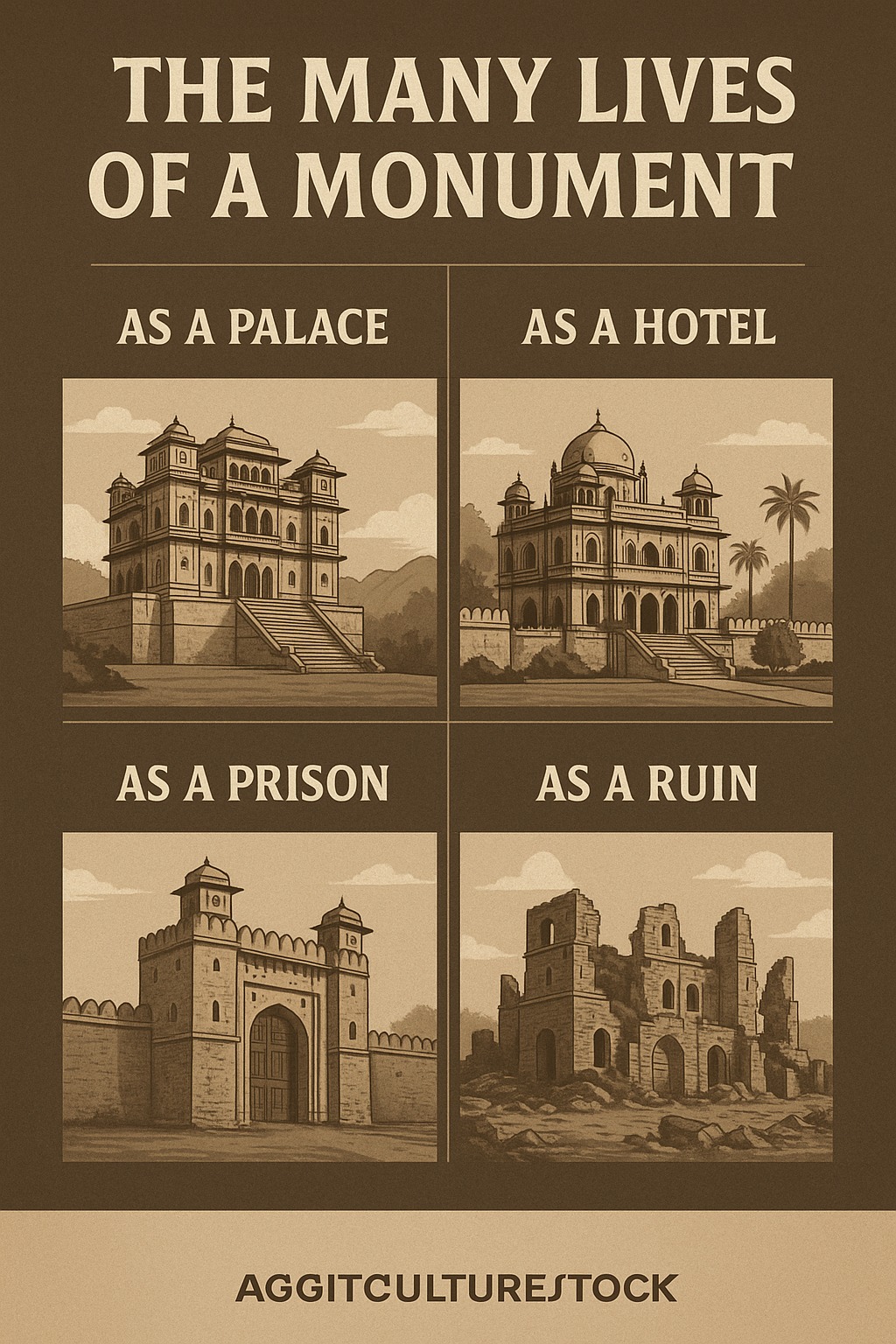
India’s forts — once the heartbeat of empires — have not always remained majestic bastions of power. Over centuries, many of these architectural marvels were repurposed, reused, or abandoned.
From battlefield command centers to colonial prisons, and from luxury heritage hotels to crumbling ruins, each fort holds layers of untold stories, revealing how history bends with time.
Forts as Seats of Power
✦ Rajputana & Maratha Forts
Built for defense and prestige, forts like Chittorgarh, Gwalior, and Sinhagad were epicenters of war strategies and royal life.
✦ Symbolism of Control
The fort was more than walls; it was an assertion of territorial dominance, military brilliance, and dynastic pride.
Forts as Prisons
✦ From Thrones to Cells
Red Fort (Delhi) once hosted emperors — but during British rule, it held Indian freedom fighters.
Cellular Jail (Andaman), although not a traditional fort, echoes a similar transformation — from imperial isolation to a colonial torture site.
✦ Golconda Fort (Hyderabad)**
Later used to house political prisoners by the Nizam and British alike.
Forts as Luxury Heritage Hotels
✦ Taj Lake Palace (Udaipur)
Originally a summer retreat for the royal family, now a 5-star floating hotel on Lake Pichola.
✦ Neemrana Fort Palace (Rajasthan)
Restored from ruins, this 15th-century fort is now a heritage hotel with vintage architecture and modern comforts.
✦ Forts Turned into Wedding Venues
Many forts now host royal destination weddings, giving guests a taste of regal life.
Forts as Forgotten Ruins
✦ Daulatabad Fort (Maharashtra)
Once a strategic military fortification, now partially in ruins — visited for its eerie staircases and acoustic traps.
✦ Warangal Fort (Telangana)**
Little remains of this Kakatiya marvel, except scattered granite walls and archways.
✦ Gingee Fort (Tamil Nadu)**
Described by the British as the “Troy of the East,” now largely neglected despite its historical significance.
Why Forts Change Roles Over Time
Political transitions: From kingdom to colony, to democracy.
Urban expansion: Cities grew, swallowing old strongholds.
Neglect and decay: Some were forgotten, others misused.
Restoration initiatives: Recent efforts aim to revive these structures for tourism and education.
The UNESCO Touch
Some forts like Agra Fort, Jaisalmer Fort, and Red Fort are now UNESCO World Heritage Sites — a sign of global recognition but also a reminder of the need for protection.
❓FAQs
Q1: Why were Indian forts turned into hotels?
To preserve heritage and promote tourism. Converting forts into luxury stays funds their maintenance.
Q2: Which Indian fort was famously a prison?
The Red Fort in Delhi housed revolutionaries like Bahadur Shah Zafar during British rule.
Q3: Are all forts protected by the ASI or government?
No. Many lesser-known forts are in ruins due to lack of funds or awareness.
Published on : 1st August
Published by : SMITA
www.vizzve.com || www.vizzveservices.com
Follow us on social media: Facebook || Linkedin || Instagram
🛡 Powered by Vizzve Financial
RBI-Registered Loan Partner | 10 Lakh+ Customers | ₹600 Cr+ Disbursed