

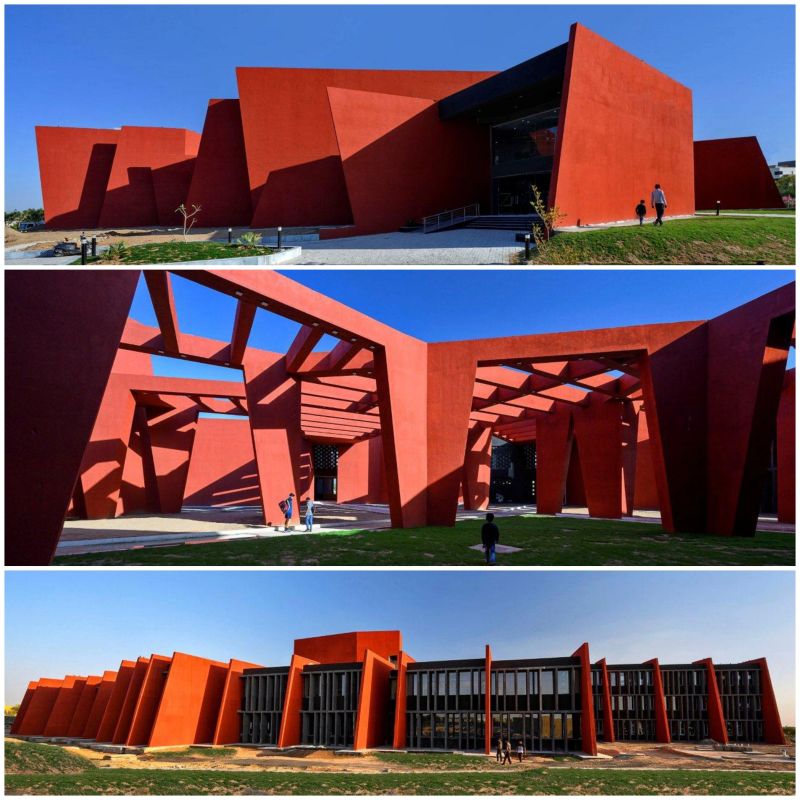
THE RAJASTHAN SCHOOL’S RUGGED LANDSCAPE MAKES LIGHT OF THE WEATHER
Natural Harmony with the Desert
The spectacular Rajkumari Ratnavati Girls School, located near Jaisalmer in Rajasthan’s Thar Desert, uses its surroundings to conquer the region’s extreme weather. Architecturally integrated with the undulating desert, the school’s oval form and robust construction echo the landscape’s strength and beauty. Designed by Diana Kellogg Architects, the school is more than a refuge from heat—it’s a testament to the power of thoughtful sustainability and local wisdom.
Sustainable Design That Defies Climate
Desert-Inspired Shape: The building’s elliptical structure blends with the dunes, capturing winds and symbolizing unity and resilience.
Thermal Mastery: Hand-carved yellow sandstone walls act as natural insulators, keeping interiors up to 10°C cooler than outside, even as desert temperatures soar past 45°C.
Passive Cooling: Traditional “jali” screens and high ceilings work with the Venturi effect, accelerating airflow and naturally venting warm air.
Lime Plaster Interiors: These regulate humidity by absorbing and releasing moisture, maintaining coolness and air quality.
Shaded Courtyards: Central courtyards provide protected spaces for learning and play, shielded from sun and sandstorms.
Solar Solutions: Rooftop solar panels generate energy while adding shade, supporting both sustainability and comfort.
Water Wisdom: Rainwater harvesting courtyards meet scarce water needs while supporting green patches in the arid zone.
How the Rugged Landscape Contributes
The Thar Desert’s raw, sun-baked terrain isn’t just a backdrop. The school’s rugged surroundings inspired an architectural approach built for endurance:
Locally Sourced Materials: Building with local sandstone ensures durability and a seamless visual connection to the desert.
Cultural Legacy: Methods used in Rajasthan’s havelis and forts—thick walls, shaded walkways, and breezy lattice—are revived.
Adapted for Extremes: The architecture uses natural light and ventilation strategies honed over centuries, making air conditioning unnecessary and keeping the school a cool oasis amid the heat.
Resilient Community and Empowerment
The Rajkumari Ratnavati Girls School’s strength comes not just from stone but from its mission. It uplifts over 400 girls from marginalized backgrounds, offering modern education alongside regional crafts and community support. The school community thrives—students study, play, and grow in a healthy environment, safe from the harsh realities of the desert climate.
FREQUENTLY ASKED QUESTIONS (FAQ)
Q1: How does the school stay cool without air conditioning?
The school uses thick sandstone walls, lime plaster interiors, jali screens, and carefully planned shading to keep interiors up to 10°C cooler than the outdoor temperature through passive cooling methods.
Q2: Why is the building oval-shaped?
The elliptical shape mimics the desert dunes, promotes airflow, symbolizes unity, and is highly effective for natural ventilation.
Q3: What local materials are used in construction?
The school is built entirely from locally sourced, hand-carved yellow sandstone, blending durability with natural insulation.
Q4: How does the landscape influence the architecture?
The design borrows from Rajasthan’s historic forts and havelis, using techniques like wind capture, thick walls, and courtyards—turning natural challenges into design features.
Q5: What sustainable features help face desert weather?
Rainwater harvesting, solar panels, and natural ventilation minimize resource use and maximize climate comfort.
Q6: Is the school only about education?
No, it’s a community anchor, also hosting craft workshops, performances, and women’s empowerment programs, all supporting local culture and livelihoods.
Published on: August 6, 2025
Published by: PAVAN
www.vizzve.com || www.vizzveservices.com
Follow us on social media: Facebook || Linkedin || Instagram
🛡 Powered by Vizzve Financial
RBI-Registered Loan Partner | 10 Lakh+ Customers | ₹600 Cr+ Disbursed