

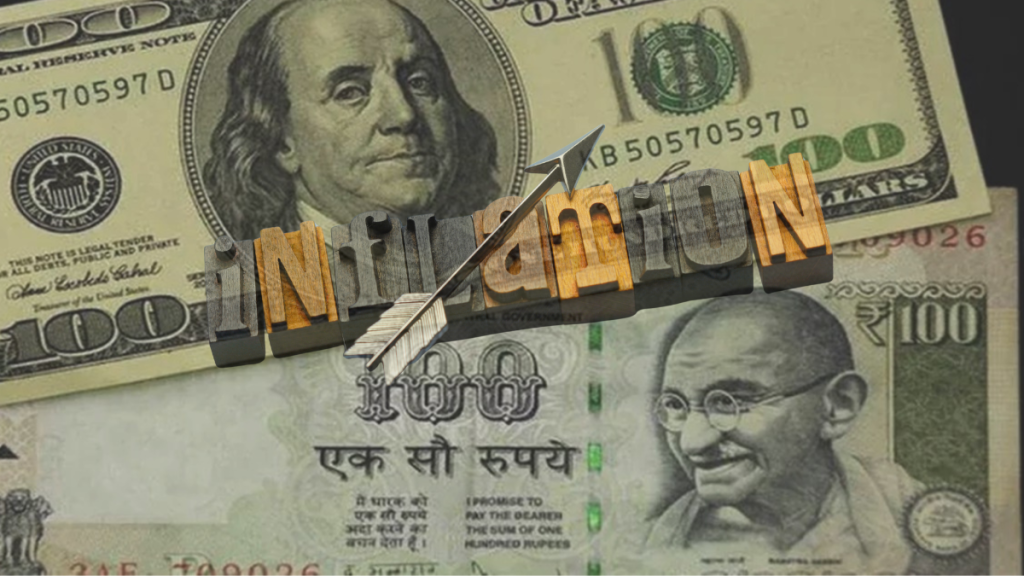
The Real Reason the Rupee Always Falls Against the Dollar
Many Indians wonder why the rupee always seems to weaken against the dollar. Headlines often report the "fall" of the INR as a sign of crisis or weakness—but is that really the case? To understand the full picture, we must look at economic fundamentals, global trade, and historical patterns.
Let’s explore the real, underlying reasons why the Indian Rupee depreciates over time compared to the US Dollar.
1. Inflation Rate Differential – The Core Driver
One of the biggest reasons for long-term rupee depreciation is higher inflation in India compared to the US. Over decades, India has consistently had higher inflation, which naturally reduces the purchasing power of the rupee.
If Indian inflation averages 5–6% and US inflation stays around 2%, the rupee will lose value relative to the dollar.
2. Trade Deficit – More Imports Than Exports
India imports more than it exports, especially crude oil, electronics, and gold. This means we constantly need more dollars to pay for imports than we earn from exports.
A chronic trade deficit puts pressure on the rupee, increasing demand for the dollar and pushing the rupee lower.
3. Stronger Dollar Globally – Not Just an India Issue
The US Dollar is the global reserve currency. When global uncertainty rises (like wars, inflation, or recessions), investors move money into “safe-haven” assets like the dollar.
This global demand boosts the dollar's strength—making other currencies, including the rupee, appear weaker by comparison.
4. Capital Outflows and Foreign Investments
When foreign institutional investors (FIIs) pull money out of Indian markets (stocks or bonds), they convert INR into USD, which increases dollar demand and depreciates the rupee.
Global interest rate hikes (like the US Fed increasing rates) often lead to capital outflows from emerging markets like India.
5. Crude Oil Prices – A Major Influencer
India is one of the largest oil importers in the world. When oil prices rise, India needs to spend more USD to buy crude, creating additional demand for the dollar and weakening the rupee.
Higher oil prices = Higher import bill = Higher pressure on INR.
6. India's Dependence on Dollar-Based Systems
Most global trade, including oil, electronics, and tech, is conducted in US dollars, not rupees. This creates a permanent demand for dollars in India’s foreign exchange market, leading to long-term rupee depreciation.
7. Currency Depreciation Is Sometimes Intentional
India’s central bank (RBI) doesn’t always intervene aggressively to prevent rupee weakening. A weaker rupee makes Indian exports more competitive globally, helping boost sectors like IT, pharma, and textiles.
So, mild depreciation is not always bad—it can be strategic.
8. Historical Context: INR at ₹8 vs $1 in 1970s to ₹83+ Today
Yes, the rupee was ₹8 against the dollar in the early 1970s. But since then:
India moved from fixed to market-based exchange rates
Inflation was often in double digits
Trade liberalization increased imports
Global dollar dominance strengthened
Thus, the long-term rupee fall is not sudden—it’s structural and expected.
Frequently Asked Questions (FAQ)
Why is the rupee always falling against the dollar?
Because of inflation differences, trade deficit, global demand for USD, and India’s structural reliance on dollar-based imports.
Is rupee depreciation bad for India?
Not always. It hurts imports (like oil) but helps exports by making Indian goods cheaper globally.
Will the rupee ever rise strongly against the dollar?
Short-term appreciation can happen, but structurally, unless inflation, trade deficit, and energy dependence reduce significantly, INR is likely to depreciate slowly over time.
Can the government or RBI stop the rupee from falling?
The RBI can intervene using forex reserves to stabilize the rupee, but it rarely tries to reverse long-term depreciation, as it can harm exports and reduce competitiveness.
Is rupee depreciation unique to India?
No. Many developing countries like Brazil, South Africa, and Indonesia have seen similar patterns of long-term depreciation against the USD.
Published on: July 19, 2025
Published by: PAVAN
www.vizzve.com || www.vizzveservices.com
Follow us on social media: Facebook || Linkedin || Instagram
🛡 Powered by Vizzve Financial
RBI-Registered Loan Partner | 10 Lakh+ Customers | ₹600 Cr+ Disbursed