

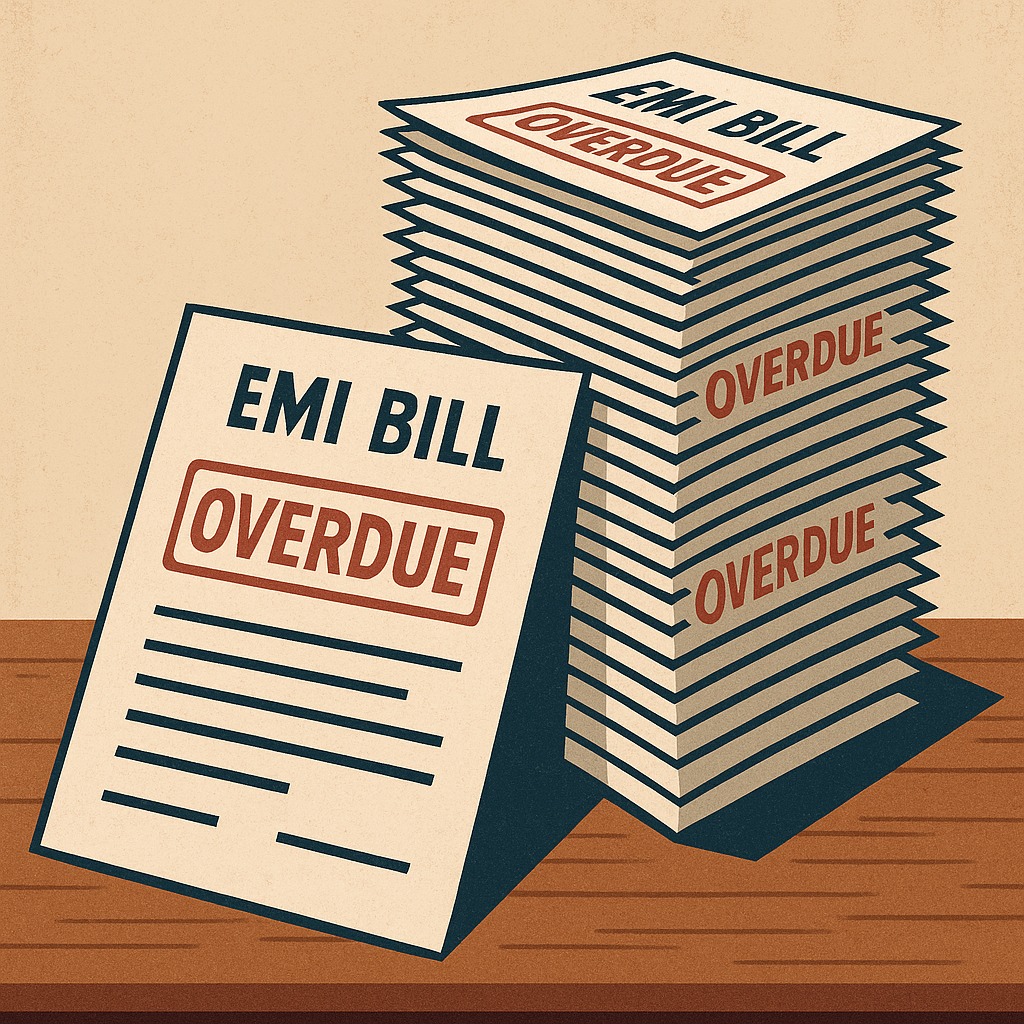
At first glance, missing an Equated Monthly Instalment (EMI) might not seem like a big deal. But in reality, a single delayed payment can trigger a chain reaction — affecting your credit score, loan eligibility, and overall financial health.
Let’s uncover how one small slip can quietly snowball into years of debt and financial stress.
The Immediate Impact of Missing an EMI
Late Payment Penalty
Most lenders charge a penal interest or late fee, usually between 2% to 3% per month on the overdue amount.
This means even a short delay can make your next EMI significantly higher.
Interest Accumulation
The missed EMI continues to accrue interest, which gets added to your outstanding balance, increasing the total repayment cost.
Credit Score Drop
Missing an EMI by even 30 days can reduce your credit score by 50–100 points, depending on your repayment history.
A lower credit score makes it harder to get future loans or credit cards.
The Long-Term Consequences
Reduced Loan Eligibility
Lenders see missed EMIs as a sign of poor credit discipline, which can hurt your chances of getting approved for future loans.
Higher Interest Rates in Future
Even if you do get approved later, a low credit score means you’ll likely pay higher interest rates — costing you thousands over time.
Legal or Recovery Action
Repeated defaults may lead to collection calls, legal notices, or repossession of collateral (for secured loans).
Debt Trap Cycle
Late fees, penalties, and compounding interest can push borrowers into a cycle of debt, making it harder to catch up.
How to Avoid the Debt Spiral
Set Up Auto-Pay or Reminders
Automating EMI payments ensures you never miss a due date.
Keep an Emergency Fund
Maintain at least 3–6 months of EMI reserves to handle unexpected expenses.
Communicate With Your Lender
If you anticipate a delay, inform your lender early. Some may offer a grace period or EMI restructuring.
Avoid Taking Multiple Loans
Multiple EMIs can strain your monthly budget. Borrow only what you can comfortably repay.
Track Your Credit Score Regularly
Monitoring your score helps identify and correct payment issues before they escalate.
Example: The EMI Domino Effect
Let’s say you miss a ₹10,000 EMI on a personal loan.
Late payment fee (3%): ₹300
Penal interest (24% p.a. for 30 days): ₹200
Total next month’s due: ₹10,500
If the delay extends or repeats, you end up paying ₹2,000–₹5,000 extra per month, plus long-term interest — a small delay quickly becomes a big financial burden.
Final Thoughts
The silent cost of missed EMIs goes beyond just late fees — it damages your creditworthiness, strains your finances, and can trap you in years of debt if left unchecked.
The best strategy? Stay proactive. Automate payments, plan your budget, and communicate with your lender if trouble arises. Remember — financial discipline today ensures a stress-free tomorrow.
FAQs
Q1. How many days after the due date is an EMI considered “missed”?
Typically, payments delayed by more than 30 days are reported to credit bureaus as missed EMIs.
Q2. Does one missed EMI ruin my credit score permanently?
No, but it does lower your score temporarily. Consistent on-time payments can rebuild it over time.
Q3. Can I request an EMI moratorium?
Yes, some lenders allow deferment in genuine hardship cases — but interest may continue to accrue.
Q4. How can I check if my missed EMI affected my credit score?
You can check your credit report through agencies like CIBIL, Experian, or Equifax.
Q5. What’s the best way to recover from a missed EMI?
Pay it immediately, avoid further delays, and maintain consistent payments thereafter.
Published on : 7th November
Published by : SMITA
www.vizzve.com || www.vizzveservices.com
Follow us on social media: Facebook || Linkedin || Instagram
🛡 Powered by Vizzve Financial
RBI-Registered Loan Partner | 10 Lakh+ Customers | ₹600 Cr+ Disbursed