

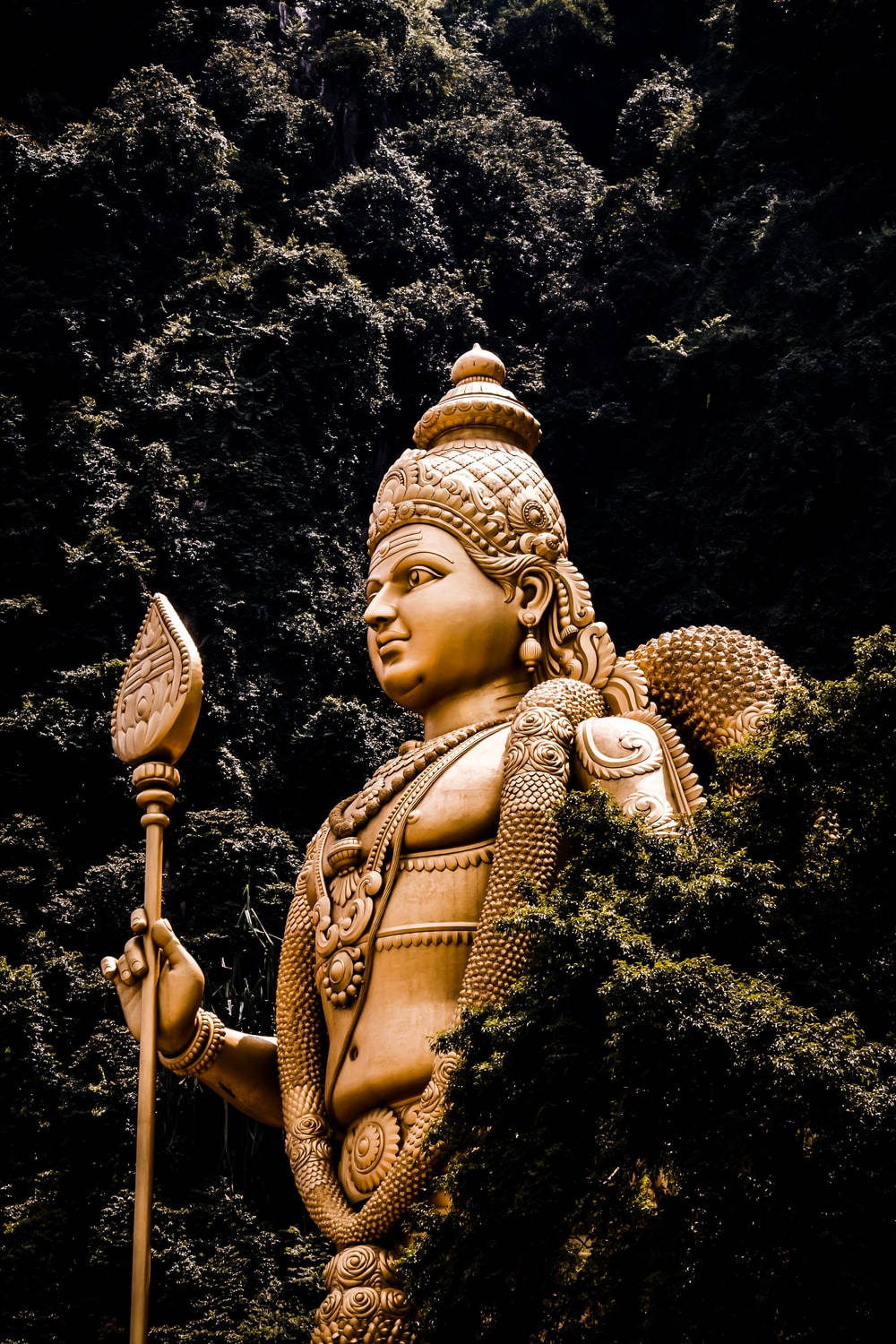
🌟 Who Is Murugan?
Murugan, also known as Kartikeya, Skanda, Kumara, and Subramanya, is the Hindu god of war, youth, wisdom, and divine knowledge. He is the second son of Shiva and Parvati, and the younger brother of Ganesha.
Murugan is most revered in Tamil culture, where he is considered the patron deity of the Tamil people, and is affectionately called “Thamizh Kadavul” (God of the Tamils). His life story is both a mythological marvel and a spiritual journey.
🔥 His Fiery Birth
The story of Murugan begins with the rise of the demon Tarakasura, who could only be killed by the son of Shiva. Since Shiva was in deep meditation, the gods became anxious. They enlisted Kama Deva (the god of love) to awaken Shiva, which led to Kama’s destruction by Shiva’s third eye — but also to his union with Parvati.
From their divine energy emerged six powerful sparks which were carried by Agni (fire god) and Ganga to the sacred Saravana pond, where they transformed into six divine babies. These were nurtured by six celestial maidens — the Krittikas.
Parvati embraced them all together into one form with six heads and twelve arms — and thus was born Murugan, the Six-Faced One (Shanmukha).
🛡️ Warrior of the Gods
Murugan was born not just as a son but as a divine commander. Armed with the Vel (a powerful spear gifted by Parvati), he was appointed the leader of the Deva army. He vanquished the demon Tarakasura in a fierce battle, restoring balance and dharma in the universe.
This act established Murugan as the ultimate symbol of valor, purity, and spiritual discipline.
🕉️ Murugan’s Symbolism
Six Heads (Arumugam): Representing intelligence, strength, beauty, wealth, fame, and divine power.
Peacock (Vehicle): Symbolizing ego under control and the vibrant energy of life.
Vel (Spear): A weapon of knowledge, destruction of evil, and divine protection.
🛕 Worship in South India
Murugan is most deeply worshipped in Tamil Nadu, with major pilgrimage centers including:
Palani Hills – Where he stands as a renunciate holding a staff.
Tiruchendur – Site of his victory over demons.
Swamimalai, Thiruthani, Thiruparankundram, and Pazhamudircholai – Known collectively as the Arupadai Veedu (six abodes of Murugan).
Murugan is also honored through festivals like Thaipusam, Skanda Shasti, and Panguni Uthiram.
💖 The Tale of Love: Murugan, Valli, and Devasena
Murugan’s life includes not just battles but beautiful love stories:
Devasena, daughter of Indra, became his consort after his victory over Tarakasura.
Valli, a tribal princess, was won through Murugan’s playful and romantic pursuit, often disguised in different forms.
Together, Valli and Devasena symbolize devotion (bhakti) and duty (dharma), both paths to the divine.
FAQ
Q1: Who is Lord Murugan in Hindu mythology?
A: Murugan is the son of Shiva and Parvati, known as the god of war, wisdom, and youth, especially revered in South India.
Q2: Why does Murugan have six faces?
A: His six faces symbolize multiple virtues and his nurturing by six celestial mothers, the Krittikas.
Q3: What is the significance of Murugan’s spear (Vel)?
A: The Vel represents divine knowledge, destruction of evil, and protection of the righteous.
Q4: What are Murugan’s six abodes?
A: The Arupadai Veedu are sacred shrines in Tamil Nadu: Palani, Tiruchendur, Swamimalai, Thiruthani, Thiruparankundram, and Pazhamudircholai.
Q5: What is the love story of Murugan and Valli?
A: Murugan, in various disguises, wooed and won the love of the tribal princess Valli, symbolizing the path of love (bhakti) in spirituality.
Publisher : Kaushik
www.vizzve.com || www.vizzveservices.com
Follow us on social media: Facebook || Linkedin || Instagram