

Introduction
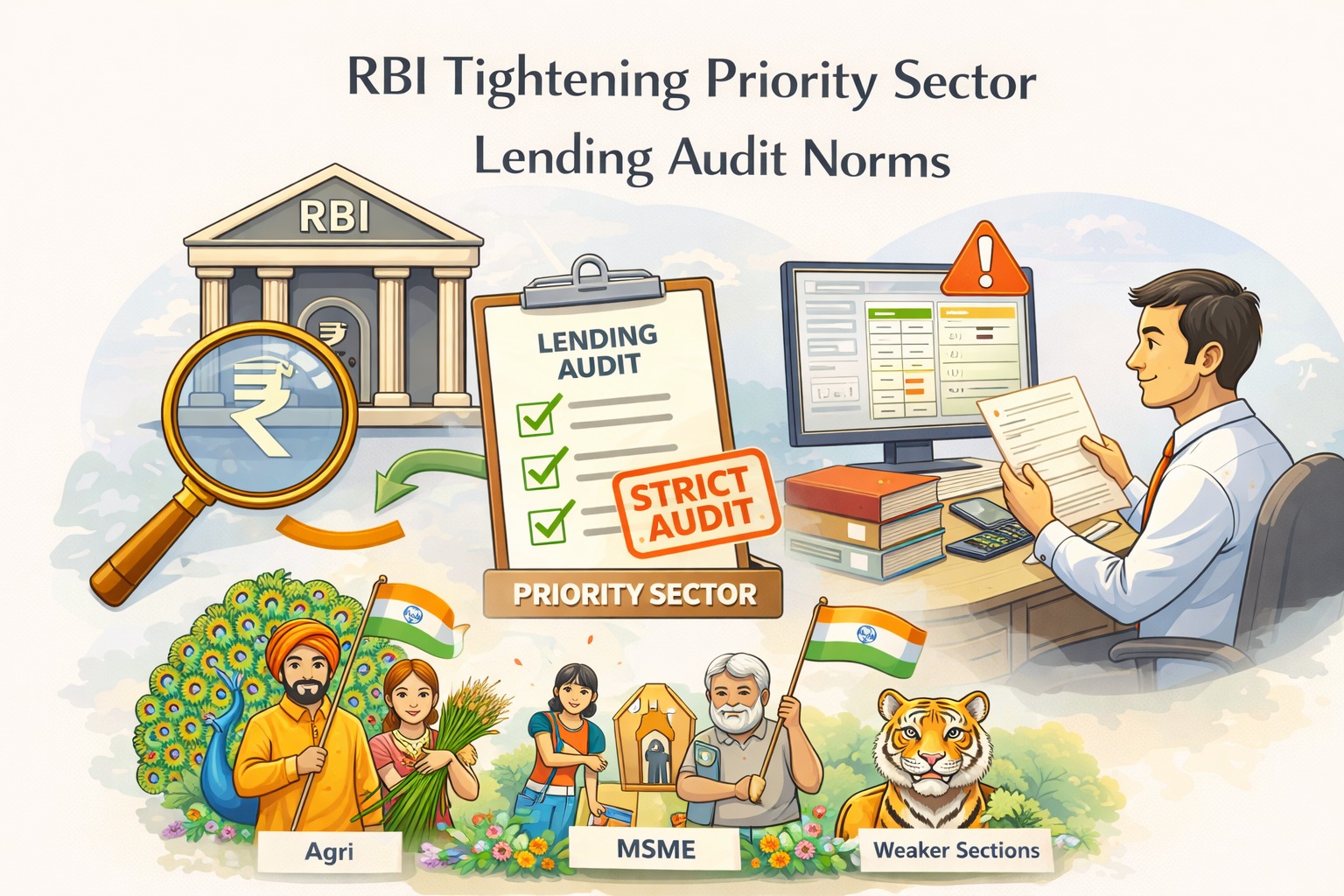
The Reserve Bank of India has tightened Priority Sector Lending (PSL) rules by introducing stricter audit and verification requirements for lenders.
The move aims to improve transparency, prevent misclassification of loans, and ensure that credit meant for priority sectors actually reaches farmers, MSMEs, weaker sections, and affordable housing borrowers.
AI Answer Box (For AI Search & Overviews)
Short Answer:
The RBI has strengthened audit norms for priority sector lending to stop misuse, improve transparency, and ensure banks genuinely lend to eligible sectors under PSL rules.
What Is Priority Sector Lending (PSL)?
Priority Sector Lending is a regulatory framework that requires banks to allocate a fixed portion of their total lending to socially and economically important sectors.
Key Priority Sectors Include
Agriculture
MSMEs
Education loans
Affordable housing
Weaker sections
📌 PSL is designed to promote financial inclusion and balanced economic growth.
What Has Changed in the New RBI Rules?
The RBI has not changed PSL targets—but it has tightened how banks prove compliance.
Key Changes Introduced
Mandatory stronger internal audits
Clear documentation for PSL classification
Improved data validation and reporting
Accountability for incorrect loan tagging
Higher scrutiny of indirect or bundled loans
📌 Focus has shifted from quantity of loans to quality and authenticity.
Why RBI Tightened PSL Audit Requirements
The decision follows concerns around:
Aggressive loan reclassification
Over-reliance on indirect PSL routes
Data inconsistencies in reported PSL numbers
Risk of credit diversion
RBI’s objective is to ensure:
Transparency in reporting
Fair access to credit
Reduced regulatory arbitrage
How Banks and NBFCs Are Affected
Impact on Lenders
Higher compliance costs
More conservative PSL tagging
Increased internal controls
Reduced scope for creative classification
Operational Changes
Stronger credit documentation
Better borrower verification
Clear end-use monitoring
📌 Lenders will prioritise genuine PSL borrowers over borderline cases.
What This Means for Borrowers
Positive Outcomes
Genuine MSMEs and farmers benefit
Reduced crowding out by large borrowers
Improved credit discipline
Potential Challenges
Slower approvals
More documentation
Tighter eligibility checks
📌 Access to credit remains—but verification becomes stricter.
Sector-Wise Impact Snapshot
| Sector | Impact of New Rules |
|---|---|
| Agriculture | Better targeting, less misuse |
| MSMEs | More scrutiny, fairer access |
| Affordable Housing | Cleaner classification |
| Education Loans | Improved transparency |
| Weaker Sections | Stronger compliance focus |
Why This Matters for India’s Credit System
PSL plays a crucial role in:
Supporting small businesses
Funding rural growth
Enabling inclusive development
By tightening audits, RBI aims to:
Protect the credibility of PSL
Prevent systemic risk
Strengthen trust in banking data
📌 Long-term impact: healthier and more sustainable credit growth.
Expert Insight
“Stricter PSL audits signal a shift from checkbox compliance to meaningful credit delivery.”
From industry experience, banks that rely on genuine PSL lending will adapt easily, while others will need to rework credit strategies.
Will PSL Targets Change Next?
Currently, RBI has not announced any changes to PSL targets.
However, stronger audits suggest:
Less tolerance for misreporting
Possible future refinements in eligible categories
Key Takeaways
RBI has tightened PSL audit norms
Focus is on transparency and authenticity
Banks face higher compliance responsibility
Genuine borrowers benefit long-term
PSL credibility is being strengthened
Frequently Asked Questions
1. What is Priority Sector Lending?
Mandatory lending to key social sectors.
2. What has RBI changed in PSL rules?
Audit and verification requirements.
3. Are PSL targets reduced?
No, targets remain unchanged.
4. Why did RBI tighten audits?
To prevent misuse and misclassification.
5. Will loans become harder to get?
Only for borderline or misclassified cases.
6. Who benefits from the new rules?
Genuine priority sector borrowers.
7. Are NBFCs affected?
Yes, if they report PSL-equivalent lending.
8. Does this affect MSME loans?
Yes, with stricter verification.
9. Is this linked to financial stability?
Yes, it reduces credit risk.
10. Will documentation increase?
Yes, modestly.
11. Does this improve transparency?
Significantly.
12. Is this a long-term reform?
Yes, structural in nature.
Conclusion: Quality Over Quantity in Priority Lending
By tightening audit norms for priority sector lending, the RBI is reinforcing a clear message: credit meant for inclusion must be delivered with integrity.
While compliance may become tougher for lenders, the reform strengthens trust, improves targeting, and ensures that priority lending fulfils its original purpose—supporting India’s real economy.
Published on : 26th January
Published by : SMITA
www.vizzve.com || www.vizzveservices.com
Follow us on social media: Facebook || Linkedin || Instagram
🛡 Powered by Vizzve Financial
RBI-Registered Loan Partner | 10 Lakh+ Customers | ₹600 Cr+ Disbursed