

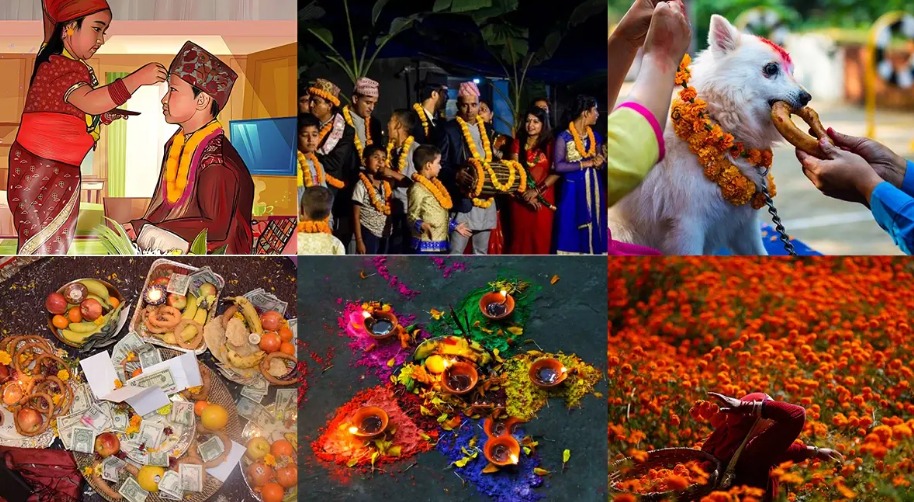
While India celebrates Diwali as the festival of lights, in Nepal, the same festival takes a beautifully distinct form known as Tihar. This five-day celebration is one of the most vibrant and meaningful festivals in Nepali culture, blending devotion, family bonding, and deep respect for animals and nature.
From worshiping crows, dogs, and cows to the joyous singing of Bhailo and Deusi, Tihar is a time when every corner of Nepal glows with light, music, and warmth.
The Five Days of Tihar
1️⃣ Kaag Tihar (Day of the Crow)
The festival begins with Kaag Tihar, dedicated to crows — messengers of death and the divine. Nepalis offer food to crows early in the morning to ward off sadness and bring good luck.
2️⃣ Kukur Tihar (Day of the Dog)
This is one of the most heartwarming days of the festival. Dogs, regarded as loyal companions and protectors, are honored with garlands, tika, and delicious food. Kukur Tihar has even gained international attention for celebrating the bond between humans and animals.
3️⃣ Gai Tihar and Laxmi Puja (Day of the Cow and Goddess Laxmi)
On this day, cows — sacred symbols of prosperity and motherhood — are worshiped. Later in the evening, homes are illuminated with oil lamps and candles, as families perform Laxmi Puja to invite the goddess of wealth and fortune into their homes.
4️⃣ Govardhan Puja and Mha Puja (Day of Self and Nature)
The fourth day varies among communities. Some worship the ox (Goru Tihar) for its agricultural importance, while the Newar community performs Mha Puja, a ritual to honor and purify the self — symbolizing self-awareness and inner strength.
5️⃣ Bhai Tika (Day of Sibling Bond)
The final day celebrates the sacred bond between brothers and sisters. Sisters apply a seven-colored tika (Saptarangi Tika) on their brothers’ foreheads, praying for their long life and prosperity, while brothers offer gifts and blessings in return.
How Nepal Lights Up During Tihar
Homes and streets are decorated with diyas (oil lamps), colorful rangolis, and flower garlands (marigolds).
Children and youth perform Deusi and Bhailo, traditional songs sung door-to-door in exchange for treats or donations — much like caroling.
Temples and cities, especially in Kathmandu, Bhaktapur, and Pokhara, glow with vibrant lights, laughter, and music.
Cultural Significance
Tihar isn’t just about lights — it’s about gratitude, connection, and renewal.
It teaches respect for all forms of life, celebrates relationships, and reminds everyone that prosperity begins with harmony — within oneself, with others, and with nature.
Modern Celebrations
Today, Tihar continues to evolve with time — blending traditional rituals with modern celebrations. Families use electric lights along with diyas, share festive meals, exchange gifts, and even post Bhai Tika wishes online — keeping tradition alive in a modern world.
Despite the change, one thing remains the same: the spirit of love, light, and togetherness that defines the Nepali Diwali.
Conclusion
Tihar is more than a festival — it’s a reflection of Nepal’s heart and soul.
From honoring animals to cherishing family bonds, it embodies compassion, faith, and unity.
As Nepal glows under countless diyas and marigolds, Tihar reminds us all that light triumphs over darkness, love over fear, and gratitude over greed — values that transcend borders and time.
Frequently Asked Questions (FAQ)
1. What is Diwali called in Nepal?
In Nepal, Diwali is known as Tihar. It is a five-day festival that celebrates lights, prosperity, and the bond between humans, animals, and nature.
2. How many days is Tihar celebrated in Nepal?
Tihar is celebrated for five days, each day dedicated to different deities and symbols — from crows and dogs to Goddess Laxmi and the sacred bond of siblings.
3. What is special about Kukur Tihar?
Kukur Tihar is a unique day in Nepal when dogs are worshiped with garlands, tika, and food. It symbolizes love, loyalty, and respect for all living beings.
4. How is Bhai Tika celebrated?
During Bhai Tika, sisters apply a seven-colored tika (Saptarangi Tika) on their brothers’ foreheads, praying for their long life and success. Brothers, in return, give gifts and blessings.
5. What is the difference between Diwali in India and Tihar in Nepal?
While both celebrate the victory of light over darkness, Tihar in Nepal includes unique rituals honoring animals like crows, dogs, and cows, emphasizing gratitude toward all living beings.
Published on : 15th October
Published by : SMITA
www.vizzve.com || www.vizzveservices.com
Follow us on social media: Facebook || Linkedin || Instagram
🛡 Powered by Vizzve Financial
RBI-Registered Loan Partner | 10 Lakh+ Customers | ₹600 Cr+ Disbursed
https://play.google.com/store/apps/details?id=com.vizzve_micro_seva&pcampaignid=web_share