

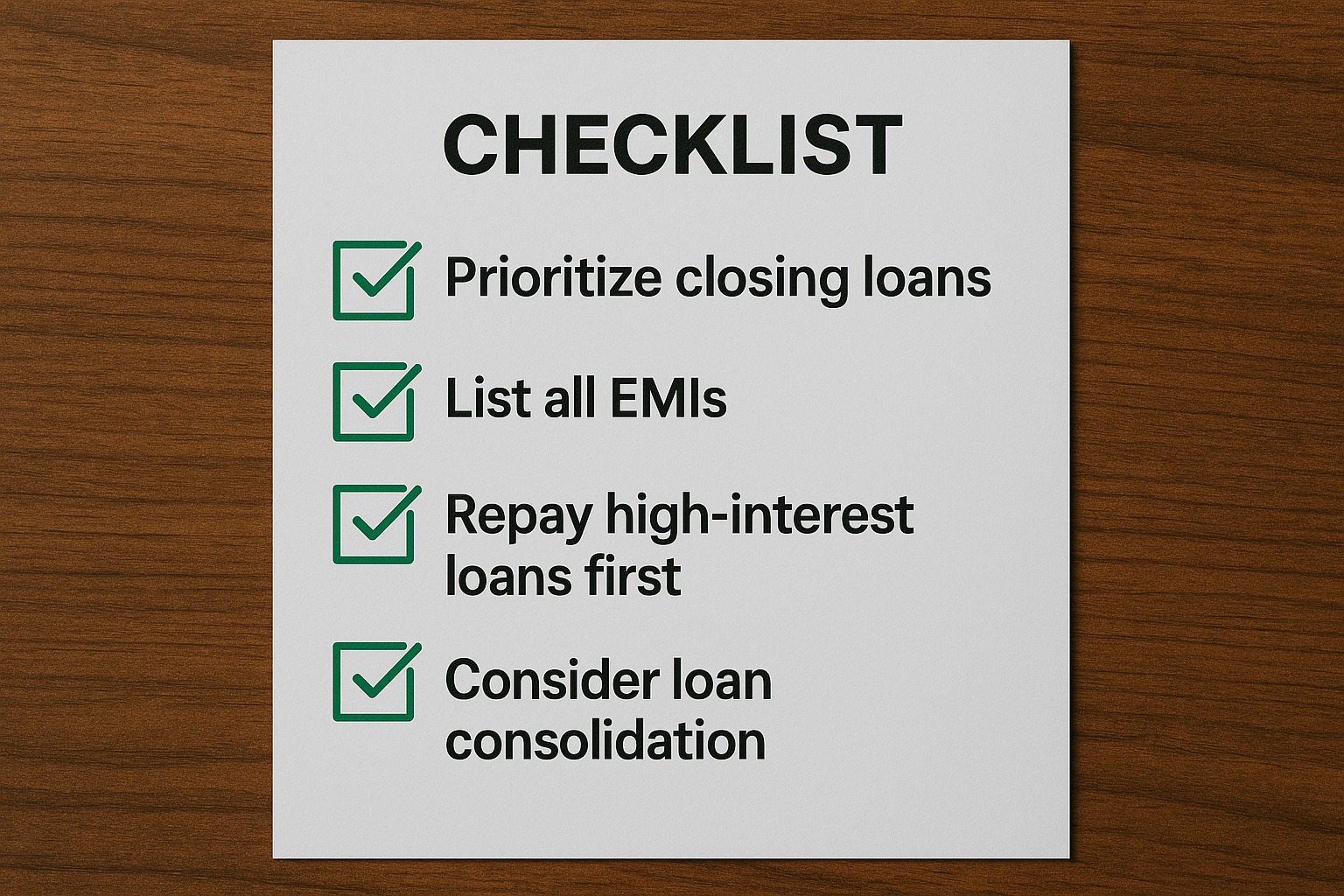
Handling multiple loans at once — home loan, personal loan, credit card debt, business loan, consumer durable loans, or BNPL EMIs — can feel overwhelming, especially when income or expenses fluctuate. If EMIs are taking away peace of mind, it’s crucial to strategically decide which loans to close first instead of making random part-payments.
A structured approach can help reduce stress, save money, and improve long-term financial stability. Below are proven priority layers used by financial planners, risk managers, and credit strategists.
Step 1: List All Loans With Key Details
Write down or tabulate:
Interest rate (APR or effective cost)
Loan type (secured/unsecured)
Remaining tenure
Outstanding principal
EMI amount
Penalties, hidden charges, insurance loading, etc.
This creates clarity, which is the first step toward control.
Step 2: Close High-Interest Loans First
Loans with higher interest rates drain money faster. In most cases, the order is:
1️⃣ Credit card dues
2️⃣ BNPL / Pay-later / Consumer loans
3️⃣ Personal loans
4️⃣ Business unsecured loans
5️⃣ Used car loans
6️⃣ Home loans and mortgage loans (last priority)
Even small balances on credit cards can accumulate rapidly due to compounding charges.
Step 3: Clear Unsecured Loans Before Secured
Unsecured debt = More expensive + Higher credit-risk perception
Examples:
Personal loan
Credit card bill
Pay-later finance
Salary advance
Micro finance EMI
These loans do not have collateral, so lenders charge more interest and penalties for delays. Clearing them boosts credit profile faster.
Step 4: Consider EMI-to-Value Stress
If a loan’s EMI consumes a large chunk of your monthly income but offers no long-term asset value, it should move higher on the closure list.
Example: Financing a non-depreciating asset (home) is different than paying EMI for a gadget.
Step 5: Prioritize Loans With Short Remaining Tenure
Loans nearing the end accumulate less interest, but small top-ups can fully close them, freeing monthly cash flow immediately.
Freeing one EMI improves psychological relief, enabling disciplined repayment of remaining loans.
Step 6: Evaluate Prepayment Charges & Tax Benefits
Some loans include:
Pre-closure penalties
Tax savings (ex: home loan, education loan – applicable under prevailing tax laws)
So, compare:
Interest saved vs penalty vs tax advantage
Sometimes it’s smarter not to prepay certain loans even if funds are available.
Step 7: Use Lump Sum & Bonus Strategically
Best repayment opportunities:
Yearly bonus
Incentives or freelance income
Sale of unused items or investments
Tax refund
Instead of lifestyle purchases, allocate part to debt reduction. The math pays off for years.
Final Priority Framework Summary
| Priority Rank | Loan Type | Reason |
|---|---|---|
| 1st | Credit card & Pay-Later | Highest interest, fastest debt trap |
| 2nd | Personal & unsecured loans | No collateral + high charges |
| 3rd | Vehicle/consumer durable loans | Depreciating asset + recurring EMI |
| 4th | Business/overdraft loans | Case-based, depends on cash flow |
| 5th | Education/home loan | Lowest interest + tax benefits |
❓ FAQs
Q1. Should I close my home loan first to become debt-free?
Not necessarily — home loans usually have lower interest and tax benefits compared to unsecured loans.
Q2. Is it better to invest extra money or prepay loans?
If loan interest rate is higher than the expected investment return, repayment is better.
Q3. Does prepayment affect credit score?
Early closure does not negatively affect credit score; good repayment builds positive history.
Q4. Can I close multiple loans at once?
Yes, if finances allow. But prioritize the ones with high interest and no long-term benefit.
Q5. Should I refinance instead of prepaying?
Refinancing helps only if it significantly reduces the interest burden and total cost.
Published on : 17th November
Published by : SMITA
www.vizzve.com || www.vizzveservices.com
Follow us on social media: Facebook || Linkedin || Instagram
🛡 Powered by Vizzve Financial
RBI-Registered Loan Partner | 10 Lakh+ Customers | ₹600 Cr+ Disbursed