

What Is Climate-Induced Inflation?
Climate-induced inflation refers to the rise in prices of goods and services caused by climate-related disruptions such as:
Droughts affecting crop yields
Floods damaging infrastructure
Heatwaves pushing up energy demand
Storms impacting supply chains
The result? Food, fuel, and everyday items become more expensive, especially in economies that depend heavily on agriculture or imports.
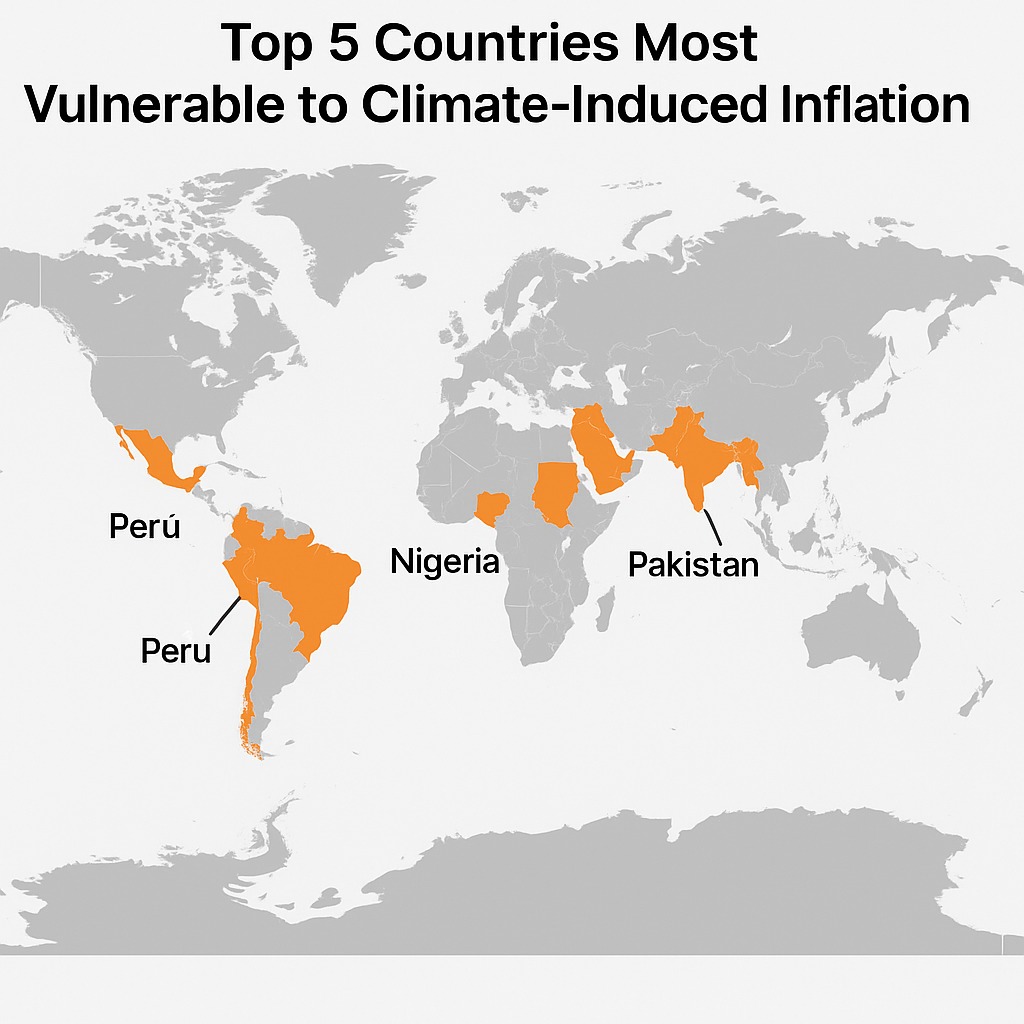
Top 5 Countries Most Vulnerable to Climate-Induced Inflation
🇮🇳 1. India
🔥 Rising Heatwaves & Water Shortages
🌾 Impact on Agriculture: Wheat, rice, and sugar production are hit frequently.
💸 Effect: Price surges in vegetables, pulses, and electricity.
📊 2024–25 inflation impact: Food inflation reached 9% in some states.
🇪🇬 2. Egypt
💧 Dependence on Nile Water (vulnerable to climate shifts)
🌾 High reliance on imported wheat
🌍 Geopolitical + climate stress = price shocks
📊 Result: Food inflation crossed 40% in 2023, partly due to climate-driven shortages.
🇵🇰 3. Pakistan
☔ Frequent floods and droughts
🚜 Crop damage and irrigation issues
🔌 Power outages = industrial slowdowns + energy inflation
📊 Inflation crossed 28% in 2023, aggravated by climate disasters.
🇳🇬 4. Nigeria
🌽 Heavily agricultural economy
🌧️ Floods and erratic rainfall hurt farming seasons
⛽ Energy inflation due to heatwaves increasing demand
📊 Inflation regularly above 22%, worsened by climate events.
🇵🇪 5. Peru
⛰️ Dependent on glacial water for farming
🌡️ El Niño effects = weather instability
🥔 Agriculture disruptions hit native crops like potatoes and corn
📊 Inflation spikes seen during recent El Niño years.
💡 What Makes These Countries More Vulnerable?
⚠️ Large rural/agricultural populations
🚜 Dependence on climate-sensitive crops
🔌 Fragile energy and water infrastructure
🌎 Limited adaptive policies or financial buffers
🌱 How Can Countries Protect Themselves?
✅ Shift to climate-resilient crops
✅ Improve irrigation and weather forecasting systems
✅ Invest in green infrastructure
✅ Strengthen social protection programs (like food subsidies)
📌 Conclusion
Climate-induced inflation is no longer a future threat — it’s already here. Countries like India, Egypt, Pakistan, Nigeria, and Peru are on the frontlines, facing economic strain as climate chaos continues.
Without strong action, millions may be pushed into poverty, and food security could be severely compromised.
❓FAQs
Q1: What is climate-induced inflation?
It’s the rise in prices due to climate-related events like droughts, floods, or heatwaves affecting supply chains.
Q2: Which country is the most affected?
India faces severe inflation due to heatwaves, monsoon changes, and crop losses.
Q3: How does climate impact food prices?
Bad weather reduces crop yields, increasing demand and prices in local and global markets.
Q4: Can we prevent climate-related inflation?
Yes, with better climate planning, green investment, and resilient supply chains.
Published on : 1st August
Published by : SMITA
www.vizzve.com || www.vizzveservices.com
Follow us on social media: Facebook || Linkedin || Instagram
🛡 Powered by Vizzve Financial
RBI-Registered Loan Partner | 10 Lakh+ Customers | ₹600 Cr+ Disbursed