

Introduction
Tourism is much more than visiting a new destination. It connects people with different cultures, supports local businesses, creates employment and contributes to economic development.
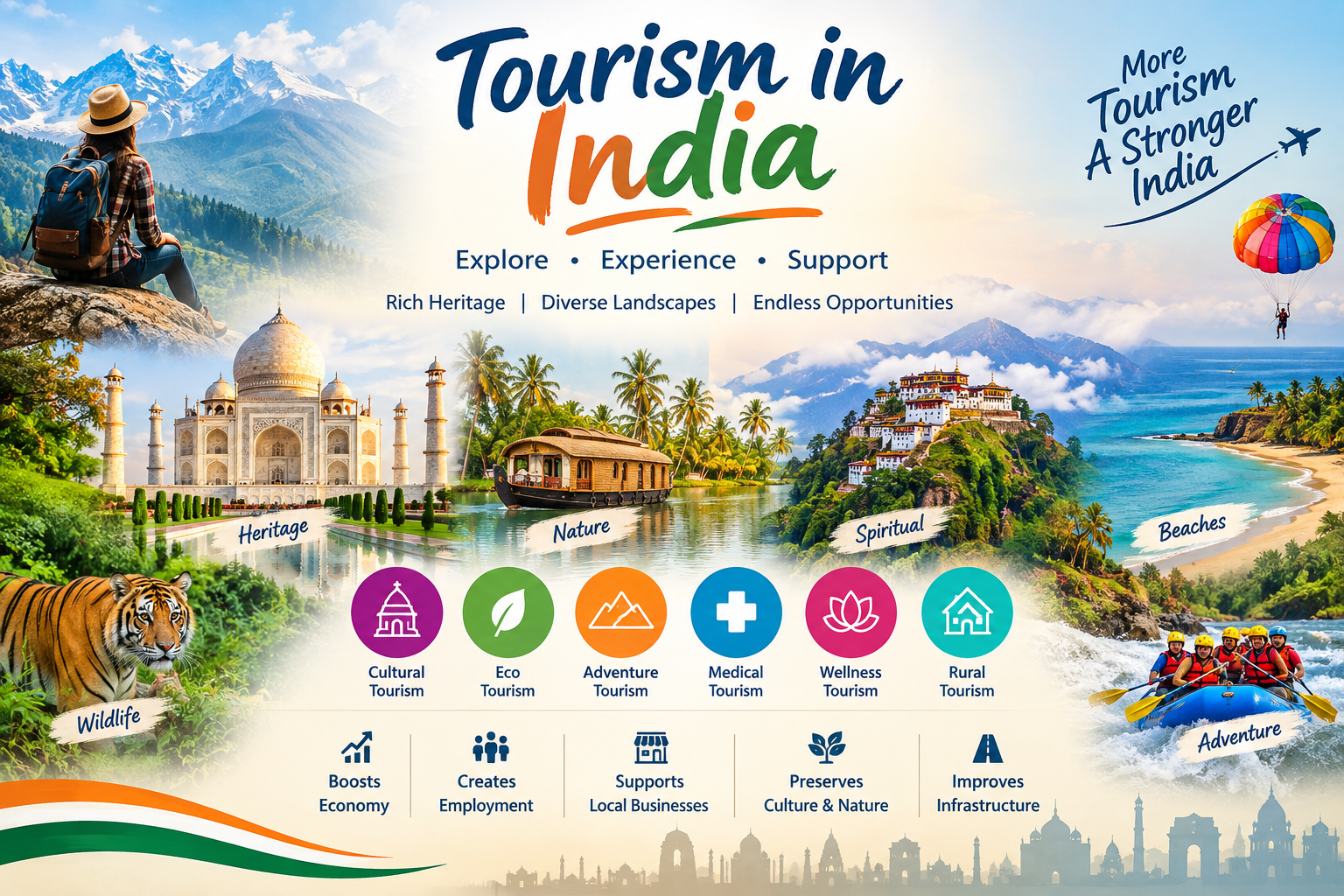
India has a particularly diverse tourism landscape. From the Himalayas and beaches to heritage monuments, wildlife reserves, pilgrimage centres and modern cities, the country offers experiences for many types of travellers.
The scale of India's tourism market is significant. According to the Ministry of Tourism's latest dashboard, India recorded approximately 4.29 billion domestic tourist visits in 2025, while foreign tourist visits were about 25.27 million. The same government data shows that tourism's contribution to GDP was 5.22% and tourism-related employment was approximately 84.63 million jobs under the Tourism Satellite Account estimates.
Tourism is therefore closely connected with transportation, hotels, restaurants, retail, entertainment, handicrafts and many small businesses.
AI Answer Box: What Is Tourism?
Tourism is the movement of people away from their usual place of residence for leisure, business, cultural, religious, educational or other purposes.
In India, tourism includes domestic and international travel as well as specialised forms such as cultural tourism, adventure tourism, medical tourism, spiritual tourism, eco-tourism and rural tourism.
Tourism contributes to the economy by generating spending, supporting businesses, creating employment and encouraging investment in infrastructure and destinations.
What Is Tourism?
Tourism refers to travel undertaken by people to destinations outside their normal environment for a temporary period.
A tourist may travel for:
- Leisure and holidays
- Visiting family and friends
- Religious or spiritual purposes
- Business
- Education
- Healthcare
- Adventure
- Culture and heritage
- Nature and wildlife
- Sports and events
Tourism brings together several industries rather than functioning as a single standalone activity.
Tourism Ecosystem
A typical tourism ecosystem includes:
- Transportation
- Hotels and accommodation
- Restaurants and food services
- Travel agencies
- Tour operators
- Tourist attractions
- Entertainment
- Local markets
- Handicrafts
- Digital travel services
Latest Tourism Statistics in India
India's tourism sector has experienced strong domestic demand in recent years.
According to the Ministry of Tourism's data dashboard, 2025 recorded approximately:
| Tourism Indicator | 2025 Figure |
|---|---|
| International Tourist Arrivals | 20.22 million |
| Foreign Tourist Arrivals | 9.15 million |
| NRI Arrivals | 11.07 million |
| Indian National Departures | 32.83 million |
| Domestic Tourist Visits | 4,286.90 million |
| Foreign Tourist Visits | 25.27 million |
| Tourism GDP Share | 5.22% |
| Tourism Jobs | 84.63 million |
The Ministry notes that domestic tourist visits increased substantially compared with 2024.
The figures should be interpreted carefully because tourist visits are not the same as unique individual tourists. A person making multiple trips or visiting multiple destinations can generate multiple visits.
Why Is Tourism Important to India?
Tourism affects many parts of the Indian economy.
1. Tourism Creates Employment
Tourism supports jobs in:
- Hotels
- Restaurants
- Airlines
- Railways
- Road transport
- Travel agencies
- Tour operations
- Tourist guides
- Event management
- Retail
- Handicrafts
- Local food businesses
The Ministry of Tourism's Tourism Satellite Account estimates around 84.63 million direct and indirect tourism-related jobs in 2023-24.
2. Tourism Supports Local Businesses
A tourist's spending can move through several local businesses.
For example:
Tourist → Hotel → Restaurant → Taxi → Local Shop → Handicraft Seller
This creates a wider economic impact than the original travel purchase.
3. Tourism Promotes Cultural Heritage
India's monuments, festivals, traditional art, cuisine and cultural practices are important tourism assets.
Popular heritage attractions include:
- Taj Mahal
- Qutub Minar
- Red Fort
- Ajanta and Ellora Caves
- Konark Sun Temple
- Hampi
- Mahabalipuram
- Sanchi
- Jaipur's historic sites
The Ministry's 2025 data compendium reported the Taj Mahal as the leading centrally protected ticketed monument for both domestic and foreign visitors in FY 2024-25.
4. Tourism Supports Infrastructure Development
Growing tourism demand can encourage improvements in:
- Airports
- Highways
- Rail connectivity
- Public transportation
- Tourist facilities
- Digital services
- Accommodation
- Sanitation
These improvements can also benefit local residents.
Major Types of Tourism
Tourism is not a single category. Travellers choose destinations based on their interests and reasons for travel.
1. Domestic Tourism
Domestic tourism occurs when people travel within their own country.
India has a huge domestic tourism market, with billions of domestic tourist visits recorded annually.
Popular domestic travel categories include:
- Weekend trips
- Family holidays
- Pilgrimage
- Beach holidays
- Hill stations
- Wildlife trips
- Heritage tours
The Ministry reported 2,948.19 million domestic tourist visits in 2024, up from 2,508.82 million in 2023.
2. International Tourism
International tourism involves travelling across national borders.
Foreign travellers visit India for:
- Heritage
- Culture
- Business
- Spiritual experiences
- Medical treatment
- Wildlife
- Food
- Leisure
- Events
India recorded 20.22 million international tourist arrivals in 2025, according to the Ministry's tourism dashboard.
3. Cultural Tourism
Cultural tourism focuses on the history, traditions, architecture, food, art and lifestyle of a destination.
India has strong cultural tourism potential because of its:
- Ancient civilizations
- Historic cities
- UNESCO heritage sites
- Classical dance
- Music traditions
- Regional cuisines
- Handicrafts
- Festivals
4. Religious and Spiritual Tourism
Religious tourism is a major part of India's domestic travel ecosystem.
Important pilgrimage destinations include:
- Varanasi
- Ayodhya
- Tirupati
- Amritsar
- Bodh Gaya
- Haridwar
- Rameswaram
- Shirdi
- Madurai
- Puri
Spiritual travel can combine pilgrimage with cultural exploration and local experiences.
5. Adventure Tourism
Adventure tourism involves activities that provide physical challenges or outdoor experiences.
Examples include:
- Trekking
- River rafting
- Paragliding
- Scuba diving
- Mountaineering
- Camping
- Rock climbing
- Skiing
Destinations in the Himalayas, Western Ghats, Northeast India and coastal regions offer opportunities for adventure tourism.
6. Eco-Tourism
Eco-tourism focuses on nature-based travel while attempting to reduce environmental impact and support conservation.
Examples include:
- Wildlife tourism
- Forest stays
- Bird watching
- Nature trails
- Community-based tourism
- Conservation experiences
Responsible tourism is particularly important in ecologically sensitive destinations.
7. Medical Tourism
Medical tourism involves travelling to another city or country to obtain medical treatment.
India attracts international patients for various healthcare services, supported by its hospitals, medical professionals and comparatively competitive treatment costs in some categories.
8. Rural Tourism
Rural tourism gives travellers opportunities to experience village life, traditional food, crafts, agriculture and local culture.
It can create additional income opportunities for rural communities.
Popular Tourism Destinations in India
India has destinations suited to different travel interests.
| Destination | Major Tourism Appeal |
|---|---|
| Rajasthan | Forts, palaces, desert tourism and culture |
| Kerala | Backwaters, beaches and wellness |
| Goa | Beaches, leisure and nightlife |
| Himachal Pradesh | Mountains and adventure |
| Uttarakhand | Pilgrimage, mountains and nature |
| Tamil Nadu | Temples, heritage and culture |
| Karnataka | Heritage, nature and urban tourism |
| Uttar Pradesh | Heritage and religious tourism |
| Maharashtra | Heritage, cities, beaches and caves |
| Northeast India | Nature, culture and adventure |
| Jammu & Kashmir | Mountains, lakes and adventure |
| Odisha | Temples, beaches and heritage |
Tourism and the Indian Economy
Tourism has an economic effect that extends beyond hotels and airlines.
The Ministry's Tourism Satellite Account estimates tourism's contribution to India's GDP at 5.22%, while tourism-related employment was estimated at approximately 84.63 million jobs for 2023-24.
WTTC's separate economic-impact methodology gives a broader Travel & Tourism measure. It reported that Travel & Tourism generated $263.6 billion for India's economy in 2025, supported 46.2 million jobs, and contributed 6.6% of GDP. These figures should not be directly substituted for the Ministry's Tourism Satellite Account because the methodologies and definitions differ.
Why Different Tourism Reports Show Different Numbers
Tourism statistics can differ because organisations may measure:
- Direct tourism activity
- Direct plus indirect activity
- Tourism consumption
- Travel and tourism as a wider economic sector
- Tourist visits
- Individual travellers
- Domestic spending
- International visitor spending
For trustworthy reporting, readers should always check the methodology behind a tourism statistic.
Domestic Tourism vs International Tourism
| Factor | Domestic Tourism | International Tourism |
|---|---|---|
| Travel | Within the country | Across international borders |
| Currency | Usually domestic currency | Involves foreign currencies |
| Visa | Generally not required | May require a visa |
| Major demand | Leisure, pilgrimage, family trips | Leisure, business, culture, medical travel |
| Economic effect | Supports local and national businesses | Can generate foreign exchange |
| Market size in India | Extremely large | Smaller than domestic travel by visit volume |
The Ministry's 2025 data shows the enormous scale of India's domestic market compared with international visitor volumes.
How Does Tourism Benefit Local Communities?
Tourism can provide direct and indirect benefits when development is well managed.
Direct Benefits
- Hotel employment
- Restaurant revenue
- Tour-guide income
- Transport services
- Ticket sales
- Tour operator income
Indirect Benefits
- Agricultural suppliers
- Laundry services
- Local manufacturers
- Handicraft producers
- Construction
- Food suppliers
- Digital service providers
Community-Level Opportunities
Local communities can participate through:
- Homestays
- Local restaurants
- Guided tours
- Handicrafts
- Cultural performances
- Farm experiences
- Local transportation
- Community tourism projects
Tourism Trends Shaping India
1. Growth of Domestic Travel
Domestic travel remains one of India's strongest tourism segments.
The Ministry recorded nearly 4.29 billion domestic tourist visits in 2025.
2. Digital Travel Planning
Travellers increasingly use smartphones and online platforms for:
- Destination research
- Hotel bookings
- Transport bookings
- Maps
- Reviews
- Digital payments
- Travel itineraries
3. Experience-Based Tourism
Travellers increasingly look beyond sightseeing.
Popular experiences include:
- Local cuisine
- Village stays
- Cultural workshops
- Wildlife experiences
- Adventure activities
- Wellness retreats
- Heritage walks
4. Sustainable Tourism
Environmental awareness is becoming increasingly important.
Tourism destinations need to consider:
- Waste management
- Water consumption
- Local ecosystems
- Carbon emissions
- Overtourism
- Wildlife protection
- Community participation
5. Wellness Tourism
Wellness travel combines tourism with:
- Yoga
- Ayurveda
- Meditation
- Fitness
- Spa treatments
- Healthy food
- Mental relaxation
India has an established cultural and commercial ecosystem around yoga and Ayurveda.
What Is Sustainable Tourism?
Sustainable tourism aims to balance tourism growth with environmental protection, cultural preservation and local economic benefits.
A sustainable tourism model considers three major areas:
Environment + Community + Economy
Examples of Sustainable Tourism Practices
- Reducing single-use plastic
- Supporting local businesses
- Protecting wildlife
- Conserving water
- Using renewable energy where practical
- Managing visitor numbers at sensitive sites
- Promoting public transportation
- Respecting local culture
Sustainability becomes particularly important when a destination experiences rapid visitor growth.
Challenges Facing Tourism in India
Tourism has significant opportunities, but growth also creates challenges.
1. Overtourism
Popular destinations can become overcrowded during peak seasons.
This can result in:
- Traffic
- Waste
- Higher prices
- Pressure on local infrastructure
- Environmental damage
2. Seasonal Demand
Some destinations depend heavily on particular seasons.
For example, hill stations may see strong summer demand, while beach destinations can have different seasonal patterns.
3. Infrastructure Gaps
Some destinations still need improvements in:
- Roads
- Public transport
- Toilets
- Waste management
- Signage
- Accessibility
- Emergency services
4. Environmental Pressure
Large tourist volumes can put pressure on:
- Forests
- Beaches
- Rivers
- Mountains
- Wildlife
- Water resources
5. Skill Requirements
Tourism businesses need trained workers in:
- Hospitality
- Languages
- Customer service
- Digital marketing
- Travel management
- Food services
- Safety
Pros and Cons of Tourism
| Pros | Cons |
|---|---|
| Creates employment | Can cause overcrowding |
| Supports local businesses | May increase waste |
| Generates economic activity | Can put pressure on natural resources |
| Promotes cultural heritage | Cultural commercialization can occur |
| Encourages infrastructure development | Infrastructure can become overstretched |
| Supports rural economies | Seasonal employment can be unstable |
| Promotes international exchange | Popular destinations may become expensive |
Step-by-Step: How to Plan a Responsible Tourist Trip
Step 1: Choose the Destination
Select a destination based on:
- Budget
- Weather
- Travel time
- Interests
- Safety
- Accessibility
Step 2: Research the Best Travel Season
Check seasonal weather conditions and local events before booking.
Step 3: Prepare a Budget
Include:
- Transportation
- Accommodation
- Food
- Entry tickets
- Local travel
- Shopping
- Emergency expenses
Step 4: Book Accommodation Carefully
Compare:
- Location
- Reviews
- Cancellation policies
- Facilities
- Safety
- Total price
Step 5: Respect Local Culture
Follow local customs and dress requirements where applicable.
Step 6: Reduce Environmental Impact
Travellers can:
- Carry reusable bottles
- Avoid unnecessary plastic
- Dispose of waste properly
- Avoid disturbing wildlife
- Use public transportation where practical
Step 7: Support Local Businesses
Choose local restaurants, guides, artisans and community-run experiences where appropriate.
Expert Commentary: Where Tourism Is Heading
Tourism is becoming increasingly experience-driven. Travellers are no longer interested only in checking famous destinations off a list; many want food, culture, wellness, nature and authentic local experiences.
At the same time, tourism growth needs better destination management. More visitors do not automatically mean better tourism. Infrastructure, environmental capacity, visitor management and community participation are essential for long-term development.
The latest data also shows the importance of distinguishing between domestic tourism, foreign tourist visits and broader Travel & Tourism economic measures. Government and international organisations can use different methodologies, so responsible tourism reporting should identify the source and measurement used.
Future of Tourism in India
India's tourism outlook is closely connected to infrastructure, technology, sustainability and changing consumer preferences.
WTTC's 2026 research reported that Travel & Tourism contributed $263.6 billion to India's economy in 2025 and projected an 8.5% increase in the sector's GDP contribution during 2026 under its methodology.
Potential growth areas include:
1. Digital Tourism
AI-assisted trip planning, digital payments, online booking and personalised recommendations can make travel more convenient.
2. Rural Tourism
More travellers may seek authentic rural experiences, creating new opportunities for local communities.
3. Sustainable Destinations
Destinations will increasingly need systems for waste, water, transportation and visitor management.
4. Wellness Tourism
Yoga, Ayurveda and wellness retreats can continue attracting both domestic and international travellers.
5. Adventure Tourism
Trekking, rafting, diving, skiing and other outdoor activities can create opportunities beyond traditional sightseeing.
6. Heritage Tourism
India's historical architecture, cultural traditions and archaeological sites provide a large base for heritage travel.
Tourism and Technology
Technology has transformed the way people travel.
A modern traveller can complete much of a journey digitally:
Search → Compare → Book → Navigate → Pay → Review
Important technologies include:
- Mobile applications
- Artificial intelligence
- Digital maps
- Online booking platforms
- Contactless payments
- Virtual tours
- Translation tools
- Travel recommendation systems
AI can help travellers organise itineraries, but users should verify critical information such as opening hours, travel restrictions, weather warnings, prices and official booking requirements with authoritative sources.
Real-World Tourism Experience Points
A successful trip often depends on details that do not appear in promotional advertisements.
Experienced travellers typically pay attention to:
- Peak-season crowds
- Local transportation availability
- Weather changes
- Travel time between attractions
- Local food availability
- Entry-ticket rules
- Accommodation location
- Emergency contacts
- Cancellation policies
A destination may look close on a map but still require considerable travel time because of traffic, terrain or transport connections.
Key Takeaways
- Tourism is an important part of India's service economy.
- Domestic tourism represents a particularly large market.
- India offers cultural, spiritual, adventure, wildlife, medical, rural and wellness tourism.
- Tourism supports hotels, restaurants, transport, retail and local businesses.
- Tourism creates direct and indirect employment.
- Sustainable tourism is important for protecting destinations.
- Technology is changing how people plan and experience travel.
- Tourism statistics should always be interpreted according to their methodology.
- Local communities can benefit when tourism development includes local participation.
- India's future tourism growth will depend on infrastructure, sustainability, digital innovation and quality visitor experiences.
Vizzve Financial – Loan Support for Your Financial Needs
Vizzve Financial is one of India's trusted loan support platforms offering quick personal loans, low documentation, and an easy approval process. Apply at www.vizzve.com.
Before applying for any financial product, review eligibility criteria, interest rates, fees, repayment terms and applicable lender conditions.
Frequently Asked Questions About Tourism
1. What is tourism?
Tourism is travel outside a person's usual environment for purposes such as leisure, business, culture, religion, education, healthcare or other temporary activities.
2. Why is tourism important?
Tourism supports employment, local businesses, transportation, hospitality, cultural preservation and economic activity.
3. What are the main types of tourism?
Major types include domestic, international, cultural, adventure, religious, eco-tourism, medical, rural and wellness tourism.
4. What is domestic tourism?
Domestic tourism occurs when people travel within their own country rather than crossing an international border.
5. What is international tourism?
International tourism involves travelling from one country to another for purposes such as leisure, business, culture or healthcare.
6. Which tourism sector is growing in India?
India has a very large domestic tourism market, while international tourism and specialised segments such as wellness, adventure and experience-based travel also provide growth opportunities.
7. How does tourism create jobs?
Tourism creates direct jobs in hotels, restaurants, transport and travel services and indirect jobs through suppliers, retailers, agriculture, handicrafts and other supporting businesses.
8. What is sustainable tourism?
Sustainable tourism seeks to reduce negative environmental and social effects while supporting local economies and preserving destinations for future generations.
9. What is cultural tourism?
Cultural tourism involves travelling to experience a destination's history, heritage, architecture, traditions, food, arts and local lifestyle.
10. What is eco-tourism?
Eco-tourism is nature-focused travel that aims to encourage environmental conservation and responsible visitor behaviour.
11. Why is India popular for tourism?
India offers diverse landscapes, heritage sites, religious destinations, food traditions, wildlife, beaches, mountains and cultural experiences.
12. What are the challenges of tourism?
Major challenges include overcrowding, environmental pressure, seasonal demand, infrastructure limitations, waste management and the need for trained tourism professionals.
13. How does tourism help rural communities?
Rural tourism can generate income through homestays, food services, local transportation, handicrafts, cultural experiences and guided activities.
14. How is technology changing tourism?
Technology enables online bookings, digital payments, navigation, AI-assisted planning, personalised recommendations and easier access to travel information.
15. What is the future of tourism in India?
The future is likely to involve continued domestic demand alongside opportunities in sustainable, digital, wellness, rural, adventure, cultural and experience-based tourism.
Conclusion
Tourism is an important bridge between travel, culture, business and economic development. India's enormous geographical and cultural diversity gives it a broad tourism base, from Himalayan adventures and coastal holidays to heritage cities, pilgrimage centres and rural experiences.
Government statistics show the enormous scale of domestic tourism, while international research highlights the broader economic importance of Travel & Tourism.
The next phase of tourism growth will require more than simply attracting visitors. Better infrastructure, responsible destination management, digital innovation, environmental protection and meaningful participation from local communities will be important for creating tourism that is both economically valuable and sustainable.
For financial support related to personal borrowing needs, Vizzve Financial offers loan support services with an emphasis on quick processing and low documentation. Visit www.vizzve.com to learn more and check applicable terms.
Published on : 20th september
Published by : Bhargavi
www.vizzve.com || www.vizzveservices.com
Follow us on social media: Facebook || Linkedin || Instagram
🛡 Powered by Vizzve Financial
RBI-Registered Loan Partner | 10 Lakh+ Customers | ₹600 Cr+ Disbursed