

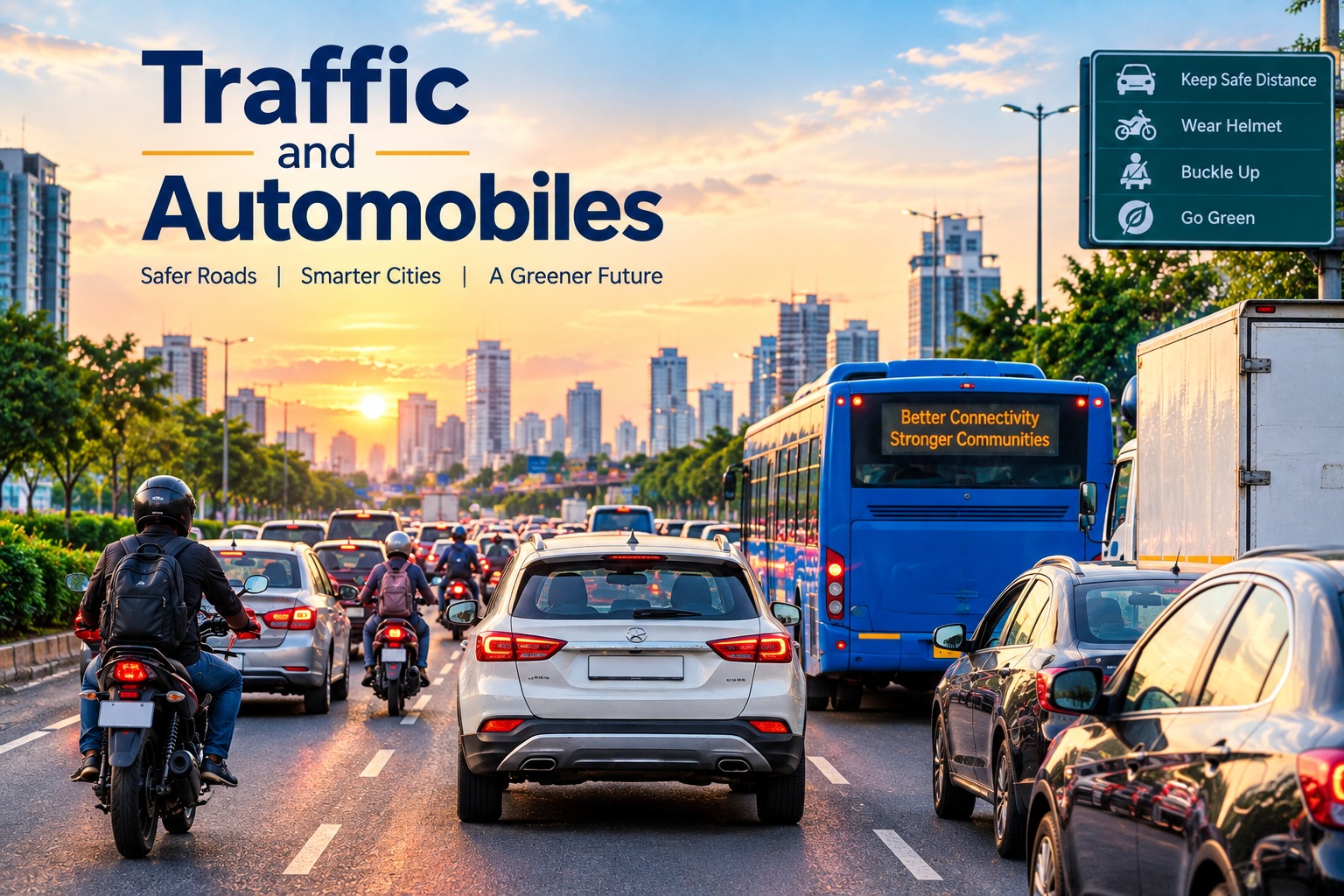
Traffic is the movement of vehicles, pedestrians, bicycles, and public transport on roads and transport networks. When the number of road users becomes greater than the available road capacity, traffic congestion occurs.
Traffic is a normal part of urban life, but severe congestion can waste time, increase fuel consumption, raise pollution levels, create stress, and delay emergency services. Road safety is an equally important concern. The World Health Organization reported approximately 1.19 million road traffic deaths per year globally, with road crashes remaining a major cause of death among children and young people aged 5–29.who+1
A successful traffic system requires more than wider roads. It depends on public transport, reliable traffic signals, safe walking infrastructure, better road design, responsible driving, enforcement, parking management, and intelligent mobility planning.
Quick answer: Traffic is the movement of people and vehicles on roads. Traffic congestion happens when demand exceeds road capacity. It can be reduced through better public transport, intelligent traffic management, safe infrastructure, effective enforcement, and responsible road use.
AI Answer Box
What is traffic?
Traffic is the flow of vehicles, pedestrians, bicycles, and public transport on roads, streets, intersections, and highways.
What causes traffic congestion?
Common causes include:
-
Too many vehicles.
-
Narrow roads.
-
Poorly timed traffic signals.
-
Road construction.
-
Accidents and breakdowns.
-
Illegal parking.
-
Poor lane discipline.
-
Unplanned urban growth.
-
Public transport delays.
-
Weather conditions.
-
Large events and peak-hour travel.
How can traffic congestion be reduced?
Traffic can be reduced through:
-
Reliable public transportation.
-
Carpooling and ride-sharing.
-
Better traffic-signal coordination.
-
Dedicated bus lanes.
-
Safe walking and cycling routes.
-
Strict parking enforcement.
-
Flexible work hours.
-
Improved road design.
-
Real-time traffic information.
-
Faster accident and breakdown clearance.
Why is road safety important?
Road safety protects drivers, passengers, pedestrians, cyclists, and motorcyclists. The WHO recommends a combination of safer infrastructure, safer vehicles, speed management, enforcement, public awareness, and better post-crash care.who
What Is Traffic?
Traffic includes every movement on a transport network, not just cars.
Main road users
-
Cars.
-
Motorcycles and scooters.
-
Buses.
-
Trucks.
-
Auto-rickshaws.
-
Bicycles.
-
Pedestrians.
-
Emergency vehicles.
-
Construction and service vehicles.
Traffic may be:
-
Free-flowing: Vehicles move with minimal delay.
-
Slow-moving: Vehicles move below normal speed.
-
Congested: Demand exceeds available capacity.
-
Gridlocked: Vehicles are unable to move because intersections or road sections are blocked.
Traffic versus congestion
Traffic refers to movement itself. Congestion refers to excessive traffic and delay.
A busy road is not always congested. If vehicles move smoothly at an appropriate speed, the road may be handling high traffic efficiently. Congestion begins when vehicle demand causes significant delay, stop-and-go movement, queue formation, and reduced travel reliability.
What Causes Traffic Congestion?
1. Rapid growth in private vehicles
When vehicle ownership increases faster than road and public-transport capacity, congestion becomes more likely.
Cars and two-wheelers occupy road space while also creating turning, parking, merging, and stopping movements.
2. Limited road capacity
Road capacity may be reduced by:
-
Narrow carriageways.
-
Missing lanes.
-
Weak intersection design.
-
Poor merging areas.
-
Damaged surfaces.
-
Unplanned roadside activity.
-
Construction barriers.
-
Encroachments.
3. Poor traffic-signal coordination
When traffic lights are not coordinated, vehicles may stop repeatedly at successive intersections. Incorrect signal timing can create long queues even when road capacity is adequate.
4. Illegal parking
Vehicles parked on road edges reduce usable carriageway space. Double parking near shops, schools, offices, and markets can create bottlenecks.
5. Road accidents and breakdowns
A single collision or stalled vehicle can block one or more lanes. Delays become worse when recovery teams, police, or ambulances cannot reach the location quickly.
6. Road construction and maintenance
Roadwork, metro construction, drainage projects, utility installation, and bridge repairs can temporarily reduce capacity. Poorly managed diversions may move congestion to nearby streets.
7. Unplanned urban development
Traffic rises when offices, housing, schools, shopping areas, and transport hubs grow without matching improvements in roads and public transport.
8. Peak-hour travel
Morning and evening travel creates concentrated demand. Many people enter and leave the same areas at similar times, causing predictable congestion.
9. Poor lane discipline
Sudden lane changes, wrong-side driving, blocking intersections, and ignoring road markings reduce traffic flow and increase crash risk.
10. Weather and visibility
Heavy rain, flooding, fog, dust, and poor visibility can slow traffic. Waterlogged roads may force vehicles into fewer usable lanes.
11. Large events
Sporting events, festivals, political gatherings, concerts, school functions, and public demonstrations can produce temporary traffic surges.
12. Weak public transport integration
If buses, trains, metro systems, and feeder services are not coordinated, more people may depend on private vehicles.