

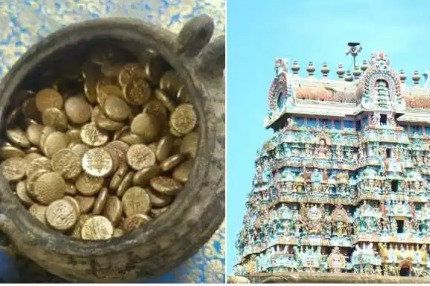
In a fascinating discovery blending faith and history, 103 ancient gold coins were found during renovation work at a temple in Tamil Nadu. The find has sparked excitement among locals and drawn the attention of the Archaeological Department, which has begun examining the coins for their origin and historical significance.
The Discovery
The coins were discovered by workers renovating the Arulmigu Viswanatha Swamy Temple in Chettikulam village, Perambalur district. While digging near the sanctum area, laborers came across a small earthen pot buried beneath the stone floor.
Upon opening it, they found shining gold coins, each wrapped in an old piece of cloth that had partially disintegrated over time. Work was immediately halted, and temple authorities informed the district administration and archaeology officials.
What Experts Found
According to early examinations by experts from the Tamil Nadu State Archaeology Department, the coins appear to be nearly 100–150 years old, possibly dating back to the late 19th or early 20th century, during the British colonial period.
“The craftsmanship and inscriptions suggest they were used during the reign of British India, though a few may belong to earlier regional kingdoms,” said an archaeology officer involved in the analysis.
Officials believe the coins were donations made by devotees or temple patrons, safely buried for preservation generations ago.
Composition and Weight
Preliminary reports indicate the coins are made of pure gold, each weighing between 7 to 8 grams. Most feature royal insignias and English markings, hinting at their connection to colonial-era minting.
They are now under secure custody for scientific examination and valuation.
Cultural and Historical Significance
Temples in Tamil Nadu have long served as repositories of art, wealth, and history, with several discoveries of buried coins, jewelry, and inscriptions reported over the years.
Archaeologists note that such finds help trace patterns of ancient trade, wealth distribution, and community patronage of temples.
“This discovery not only reflects the prosperity of the region’s temple economy but also offers clues about devotional and financial practices of that era,” said a cultural historian from Madurai.
Official Response
The district administration has sealed off the excavation area and ordered the continuation of renovation work under archaeological supervision.
The state archaeology department will soon send a detailed report to the government, and the coins are expected to be displayed in a regional museum after authentication.
Public Reaction
The discovery has turned the temple into a local attraction, with devotees and visitors flocking to see the site. Priests have resumed prayers after brief interruptions, terming the find a “divine blessing revealed through destiny.”
Conclusion
The unearthing of 103 gold coins during temple renovation in Tamil Nadu offers a glimpse into the region’s rich heritage and hidden history.
As experts study the find further, these coins could shed new light on economic and cultural exchanges of South India’s past — proving once again that beneath every sacred stone, a story waits to be told.
❓ FAQs
Q1. Where were the gold coins found?
They were found beneath the floor of Arulmigu Viswanatha Swamy Temple in Chettikulam, Tamil Nadu.
Q2. How many coins were discovered?
A total of 103 gold coins were unearthed during renovation work.
Q3. How old are the coins?
Experts believe they date back around 100–150 years, possibly from the British era.
Q4. What will happen to the coins?
They are currently under archaeological custody for verification and will likely be preserved in a museum.
Q5. Were the coins part of a treasure or donation?
Officials suspect they were offerings or savings buried by temple patrons long ago.
Published on : 5th November
Published by : SMITA
www.vizzve.com || www.vizzveservices.com
Follow us on social media: Facebook || Linkedin || Instagram
🛡 Powered by Vizzve Financial
RBI-Registered Loan Partner | 10 Lakh+ Customers | ₹600 Cr+ Disbursed