

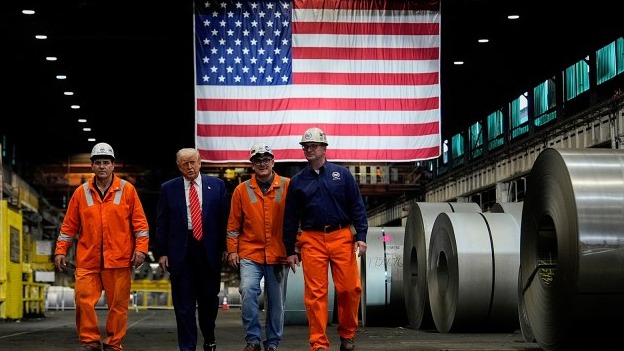
In a significant policy move with wide-ranging global trade implications, former U.S. President Donald Trump has announced a sharp increase in tariffs on steel and aluminium imports, raising them to 50%, effective June 4, 2025.
The decision has sparked immediate reactions from exporters and international trade analysts, who warn that the hike will further strain already fragile trade negotiations with key global partners.
Speaking at a campaign rally, Trump said the move is aimed at protecting American industries from “unfair foreign competition,” particularly citing overcapacity from countries like China and subsidized production elsewhere.
“We must defend American steel and American jobs. Foreign countries have taken advantage of our markets for too long,” Trump stated.
Impact on Exporters
Exporters and trade bodies across Asia and Europe have expressed concern, calling the tariff increase a setback for ongoing bilateral and multilateral trade discussions.
“This kind of abrupt escalation only complicates the environment for trade diplomacy,” said one senior trade official from a leading steel-exporting country. “Negotiating under pressure never leads to sustainable outcomes.”
Some exporters are already bracing for supply chain disruptions, increased costs, and uncertainty in long-term trade contracts.
Potential Global Ripple Effects
Analysts believe the move could trigger retaliatory measures from affected countries, potentially leading to another round of trade tensions similar to those seen during Trump’s previous term in office.
The tariff increase is also expected to raise prices for U.S. manufacturers that rely on imported raw materials, adding inflationary pressure in sectors like automotive, construction, and packaging.
Political Context
The announcement comes as Trump continues to campaign for a second term, leaning heavily on a protectionist economic platform. While supporters praise his “America First” approach, critics argue the policy could damage relationships with U.S. allies and disrupt global trade stability.
What’s Next?
Global markets and policymakers are watching closely as the tariff hike takes effect on June 4. The U.S. Trade Representative’s office has not yet issued specific implementation guidelines, but further details are expected in the coming days.
FAQ
1. What exactly has Trump announced?
Trump has announced a doubling of tariffs on steel and aluminium imports to 50%, effective June 4, 2025. The move is aimed at protecting U.S. industries from foreign competition.
2. Why is Trump increasing these tariffs?
According to Trump, the decision is part of his “America First” economic agenda to protect domestic manufacturing and reduce reliance on foreign metals, especially from countries accused of dumping or providing unfair subsidies.
3. When will the new tariffs take effect?
The increased tariffs will come into effect on June 4, 2025.
4. Which countries are most affected by this move?
Major steel and aluminium exporters to the U.S. such as China, Canada, Mexico, the EU, South Korea, and India could be significantly impacted, depending on exemptions or bilateral trade arrangements.
5. What do exporters say about the tariff hike?
Exporters have expressed concern, stating that the sudden increase complicates ongoing trade negotiations and could disrupt existing supply chains and contracts.
6. Will this affect U.S. consumers and manufacturers?
Yes. U.S. manufacturers that rely on imported steel and aluminium are likely to see higher input costs, which could lead to increased prices for end consumers, particularly in sectors like automotive, construction, and appliances.
7. Could this lead to a trade war?
There is concern that the tariff hike could trigger retaliatory tariffs from affected countries, escalating trade tensions similar to those during Trump’s first term.
8. Has there been any official response from the Biden administration or foreign governments?
As of now, the Biden administration has not issued a formal response. Several trade partners have voiced disapproval and are reviewing possible retaliatory steps.
9. Are any countries exempted from the tariff hike?
No official list of exemptions has been released yet. Trade analysts expect that some U.S. allies may seek or negotiate exemptions.
10. How can businesses prepare for the changes?
Businesses should assess their supply chains, review tariff exposure, explore alternative sourcing options, and stay updated with USTR announcements for any exemptions or clarifications.