

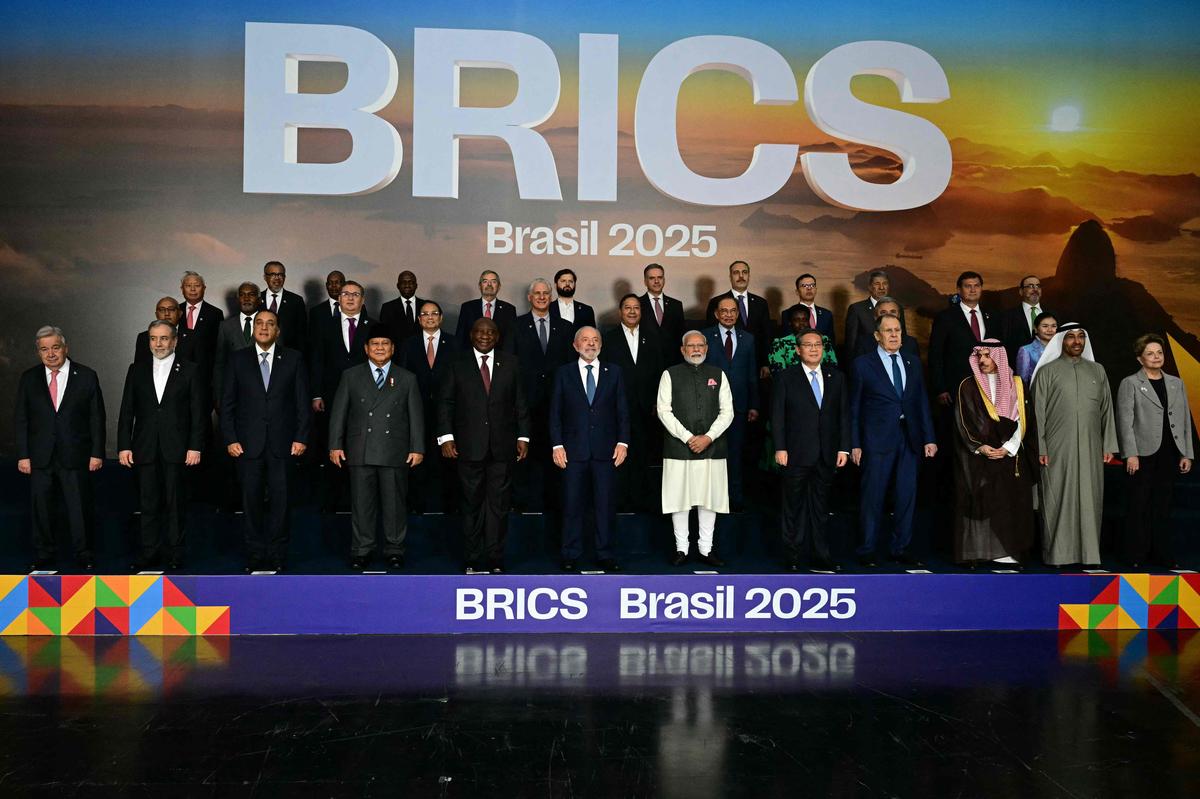
TRUMP’S ECONOMIC NATIONALISM AND ITS RIPPLE EFFECTS ON INDIA AND BRICS
With Donald Trump actively campaigning for a return to the White House in 2024, his doctrine of economic nationalism is once again under global scrutiny. The policy, rooted in “America First” principles, prioritizes domestic manufacturing, protectionist tariffs, and reshoring of jobs — a stance that could carry significant geopolitical consequences, particularly for India and BRICS nations.
Backed by expert geopolitical commentary from Vizzve Geopolitics, this analysis examines how Trump-era trade policies may resurface, affecting emerging economies that rely on exports, strategic alliances, and multilateral platforms.
WHAT IS ECONOMIC NATIONALISM UNDER TRUMP?
Economic nationalism refers to a policy framework where economic decisions are made to benefit the domestic economy first, even if that comes at the cost of global cooperation or free trade.
Trump’s version includes:
High tariffs on imports, particularly from China and other manufacturing-heavy nations
Encouraging reshoring of American companies and job creation within the U.S.
Withdrawing from multilateral trade agreements or renegotiating them for unilateral gains
Tying foreign aid and alliances to economic concessions
This strategy impacts global trade flows, weakens institutions like the WTO, and undermines collaborative platforms such as BRICS.
HOW IT AFFECTS INDIA
India, which has carefully balanced trade with both the U.S. and China, could face renewed uncertainty under a second Trump term.
Key concerns:
Export vulnerability: India’s IT, pharma, and textile sectors could be targeted by protectionist measures
Reduced H-1B visa flexibility: A repeat of past curbs may affect Indian tech professionals and outsourcing firms
Tariff escalation: Key Indian exports like steel, aluminum, and auto components may face higher duties
Disruption in supply chains: Trump’s reshoring push could further fragment global value chains, hurting Indian MSMEs
At the same time, India may benefit from U.S. decoupling from China, positioning itself as an alternative manufacturing hub, if it aligns strategically with U.S. interests.
WHAT IT MEANS FOR BRICS
The BRICS bloc (Brazil, Russia, India, China, South Africa — and now expanded with new members like Egypt and Iran) promotes multipolar global order and de-dollarization. Trump’s return may push these nations to strengthen intra-BRICS cooperation in response to:
U.S. unilateralism and weakening of global trade bodies
Expanded sanctions regimes affecting Russia, China, and BRICS-aligned states
Acceleration of alternative trade currencies and independent financial mechanisms
Trump’s worldview sees alliances as transactional, which may alienate emerging economies, compelling BRICS to become a stronger economic counterweight.
(FAQ) – FREQUENTLY ASKED QUESTIONS
Q1: What is Trump’s economic nationalism?
It’s a protectionist policy prioritizing U.S. industry, employment, and trade surpluses through tariffs, reshoring, and bilateral deals.
Q2: How would this affect India?
India could face higher export tariffs, stricter visa norms, and disrupted supply chains but also opportunities to replace China in global supply routes.
Q3: Will BRICS be weakened or strengthened?
BRICS may unify more strongly to counterbalance U.S. unilateralism, enhancing internal trade, financial systems, and global positioning.
Q4: Can India benefit from Trump’s policies?
Yes, if India positions itself as a strategic partner to the U.S. and attracts supply chain diversification, especially from China-dependent industries.
Q5: Is Trump likely to influence global trade institutions?
If re-elected, Trump may further erode the influence of the WTO and other multilateral economic forums, affecting global trade governance.
Published on: July 15, 2025
Published by: PAVAN
www.vizzve.com || www.vizzveservices.com
Follow us on social media: Facebook || Linkedin || Instagram
🛡 Powered by Vizzve Financial
RBI-Registered Loan Partner | 10 Lakh+ Customers | ₹600 Cr+ Disbursed