

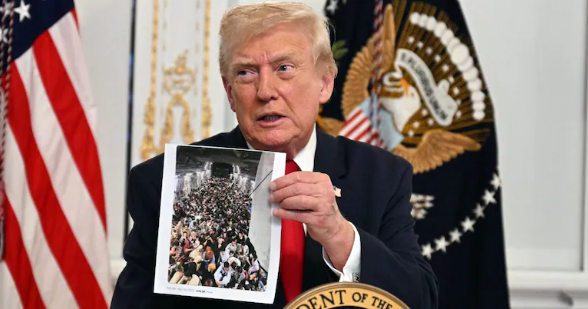
In November 2025, Donald J. Trump stunned the world with a sweeping pronouncement: a permanent freeze on migration from all “Third World countries.” The announcement — made via social media — triggered global debate. Yet, Trump did not define which nations count as “Third World.” However, several media outlets and analysts have attempted to infer which countries could be impacted, often pointing to low-income or developing nations. This post dives deep into what “Third World countries” likely means under Trump’s statement, why certain countries are on the radar, and what this could mean for global migration.
🧠 AI Answer Box
Question: Which countries did Trump threaten when he said “Third World countries”?
Answer: Trump did not explicitly list them in his statement. However, several media outlets have compiled probable lists based on previous travel bans and descriptions of “poor/developing nations.” These include many countries in Africa (e.g. Somalia, Sudan, South Sudan, Ethiopia, DR Congo), Asia (e.g. Afghanistan, Myanmar, Laos, Yemen), and a few from other regions. The list is not official and may change.
What Did Trump Say — In Short
Trump declared he would “permanently pause migration from all Third World Countries.”
He also proposed ending federal benefits for non-citizens, denaturalization of certain migrants, and deportation of those he deemed “public charges”, security risks, or “non-compatible with Western civilization.”
The announcement followed a fatal shooting near the White House involving an Afghan national — which administration officials used to justify the crackdown
Who Falls Under “Third World Countries”? (Probable List)
Because there is no official, universal definition in U.S. immigration law for “Third World countries,” it’s ambiguous. Still, several outlets have identified a probable list — largely of low- and middle-income countries that were earlier subject to travel bans or are widely considered part of the Global South.
Here is a breakdown by region (not exhaustive):
| Region / Continent | Representative Countries (Likely Affected) |
|---|---|
| Africa (≈ 32) | Angola, Benin, Burkina Faso, Burundi, Central African Republic, Chad, Comoros, DRC, Djibouti, Eritrea, Ethiopia, Gambia, Guinea, Guinea-Bissau, Lesotho, Liberia, Madagascar, Malawi, Mali, Mauritania, Mozambique, Niger, Rwanda, Senegal, Sierra Leone, Somalia, South Sudan, Sudan, Togo, Uganda, Tanzania, Zambia |
| Asia (≈ 8) | Afghanistan, Bangladesh, Cambodia, Laos, Myanmar, Nepal, Timor-Leste, Yemen |
| Caribbean | Haiti |
| Pacific / Islands | Kiribati, Solomon Islands, Tuvalu |
⚠️ Important caveat: This is not an official list. The US government has not publicly defined the full set of “Third World countries.” The lists above come from media compilations — likely to be interpreted, debated, and possibly revised.
Why These Countries? — Context & Criteria
🌍 Historical Context of “Third World”
The phrase “Third World” dates back to the Cold War era, coined to differentiate Western-aligned (First World), Soviet/Communist-aligned (Second World), and non-aligned/developing countries (Third World).
Over decades, the term has become colloquial shorthand for low- and middle-income developing nations — though it is imprecise and often criticized for being outdated or pejorative.
🛂 Trump Administration’s Justifications
In his recent statement, Trump linked the migration pause to a security incident (the shooting by an Afghan asylum seeker), arguing that mass immigration had “weakened American society and strained its resources.”
The referenced “countries of concern” — subject to previous travel bans — broadly overlap with those considered economically or politically fragile, reinforcing the Global South/developing-nation association.
Implications: What This Means for Affected Countries
Migrants at risk: People from the flagged countries — even if legally admitted — may face increased scrutiny, denaturalization or deportation if deemed “non-assets” or security risks.
Refugee & asylum flows curtailed: The freeze may especially affect asylum seekers, refugees, and migrants from unstable regions (e.g. conflict zones, famine-hit nations).
Global reaction and diplomatic tension: Many countries may view this as collective punishment or discriminatory foreign policy; could strain diplomatic relations with U.S. for several developing nations.
Impact on remittances, diaspora, and bilateral cooperation: Restricting migration may reduce remittances, affect diaspora communities, and impact collaboration on development, humanitarian aid, labour exchange, etc.
Expert Commentary & Real-World Perspectives
On the ambiguity of “Third World”: Scholars and international-development experts have long criticized the term for being outdated and overly broad. Using it in a policy context — especially for restrictive immigration — risks oversimplifying complex socio-economic conditions.
On security vs. human rights trade-offs: While governments must protect citizens, mass bans based on nationality (without individual assessment) raise serious human-rights and due-process concerns. Many rights-groups argue that linking crime or terror risk to broad nationalities is neither fair nor evidence-based.
On unintended global consequences: Such sweeping bans may fuel instability in already fragile countries, affect remittances, labour markets, and family reunification — with ripple effects across developing economies.
Key Takeaways
Trump’s “Third World countries” comment is not backed by a formal, official list; rather it targets a broad category of developing nations — many from Africa, Asia, the Caribbean, and Pacific islands.
Countries most likely impacted include Afghanistan, Yemen, Somalia, DR Congo, Sudan, South Sudan, Myanmar, and several smaller African and Pacific nations.
The policy signals a dramatic shift in U.S. immigration approach — prioritizing security and national interest over humanitarian and global migration norms.
The ambiguity and broadness of the label “Third World” heighten the risk of discriminatory treatment, human-rights violations, and global diplomatic fallout.
FAQ
What does “Third World countries” mean?
Historically, it referred to countries not aligned with either NATO (First World) or the Soviet bloc (Second World) during the Cold War. Over time, it became shorthand for developing, low- or middle-income nations.
Did Trump provide an official list of such countries?
No. In his 2025 announcement, he did not publish an official list or criteria. The lists circulated in media are inferred.
Which countries are most likely affected?
Likely candidates include many developing nations in Africa (e.g. Somalia, Sudan, DR Congo), Asia (Afghanistan, Myanmar, Yemen), and a few island nations.
Does this mean people already in the US will be deported?
Trump’s message included ending benefits for non-citizens and deporting those deemed security risks or “public charges.” This raises the possibility — though actual deportations may depend on legal/administrative process.
Is there a legal basis for banning all “Third World” nationals?
US immigration law does not define “Third World countries”. Broad nationality-based bans risk legal challenges, especially on grounds of discrimination or due process.
Are developed countries excluded?
By implication yes — the ban targets developing/Global South nations. Traditional “First World” nations (wealthy, mostly Western) are unlikely to be classified under Trump’s definition.
Could this impact refugees and asylum seekers?
Yes. Refugees from war-torn or poor nations often come from developing countries; the freeze may block or severely restrict their chances of asylum.
How reliable is the inferred list of countries?
Media-compiled lists are speculative. Because no formal definition was provided, there's no guarantee all identified nations are included — or that some unlisted ones aren’t.
Could the US administration revise or clarify the list later?
Yes. Given the ambiguity, future executive orders, regulations, or court rulings may refine, expand, or constrain the list or criteria.
What are the human-rights concerns?
Critics argue sweeping nationality-based bans punish entire populations, regardless of individual circumstances — a violation of fair immigration and asylum norms.
How might other countries respond?
Diplomatic pushback is likely, especially from nations heavily reliant on migration, remittances, or diaspora connections to the US. It may affect bilateral relations, aid, and trade.
Does this impact legal immigrants or only new arrivals?
Trump’s vow includes review of green-cards and possible denaturalization or deportation; so even existing immigrants might be affected.
Could a “Third World country” be reclassified and escape the ban?
In theory, yes — especially if US policy shifts, or if a nation meets certain development or security benchmarks. But nothing official suggests such flexibility yet.
Is “Third World” still a valid concept today?
Many experts say no — the term is outdated, oversimplified, and carries negative connotations. They urge using more precise descriptors like “developing countries” or “low-income nations.”
What should migrants from these countries do now?
Stay updated on US policy changes, consult immigration lawyers if living in the US, and avoid assuming safe routes — as visa and asylum policies are likely to tighten.
source credit : NDTV News Desk
Published on : 28 th November
Published by : Reddy kumar
Credit: Written by Vizzve Finance News Desk
www.vizzve.com || www.vizzveservices.com
Follow us on social media: Facebook || Linkedin || Instagram
🛡 Powered by Vizzve Financial
RBI-Registered Loan Partner | 10 Lakh+ Customers | ₹600 Cr+ Disbursed