

Not Just January 1st: India’s True New Year(s)
In a country where every region tells its own story, New Year celebrations in India don't follow a single date like the Gregorian calendar. Instead, across March–April, different communities welcome a new year of hope, harvest, and heritage through festivals like:
Ugadi – Celebrated in Andhra Pradesh, Telangana, Karnataka
Gudi Padwa – Celebrated in Maharashtra and Goa
Cheti Chand – Celebrated by the Sindhi community worldwide
Though different in name, these festivals are united by one concept: the arrival of spring and a fresh lunar cycle.
1. Ugadi – The Festival of Beginnings (March/April)
“Yuga” means age, and “Adi” means beginning – Ugadi literally marks the start of a new era. Observed on the first day of the Chaitra month, Ugadi celebrates:
Chaitra Shukla Pratipada: The first day after the new moon
Creation of the Universe as per Hindu mythology
Panchanga Shravanam – Hearing the astrological predictions for the year
Rituals include:
Cleaning and decorating homes with mango leaves and rangoli
Oil bath and wearing new clothes
Preparing Ugadi Pachadi – a 6-taste chutney symbolizing life’s mix of emotions (sweet, sour, bitter, salty, pungent, and astringent)
2. Gudi Padwa – Maharashtra’s Joyful New Year
Celebrated on the same day as Ugadi, Gudi Padwa marks the harvest season and the mythical coronation of Lord Rama after his return to Ayodhya.
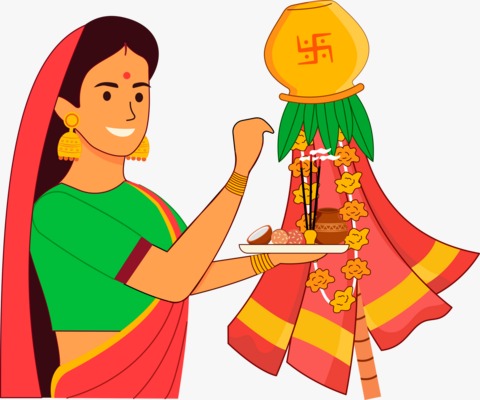
The most iconic element is the Gudi – a silk cloth-wrapped bamboo stick topped with a pot (kalash), neem leaves, and flowers. It’s hoisted outside homes as a symbol of victory, prosperity, and warding off evil.
Highlights of Gudi Padwa:
Traditional food: Puran Poli, Shrikhand, and Kairi Panha
Ritual oil baths and pooja
Reading the Panchang (Hindu almanac) for predictions
Street processions and community cultural events
3. Cheti Chand – Sindhi New Year and the Arrival of Jhulelal
Cheti Chand falls on the second day of Chaitra month, marking the birth anniversary of Jhulelal, the revered water deity of Sindhis.
For Sindhis, Cheti Chand is both a religious and cultural new year, especially important after partition, as it keeps their identity alive across the world.
Core elements of Cheti Chand:
Processions carrying Baharana Sahib (a symbolic idol of Jhulelal) to rivers or ponds
Singing Sindhi devotional songs
Offering prasad of fruits, sweets, and water-soaked grains
Emphasizing community unity and charity
Why These Festivals Matter in Modern India
Spiritual Alignment: They mark a cosmic beginning – syncing lunar cycles, planetary transitions, and agricultural timing.
Cultural Identity: In a world where everything is moving towards uniformity, these festivals preserve regional traditions.
Seasonal Awareness: These celebrations are deeply tied to the changing weather, harvests, and health routines (like eating neem or jaggery).
Social Reset: Just like January 1st, these are seen as perfect days for new goals, home purchases, or business ventures.
FAQs
Q1: Are Ugadi, Gudi Padwa, and Cheti Chand the same festival?
They occur around the same time and mark the New Year, but they belong to different regions and traditions.
Q2: Is it a good time to start new ventures?
Yes! These days are considered auspicious (Shubh Muhurat) for starting businesses, home deals, and personal resolutions.
Q3: Why is neem used in Ugadi or Gudi Padwa?
Neem has medicinal properties and represents life's bitterness—eating it symbolizes resilience and acceptance of all emotions.
Q4: How is Cheti Chand different from other Hindu festivals?
Cheti Chand is uniquely Sindhi, celebrating Jhulelal, a deity of water and protection, blending spiritual and community identity.
Conclusion: One Country, Many New Years
Whether it’s a gudi raised high, neem chutney savored, or river offerings to Jhulelal—these New Year festivals remind us that India celebrates not just with time, but with meaning.
Each is a renewal of culture, community, and cosmic connection.
Published on : 2nd August
Published by : SMITA
www.vizzve.com || www.vizzveservices.com
Follow us on social media: Facebook || Linkedin || Instagram
🛡 Powered by Vizzve Financial
RBI-Registered Loan Partner | 10 Lakh+ Customers | ₹600 Cr+ Disbursed