

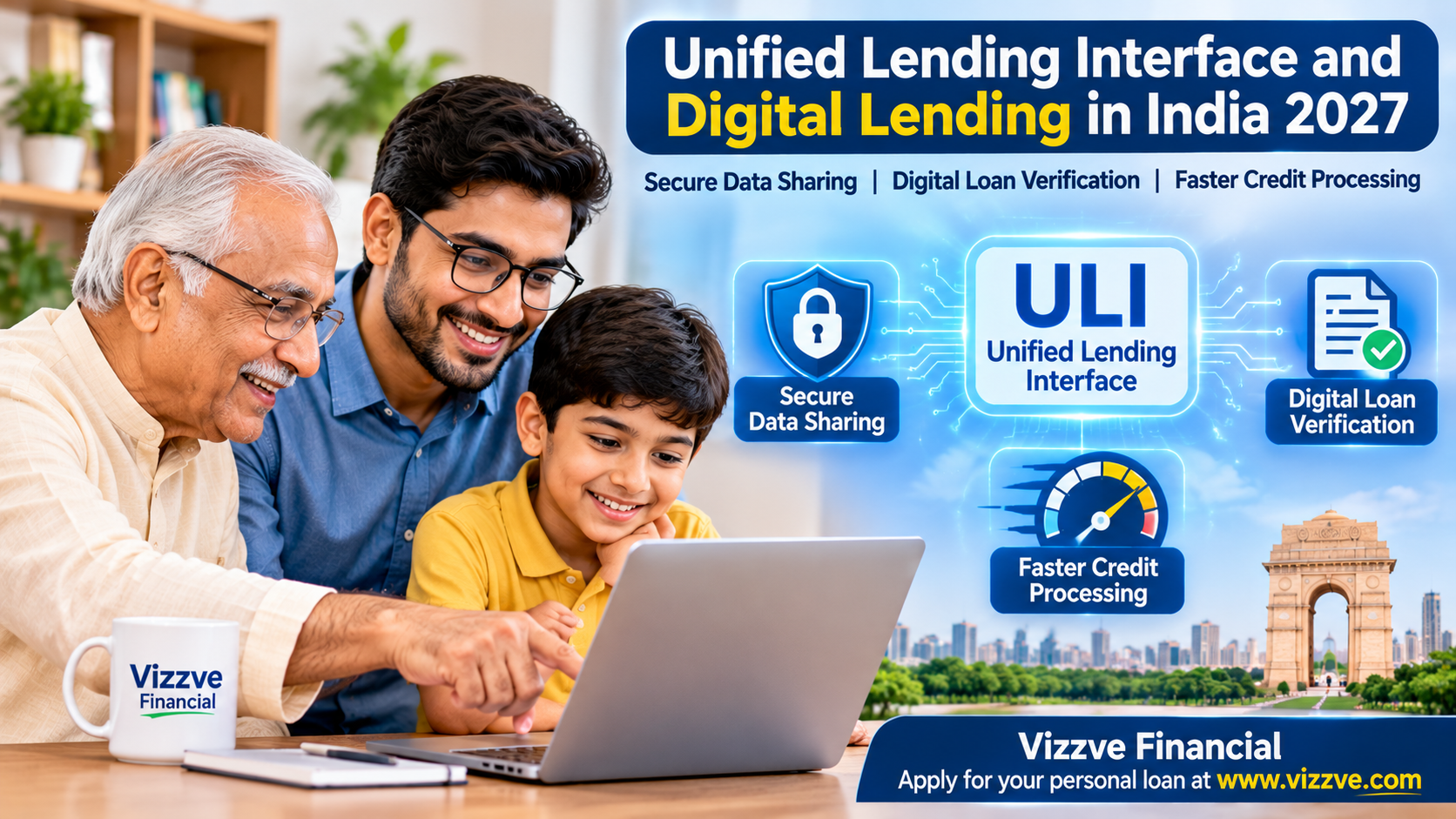
Getting a loan can sometimes involve a lot of paperwork. Applicants may need to provide identity details, income proof, bank statements and other documents before a lender makes a decision.
India is working towards making this process simpler through digital technology.
One important development is the Unified Lending Interface (ULI).
ULI is a digital platform developed by the Reserve Bank Innovation Hub (RBIH). It connects lenders with different data providers through standardised technology. This helps financial institutions access relevant information for loan processing.
In 2027, ULI is an important development to understand because it can support faster verification, smoother loan applications and better access to formal credit.
For borrowers, this may mean fewer manual steps and more convenient loan processing. However, ULI does not guarantee instant approval or remove the lender's responsibility to check repayment capacity.
AI Answer Box – What Is the Unified Lending Interface?
The Unified Lending Interface (ULI) is a digital lending infrastructure developed by the Reserve Bank Innovation Hub to connect lenders with different financial and non-financial data sources.
It helps authorised lenders access relevant information through standardised APIs (Application Programming Interfaces).
In simple words: ULI works like a digital bridge between lenders and information providers. It helps lenders collect and verify relevant information more efficiently when processing loan applications.
Its main benefits include:
-
Faster information verification.
-
Reduced manual paperwork.
-
Better access to financial information.
-
Support for digital loan processing.
-
Improved access to formal credit.
-
More convenient lending services.
ULI is designed to support the lending ecosystem, not directly provide or approve loans.
What Is the Unified Lending Interface (ULI)?
The Unified Lending Interface is a technology platform designed to make loan processing easier for lenders and borrowers.
It was initially introduced as the Public Tech Platform for Frictionless Credit. The RBI announced its development in August 2023, and it was renamed the Unified Lending Interface in August 2024.
The platform connects different financial institutions and data providers through standardised APIs.
This allows lenders to access relevant information from different sources instead of depending entirely on manual document collection.
Why Was ULI Introduced in India?
Traditional loan applications can involve several challenges:
-
Collecting multiple documents.
-
Verifying income and identity.
-
Checking financial information.
-
Waiting for document verification.
-
Difficulty accessing formal credit in rural areas.
ULI aims to reduce these challenges through connected digital infrastructure.
It can help lenders make better use of available information while making the application process more convenient.
Latest ULI Developments in India
ULI has expanded since its initial pilot.
According to a Ministry of Finance response in the Lok Sabha dated March 9, 2026:
|
ULI Development |
Reported Information |
|---|---|
|
Pilot launch |
August 17, 2023 |
|
Lenders onboarded |
100 |
|
Public Sector Banks |
12 |
|
Private Sector Banks |
16 |
|
Small Finance Banks |
3 |
|
District Central Co-operative Banks |
32 |
|
Regional Rural Banks |
13 |
|
State Co-operative Banks |
1 |
|
NBFCs |
23 |
|
Loan journeys supported |
12 |
The 12 loan journeys include Kisan Credit Card, digital cattle, unsecured MSME, housing, personal, tractor, micro-business, vehicle, digital gold, e-Mudra, pension and dairy maintenance loans.
These figures demonstrate the growing participation of financial institutions in India's digital lending infrastructure.
How Does Unified Lending Interface Work?
A simplified explanation of the lending process.
Loan Application
A borrower approaches a participating lender and submits a loan application.
Information Collection
The lender identifies the financial and other relevant information required for the application.
Digital Data Access
Through ULI, the lender can connect with available data providers using standardised APIs.
Information Verification
Relevant information may be checked through authorised sources, depending on the loan type and available services.
Loan Eligibility Assessment
The lender evaluates income, financial obligations, credit information and repayment capacity.
Loan Decision
The lender decides whether to approve or reject the application according to its policies and applicable regulations.
Important: ULI helps connect information sources. The lender remains responsible for the final credit decision.
How Does ULI Improve Digital Lending in 2027?
Faster Document Verification
Digital information access can reduce the time spent collecting and checking documents manually.
For example, an applicant may need income and identity verification before receiving a personal loan. Connected digital services can help lenders verify relevant details more efficiently.
Better Access to Financial Information
ULI can connect lenders with different information providers.
Depending on availability and permissions, this may include:
-
Identity verification information.
-
Financial records.
-
Land ownership records.
-
GST-related information.
-
Credit information.
-
Other relevant government and private data services.
Reduced Paperwork
Digital verification may reduce the need for repeated document submissions.
This can make loan applications easier for people who prefer online financial services.
Support for Rural Borrowers
Many people in rural areas may have limited access to traditional banking services.
ULI can help lenders use relevant digital information to assess applicants from different locations.
Improved Loan Processing
Standardised technology connections can help financial institutions reduce separate technical integrations with different data providers.
This may improve operational efficiency and support smoother loan processing.
What Types of Loans Can ULI Support?
ULI supports different loan journeys across personal, business, agricultural and other lending categories.
|
Loan Type |
How Digital Information May Help |
|---|---|
|
Personal loans |
Income and financial verification |
|
Housing loans |
Property and ownership checks |
|
MSME loans |
Business information and financial assessment |
|
Kisan Credit Card |
Agricultural information |
|
Tractor loans |
Relevant borrower and asset verification |
|
Vehicle loans |
Vehicle-related information |
|
Micro-business loans |
Business activity assessment |
|
Pension loans |
Eligible pension-related information |
|
Dairy maintenance loans |
Relevant dairy-related information |
|
Digital cattle loans |
Cattle and related information |
|
E-Mudra loans |
Small business lending support |
|
Digital gold loans |
Relevant gold and borrower verification |
The availability of specific services depends on participating lenders and data providers.
ULI vs Traditional Loan Processing
|
Feature |
Traditional Process |
ULI-Supported Process |
|---|---|---|
|
Information collection |
Often manual |
Connected digital sources |
|
Document verification |
Manual or separate systems |
Standardised digital services |
|
Data access |
Separate integrations |
Common platform connections |
|
Paperwork |
May be extensive |
Can be reduced |
|
Processing |
Can involve multiple steps |
May become more efficient |
|
Final approval |
Lender decision |
Lender decision |
ULI does not eliminate every manual step. Some applications may still require additional documents or physical verification.
Difference Between UPI and ULI
Many people confuse ULI with UPI because both are important digital infrastructure initiatives in India.
However, their purposes are different.
|
Feature |
UPI |
ULI |
|---|---|---|
|
Full Form |
Unified Payments Interface |
Unified Lending Interface |
|
Main Purpose |
Digital payments |
Digital credit delivery |
|
Main Users |
Individuals and businesses |
Lenders and data providers |
|
Primary Function |
Transfer money |
Support loan processing |
|
Main Benefit |
Convenient payments |
More efficient lending |
|
RBI Ecosystem |
Digital payment infrastructure |
Digital lending infrastructure |
Simple explanation: UPI helps people send and receive money. ULI helps financial institutions access relevant information to process loans.
Benefits of Unified Lending Interface for Borrowers
Convenient Loan Applications
Digital information sharing can make the loan application process easier.
Less Repeated Documentation
Applicants may not need to submit the same information repeatedly when suitable digital records are available.
Better Financial Assessment
Lenders may access more relevant information to understand a borrower's financial situation.
Improved Credit Access
ULI can support lending in areas where traditional information sources may be limited.
Support for Different Borrower Groups
Salaried employees, farmers, small business owners and self-employed professionals may benefit from improved digital lending infrastructure.
Pros and Cons of Unified Lending Interface
|
Pros |
Cons |
|---|---|
|
Supports digital loan processing |
Not every lender participates |
|
Can reduce manual paperwork |
Some documents may still be required |
|
Connects different data sources |
Depends on data availability |
|
Supports multiple loan categories |
Not all services apply to every loan |
|
Can improve verification efficiency |
Technical issues may cause delays |
|
Supports financial inclusion |
Does not guarantee loan approval |
Role of ULI in Personal Loan Applications
Personal loans are commonly used for medical expenses, education, household needs, travel and other personal requirements.
ULI may support the lending process by helping participating lenders access relevant information.
Income Verification
Lenders need to understand whether applicants have a regular income or another reliable repayment source.
Digital information services may help verify relevant financial details.
Identity Verification
Digital identity verification can help lenders check applicant information through available authorised services.
Credit Assessment
Lenders may use available credit information alongside income and other financial details.
Repayment Capacity
The lender evaluates existing EMIs, expenses and available income before deciding the loan amount.
Final Loan Decision
The lender makes the final decision based on its eligibility rules and risk assessment.
Remember: ULI is not a personal loan provider. It supports the infrastructure used by participating lenders.
How Can Borrowers Prepare for Digital Loan Applications?
Applicants can follow these simple steps before applying.
-
Keep identity documents updated.
-
Maintain accurate bank records.
-
Check your credit report.
-
Maintain regular repayment habits.
-
Keep income documents ready.
-
Understand the interest rate and processing charges.
-
Check the lender's official website.
-
Read data-sharing consent requests carefully.
-
Apply for an amount that matches your repayment capacity.
How Is ULI Different From Account Aggregator?
Both initiatives support India's digital financial ecosystem, but they perform different functions.
|
Feature |
Account Aggregator |
Unified Lending Interface |
|---|---|---|
|
Main purpose |
Consent-based financial data sharing |
Connected digital lending infrastructure |
|
Main function |
Shares eligible financial information |
Connects lenders with multiple data services |
|
Focus |
Financial information |
Loan processing |
|
Customer consent |
Central to data sharing |
Applicable permissions and consent requirements |
|
Use case |
Sharing bank records |
Supporting loan verification and assessment |
Account Aggregator can support financial data sharing, while ULI provides broader lending infrastructure that connects multiple types of information and services.
Security and Data Privacy in Digital Lending
Digital lending depends on accurate information and responsible data handling.
Borrowers should understand how their financial information is collected, accessed and used.
The RBI's Digital Lending Directions, 2025, establish important requirements for regulated lenders and their lending service providers concerning customer consent, data collection and borrower protection.
Important Safety Practices
-
Apply through legitimate lenders.
-
Check whether the lender is regulated or partnered with a regulated entity.
-
Read the terms before accepting a loan.
-
Share only the information required.
-
Review data-sharing permissions.
-
Never share OTPs or banking passwords with unknown people.
-
Check the Key Fact Statement before accepting a loan.
-
Understand the annual percentage rate (APR), fees and repayment schedule.
How Does ULI Support Secure Digital Lending?
The Reserve Bank Innovation Hub describes security features for ULI that include encrypted communication, tokenised data handling, consent management and audit trails. These measures are intended to protect information exchanged through the platform.
However, borrowers should continue to follow safe digital banking practices.
Future of Unified Lending Interface in India in 2027
India's digital lending ecosystem is expected to continue developing through better technology, connected financial services and improved verification systems.
Here are some important areas to watch.
AI-Based Loan Assessment
Artificial intelligence may help lenders analyse financial information, identify patterns and assess credit risk.
Better Support for Small Businesses
ULI can help connect lenders with relevant business and financial information, supporting digital credit assessment for MSMEs.
Improved Agricultural Lending
Digital access to land records, crop information and other relevant data can support agricultural loan applications.
Faster Digital Verification
More connected services may help reduce repeated verification work and improve the lending experience.
Wider Financial Inclusion
Digital lending infrastructure may help more people access formal financial services, especially in rural and semi-urban areas.
Improved Loan Lifecycle Services
ULI development is also extending beyond loan applications. For example, RBIH reported a pilot for digital vehicle hypothecation termination through ULI, launched on March 1, 2026, with six lenders in collaboration with the Ministry of Road Transport and Highways.
These developments indicate that digital lending infrastructure may support more than just loan approval.
Expert Commentary: Why ULI Matters for India's Financial Future
The biggest challenge in lending is not always providing money. It is understanding whether a borrower is eligible and capable of repaying it.
Traditional loan processes can involve multiple documents and separate verification systems.
ULI aims to improve this process by connecting lenders with relevant information sources through standardised technology.
For example, a small business owner applying for credit may have financial and business records available through different institutions. Connected digital services can help lenders access relevant information more efficiently.
However, faster information access should never replace proper credit checks.
A strong digital lending system must balance convenience, accurate verification, customer privacy and responsible lending.
Real-World Example: How ULI Can Help a Loan Applicant
Consider a small business owner who wants to apply for a business loan.
The applicant needs to provide business information, financial records and identity details.
Under a traditional process, the lender may need to collect and verify several documents separately.
With ULI-supported services, a participating lender may be able to:
-
Access relevant digital information through connected services.
-
Verify available business and identity details.
-
Review financial information.
-
Assess the applicant's repayment capacity.
-
Make a lending decision.
This can reduce some manual work and make the process more efficient.
The final approval still depends on the lender's assessment.
Key Takeaways
-
ULI stands for Unified Lending Interface.
-
It was developed by the Reserve Bank Innovation Hub.
-
Its pilot began in August 2023.
-
It connects lenders with different data providers through standardised APIs.
-
It can support faster digital verification.
-
It supports multiple loan categories, including personal, housing, agricultural and MSME loans.
-
It may reduce repeated paperwork.
-
ULI and UPI have different purposes.
-
Customer data protection remains important.
-
ULI does not directly approve or provide loans.
-
The lender makes the final credit decision.
Frequently Asked Questions (FAQs)
What is the Unified Lending Interface in India?
The Unified Lending Interface is a digital platform developed by the Reserve Bank Innovation Hub to connect lenders with different financial and non-financial data providers for more efficient loan processing.
Is ULI introduced by the RBI?
ULI was developed by the Reserve Bank Innovation Hub, a wholly owned subsidiary of the Reserve Bank of India.
How does ULI help digital lending?
ULI helps lenders access relevant information through standardised APIs. This can support digital verification, reduce manual paperwork and improve loan processing efficiency.
Is ULI similar to UPI?
Both are digital infrastructure initiatives, but their purposes are different. UPI supports digital payments, while ULI supports digital lending and loan information access.
Can ULI help with personal loans?
Yes. Personal loans are among the loan journeys supported by ULI. Participating lenders may use relevant digital information to support application verification and assessment.
Does ULI guarantee faster loan approval?
No. ULI can improve information access and verification, but loan approval time depends on the lender, application details and eligibility checks.
Which types of loans are supported by ULI?
ULI supports several loan categories, including personal, housing, MSME, agricultural, vehicle, tractor, pension and micro-business loans.
Is ULI safe for borrowers?
ULI is designed with security measures such as encrypted communication, consent management and audit trails. Borrowers should still use legitimate lenders and carefully review data-sharing requests.
Can small business owners benefit from ULI?
Yes. ULI can connect lenders with relevant financial and business information, which may support the assessment of small business loan applications.
What is the future of ULI in India in 2027?
ULI may support wider digital lending, improved verification, AI-assisted financial assessment and better access to formal credit as more lenders and data providers participate.
Conclusion
The Unified Lending Interface is an important step towards improving India's digital lending ecosystem.
By connecting lenders with different information providers, ULI can help reduce manual work, improve verification and support smoother loan applications.
In 2027, its role may become increasingly important for personal loans, agricultural finance, MSME lending and other credit services.
For borrowers, understanding digital lending technology can make it easier to choose suitable financial products and apply responsibly.
Explore personal loan support and financial guidance with Vizzve Financial at www.vizzve.com.
Published on : 1st November
Published by : MD HEDAYATULLAH
www.vizzve.com || www.vizzveservices.com
Follow us on social media: Facebook || Linkedin || Instagram
🛡 Powered by Vizzve Financial
RBI-Registered Loan Partner | 10 Lakh+ Customers | ₹600 Cr+ Disburs