

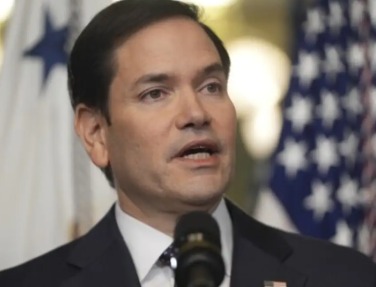
In a recent high-profile statement, Marco Rubio made it clear that U.S. efforts to strengthen strategic ties with Pakistan “will not come at the expense of our relationship … with India.” While the lines may sound reassuring, the remark actually reflects deeper shifts in India’s foreign-policy environment — especially in how India manages its relationships with major powers and neighbors.
Rubio’s comment arrives against the backdrop of renewed tensions between India and Pakistan, evolving Indo-US dynamics, and India’s own recalibration of foreign-policy priorities. For India, the remark is both a signal and a test: a signal that Washington sees multi-directional relationships in South Asia, and a test of how New Delhi will respond amidst shifting strategic currents.
Key Implications for India’s Foreign Policy
1. Multipolar Diplomacy Intensifies
Rubio’s statement underscores that the U.S. wishes to engage Pakistan more deeply while maintaining the India partnership. This implicitly affirms India’s multi-vector diplomacy — where it will no longer accept zero-sum logic (i.e., that another country’s gain equals India’s loss). India must manage this environment by strengthening its own strategic autonomy.
2. India’s Strategic Leverage Increases
By stressing that U.S.–Pakistan ties aren’t meant to undermine India, the U.S. is indirectly signalling to India: “We value you, but we also have broader regional interests.” For India, this means greater leverage but also greater responsibility — to demonstrate why India remains a critical partner. India must reinforce its value proposition: economic-technological cooperation, defence ties, Indo-Pacific alignment.
3. Neighbourhood Diplomacy Under Spotlight
Rubio’s comment also touches on India–Pakistan dynamics. India, while pursuing its security and territorial interests (especially in Kashmir and border zones), must anticipate that external powers will engage Pakistan too. This could mean India needs to move beyond confrontation and think of stable frameworks for relations with Pakistan — while retaining its core red-lines.
4. Managing Expectation vs Autonomy
The statement reflects a subtle pressure: India should accept the U.S.’s broader regional ambitions (including Pakistan) without perceiving itself sidelined. India’s foreign-policy challenge is to co-operate without compromising autonomy — retaining its decision-making freedom in pivotal matters like defence, energy, and neighbourhood engagement.
What This Means in Practice
Defence and Defence Industry: India must deepen strategic defence ties with the U.S. (joint exercises, supply chains, technology transfer) to remain indispensable in Washington’s calculus.
Trade & Economy: As the U.S. engages other South Asian partners, India must stay competitive — by reforming trade policy, attracting investment, and diversifying partnerships (e.g., East Asia, Africa).
Pakistan Strategy: India should enhance its diplomatic channels, crisis communication, and military readiness — but also consider possibilities for confidence-building to avoid escalations that may invite external mediation.
Global South Leadership: With global geopolitics shifting (China’s role, Indo-Pacific strategies, climate diplomacy), India can enhance its leadership by positioning itself as a responsible power, not just a balancing factor.
❓ FAQs
Q1. Why did Marco Rubio’s comment matter for India?
Because it revealed that the U.S. plans to engage both India and Pakistan simultaneously — signalling that India must adapt to a region where no single partner will dominate exclusively.
Q2. Does this mean U.S.–India ties will weaken?
Not necessarily. The U.S. reaffirmed that its relationship with India is “deep, historic and important.” The challenge for India is to make that relationship more substantive rather than simply symbolic.
Q3. How should India respond to this diplomacy shift?
India should strengthen its strategic collaborations (defence, tech, supply chains), maintain its territorial and security priorities, and enhance its ability to act independently in its neighbourhood.
Q4. What does this mean for India–Pakistan relations?
It means external actors may engage Pakistan without necessarily compromising India’s interests. India needs to maintain strategic clarity while preparing for a more engaged Pakistan regionally.
Q5. Will India have to make compromises?
India doesn’t have to compromise its core interests, but it may need to be more flexible in how those interests are advanced — focusing on strategic depth, diplomatic agility, and economic integration rather than confrontation alone.
Final Word
Marco Rubio’s seemingly simple comment masks a larger message about the changing rules of engagement in South Asian diplomacy. For India, this is a moment of opportunity — to elevate its role from that of a regional player to a global partner. The key will lie not in reacting to shifting alliances, but in proactively shaping them — building partnerships that reinforce India’s interests, protect its autonomy, and project its vision for a stable, cooperative region.
Published on : 27th October
Published by : SMITA
www.vizzve.com || www.vizzveservices.com
Follow us on social media: Facebook || Linkedin || Instagram
🛡 Powered by Vizzve Financial
RBI-Registered Loan Partner | 10 Lakh+ Customers | ₹600 Cr+ Disbursed
https://play.google.com/store/apps/details?id=com.vizzve_micro_seva&pcampaignid=web_share