

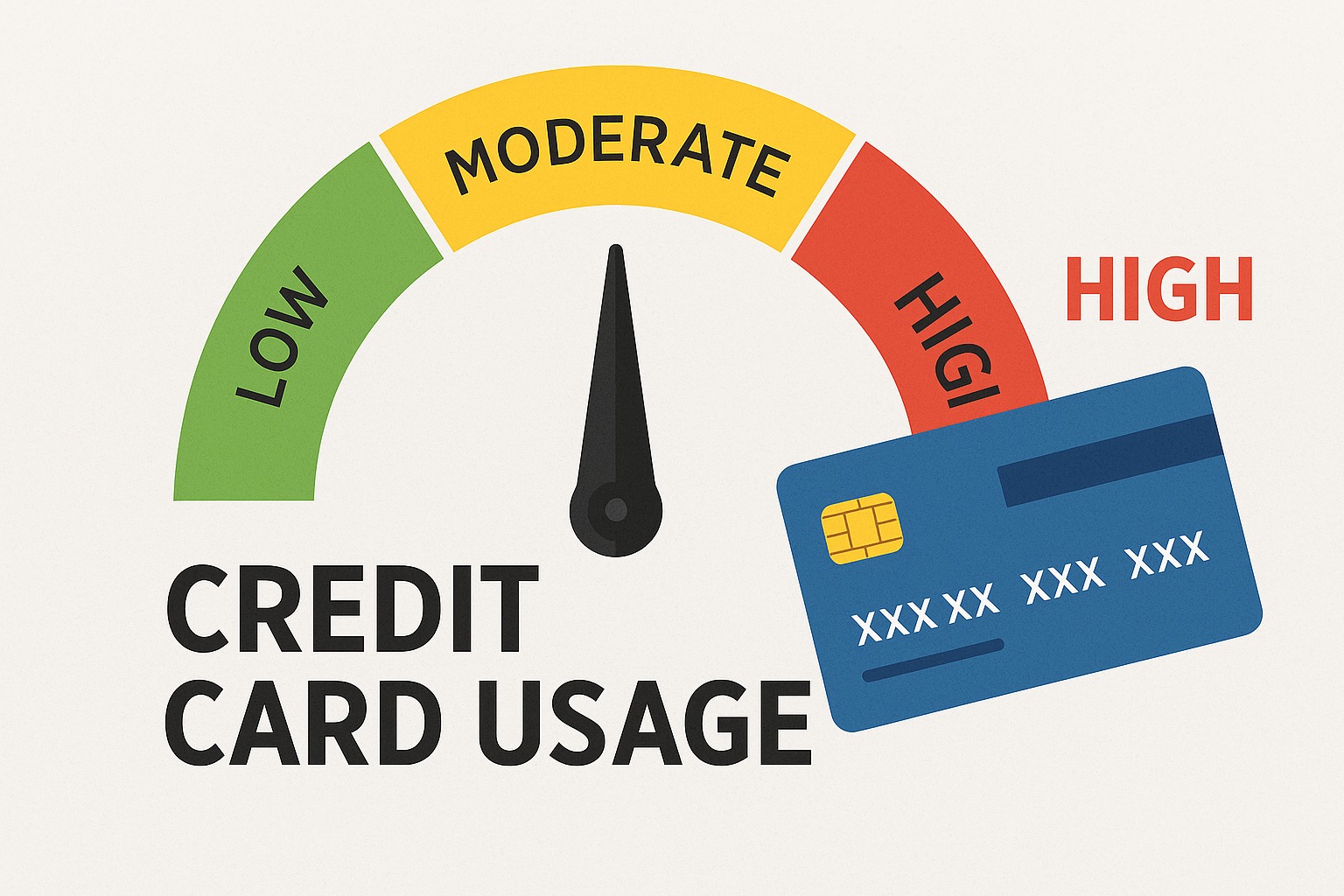
Many people assume that as long as they pay their credit card bill on time, their credit score will stay strong.
But lenders look much deeper than just timely payments — and one major factor that can harm your loan eligibility is high credit card utilisation.
Even if you never miss a due date, using too much of your card limit can make banks consider you a high-risk borrower, especially in 2025–26, where lenders have tightened approval criteria for home loans, personal loans and credit cards.
Here’s why high usage matters and how it impacts your chances of getting a loan.
1. High Utilisation Signals Credit Dependency
Credit card utilisation refers to the percentage of your available limit you use.
For example:
Card limit: ₹1,00,000
Usage: ₹70,000 → Utilisation = 70%
Anything above 30% is considered high usage.
Banks treat high utilisation as a sign of:
Financial stress
Heavy spending
Dependency on borrowed money
Low savings buffer
This increases your risk rating — which lowers loan eligibility.
2. It Directly Lowers Your Credit Score
Credit utilisation is nearly 30% of your credit score calculation.
When you continuously use more than 40–50% of your limit, your score can drop by 20–60 points even if you pay bills on time.
A lower score means:
Higher interest rates
Stricter scrutiny
Low approval chances
Smaller loan amounts
For big loans like home loans, utilisation plays a major role in lender decisions.
3. Increases Your Debt-to-Income Ratio (DTI)
Banks calculate how much of your income goes towards:
Existing EMIs
Credit card payments
Other debts
If your utilisation is high, your credit card bill becomes large, increasing your DTI ratio.
A high DTI tells banks that you have limited capacity to handle new EMIs.
4. Reduces Your Loan Amount Eligibility
With high utilisation, lenders may:
Approve a smaller loan amount
Offer a shorter tenure
Charge higher interest
Reduce top-up loan eligibility
Even a strong income profile gets affected if utilisation remains consistently high.
5. Creates a Negative Spending Pattern in Your Report
Your credit report shows lenders:
Monthly credit usage
High-value transactions
Consistent over-spending patterns
Revolving balances
If your usage stays at 60–80% every month, lenders interpret it as risky behaviour — lowering your approval chances.
6. Suggests Lack of Cash Flow Stability
High usage implies:
Insufficient savings
Dependence on borrowed funds
Inability to manage expenses within income
Banks prefer borrowers who maintain stable cash flow.
High usage weakens your financial profile significantly.
7. Can Lead to Higher Interest on Loans
Even if banks approve your application, high utilisation often leads to:
Increased interest rates
Reduced offers
No special discounts
Tougher lending terms
Because lenders categorize you under a higher-risk slab.
How to Improve Loan Eligibility Immediately
✔ Maintain utilisation below 30%
✔ Ask for a limit increase (if income supports it)
✔ Split expenses across 2–3 cards
✔ Pay twice a month to keep utilisation low
✔ Avoid large purchases before loan applications
✔ Clear full bill, never revolve credit
Keeping utilisation low for 2–3 months can increase both your credit score and loan eligibility.
FAQs
Q1. What is the ideal credit utilisation for loan approval?
Below 30% is considered the safest range.
Q2. Does high usage matter even if I pay on time?
Yes. Utilisation affects your score separately from payment history.
Q3. How fast does utilisation impact credit score?
It reflects in the next monthly reporting cycle.
Q4. Do banks check monthly usage or yearly average?
Most lenders analyse recent 3–6 month usage patterns.
Q5. Can reducing utilisation improve my loan eligibility?
Yes, improved utilisation boosts both credit score and lender confidence.
Published on : 15th November
Published by : SMITA
www.vizzve.com || www.vizzveservices.com
Follow us on social media: Facebook || Linkedin || Instagram
🛡 Powered by Vizzve Financial
RBI-Registered Loan Partner | 10 Lakh+ Customers | ₹600 Cr+ Disbursed