

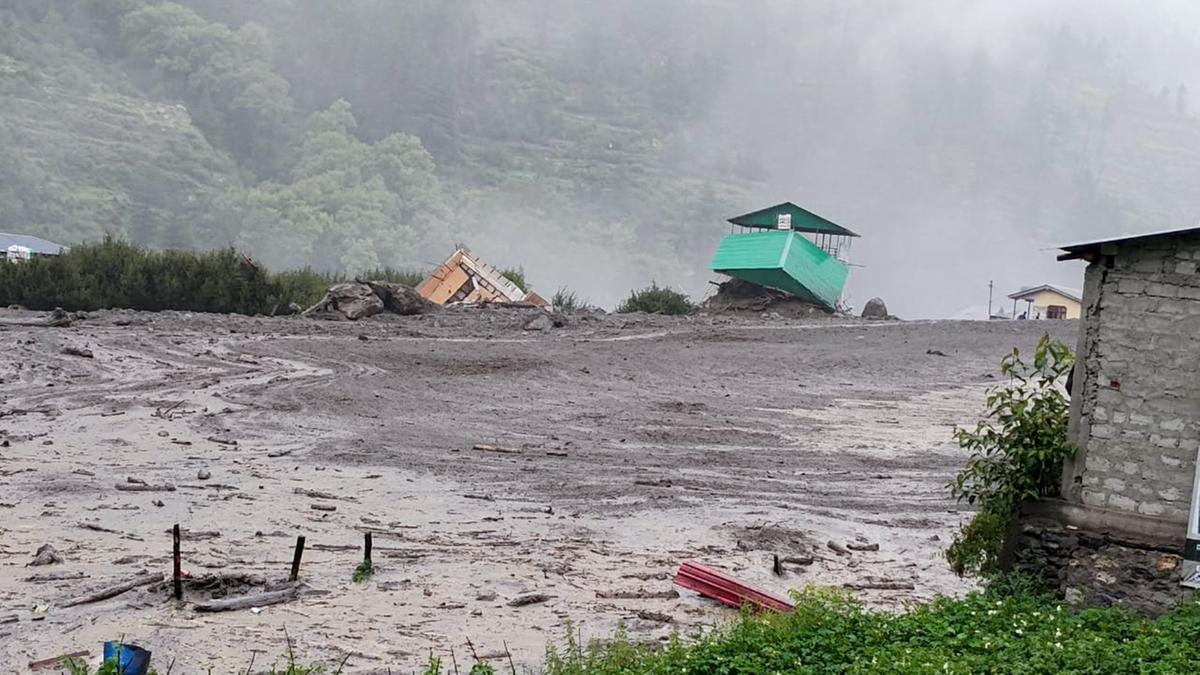
The serene landscapes of Uttarakhand turned into a scene of devastation this week after sudden flooding swept through several high-altitude villages, destroying homes, roads, and bridges. The tragedy has left dozens dead, scores missing, and hundreds displaced. While rescue teams race against time, a debate has emerged over the cause of this catastrophic event — was it a cloudburst or a glacier collapse?
Speaking to reporters, a BJP leader stated that preliminary observations point towards a glacier-related incident in the upper reaches, but stressed that “it is too early to draw definitive conclusions.” The leader added that scientists from the Indian Meteorological Department (IMD), Geological Survey of India (GSI), and Disaster Management teams are on-site to conduct detailed assessments.
What Could Have Caused the Floods?
Cloudburst
A cloudburst is an extreme rainfall event that can dump over 100mm of rain in just an hour over a small area.
In Uttarakhand’s steep terrain, such rainfall can trigger instant flash floods, washing away everything in its path.
Glacier Collapse
Glacier collapses occur when a large mass of ice breaks away due to melting or structural instability.
Climate change has been accelerating glacial melt in the Himalayas, making such events more frequent.
In 2021, Chamoli district faced a similar tragedy when a glacier fragment caused a devastating flood.
Eyewitness Accounts Paint a Grim Picture
Residents described hearing a loud rumble before a torrent of muddy water and debris came roaring down the valley.
“We barely had minutes to react. The water level rose so fast, and we ran for our lives,” said a survivor from a village in Chamba district.
Many families lost their homes and livestock. Roads to remote hamlets have been cut off, and power supply remains disrupted in several areas.
Rescue Operations in Full Swing
The National Disaster Response Force (NDRF), Indo-Tibetan Border Police (ITBP), and State Disaster Response Force (SDRF) are leading the rescue mission. Helicopters have been deployed to airlift stranded residents, while medical camps have been set up in safer zones.
Relief materials including food, blankets, and medicines are being transported despite challenging weather conditions. State authorities have urged people living near riverbanks to move to higher ground as a precaution.
Experts Call for Long-Term Solutions
Environmentalists and climate scientists have once again warned about the Himalayan region’s vulnerability. Rapid urbanisation, deforestation, hydropower projects, and the impact of global warming are increasing the frequency and intensity of such disasters.
Dr. Anil Joshi, a noted environmentalist, stated:
“Whether it’s a cloudburst or glacier collapse, the underlying problem is our unpreparedness. We must rethink development in these fragile zones.”
Looking Ahead
As rescue and relief operations continue, authorities are focusing on determining the exact cause of the tragedy. Whether it turns out to be a cloudburst or a glacier collapse, this disaster is yet another stark reminder of the urgent need for disaster preparedness, climate adaptation, and sustainable development in the Himalayan states.
FAQs
1. What is the difference between a cloudburst and a glacier collapse?
A cloudburst is a sudden, intense rainfall over a small area, while a glacier collapse occurs when large chunks of ice break away from a glacier, often causing floods.
2. Why is Uttarakhand prone to such disasters?
Its mountainous terrain, fragile ecology, and changing climate make it highly vulnerable.
3. What steps are being taken now?
Rescue teams are evacuating people, restoring connectivity, and delivering relief supplies.
4. How can such disasters be prevented?
Through early warning systems, controlled development, and climate adaptation strategies.
Published on : 8th August
Published by : SMITA
www.vizzve.com || www.vizzveservices.com
Follow us on social media: Facebook || Linkedin || Instagram
🛡 Powered by Vizzve Financial
RBI-Registered Loan Partner | 10 Lakh+ Customers | ₹600 Cr+ Disbursed