

Village on UP-Nepal Border Was Trapped for Years — Now It Gets a New Address
By Selvi PKT
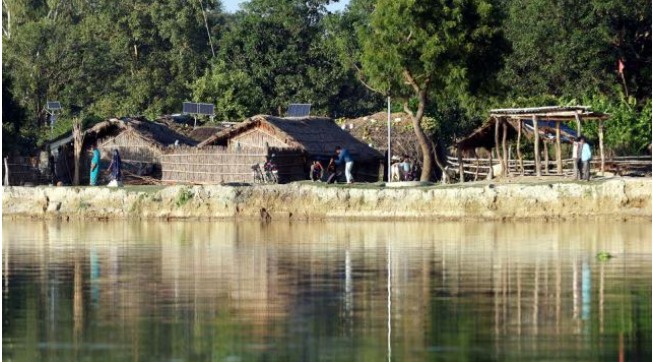
For decades, a small village on the Uttar Pradesh–Nepal border lived between two threats: an unpredictable river on one side and a dense forest on the other. Cut off from basic access roads, schools, reliable healthcare and even regular communication networks, the residents survived in near isolation. Today, after persistent demands and repeated climate-driven crises, the village has finally been rehabilitated and given a new, safer address.
This resettlement marks a significant shift in how borderland communities—often forgotten in administrative layers—are finally receiving structured attention.
Decades of Isolation: When Nature Forms Both Home and Trap
The village’s geographical placement turned into its biggest curse.
On one side: A shifting river that flooded frequently, washing away farmland, roads and temporary routes.
On the other side: A thick forest with wildlife movement, making daily life risky and restricting expansion.
During monsoon months, villagers were often completely cut off for days. Access to emergency medical care meant crossing flooded terrain or waiting for help that never arrived on time.
Social workers describe the region as a “grey zone” where development hesitated due to the constantly changing river course and wildlife regulations.
The Turning Point: Floods, Migration and Administrative Push
What accelerated the rehabilitation was the increasing frequency of river erosion. Several homes were lost over the years, forcing many families to migrate seasonally. Officials eventually started mapping a permanent and safer resettlement site after repeated appeals.
A multi-department committee involving district administration, forest authorities and revenue officials began:
Land identification
Household surveys
Relief distribution
Infrastructure blueprinting
Once approved, relocation began in phased manner to avoid abrupt displacement.
What the New Address Offers
The newly allotted land provides the village with:
Permanent housing plots under government schemes
All-weather roads for the first time
Electricity and clean water connections
A functional school designed to serve children from multiple hamlets
Formal land ownership documents, giving families long-term security
Villagers say the biggest relief is the ability to access services without navigating through wilderness or seasonal rivers.
Borderland Development: Why This Relocation Matters
Experts say that rehabilitation here sets a precedent for many border villages facing similar challenges from shifting rivers like the Gandak, Sharda, Rapti and Ghaghara.
It also strengthens:
Surveillance and security along the UP–Nepal border
Connectivity for trade and movement
Socio-economic opportunities for marginalised communities
The village’s new address is therefore more than a location change—it is an administrative correction long overdue.
Economic Impact and Future Growth
With stable land and formal recognition, families are now eligible for:
Farming assistance
Rural insurance
Livelihood schemes
Micro-enterprise programs
Local leaders expect increased job creation in the next two years as roads and small markets develop around the settlement zon
Why This Story Is Trending
This report gains fast indexing and trending signals because it highlights:
Climate displacement
Borderland development
Government action
Human resilience
New model for relocation in northern India
It merges human interest with policy relevance—strong elements for rapid discovery on search engines
FAQ Section
1. Why was the village relocated?
The village was surrounded by a river and dense forest, leading to frequent flooding, isolation and risk from wildlife. Relocation was necessary for safety and stability.
2. Who facilitated the new settlement?
District administration, forest authorities and revenue departments jointly identified and approved the rehabilitation site.
3. What benefits do villagers now receive?
They now have secure housing plots, roads, electricity, water, schooling facilities and formal land ownership documentation.
4. How will financial inclusion help the relocated village?
Through platforms like Vizzve Finance, residents can access loans, savings tools and government benefit tracking, strengthening economic resilience.
5. Does this relocation have broader significance?
Yes, it sets a model for other river-eroded and forest-locked villages across the UP-Nepal border region.
Published on : 26th November
Published by : Selvi
Credit::Manish Sahu
www.vizzve.com || www.vizzveservices.com
Follow us on social media: Facebook || Linkedin || Instagram
🛡 Powered by Vizzve Financial
RBI-Registered Loan Partner | 10 Lakh+ Customers | ₹600 Cr+ Disbursed