

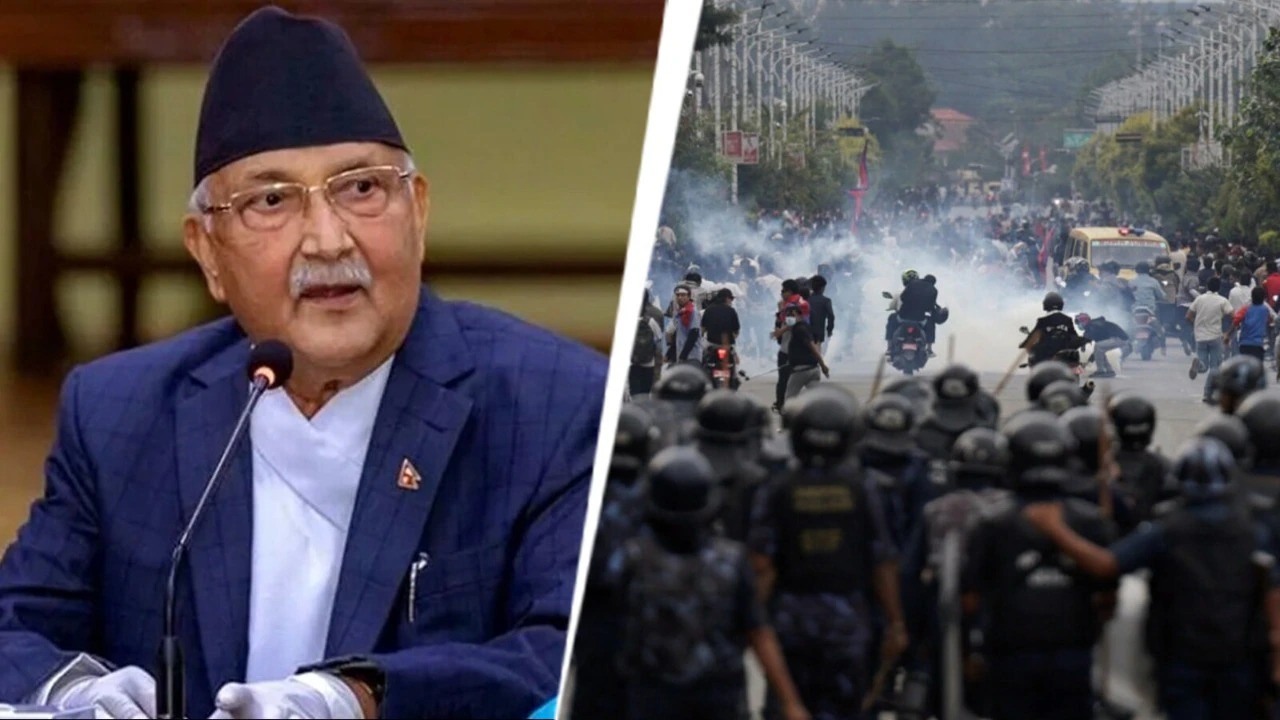
Nepal is witnessing a wave of protests and political unrest following the resignation of former Prime Minister KP Sharma Oli. The unrest has led to violent clashes in several cities, resulting in injuries, property damage, and widespread concern.
Indian Prime Minister Narendra Modi expressed that the violence in Nepal is heart-rending, emphasizing the need for peaceful resolution and democratic stability.
Background – KP Sharma Oli’s Resignation
KP Sharma Oli, former Prime Minister of Nepal, stepped down amid mounting political pressure and nationwide protests.
The resignation comes after weeks of demonstrations triggered by political disagreements and controversial decisions in governance.
Oli’s departure marks a significant shift in Nepal’s political landscape, potentially opening the path for a new coalition government or elections.
PM Modi’s Statement and India’s Concern
PM Modi conveyed deep concern over the violence and disruptions in Nepal, highlighting the importance of peace and democratic processes.
India continues to monitor the situation closely, as stability in Nepal is crucial for regional peace, security, and bilateral relations.
The statement underscores India’s role as a supportive neighbor, promoting dialogue, reconciliation, and calm amid the unrest.
Impacts of Political Violence in Nepal
Civilian Safety: Clashes have led to injuries and property damage, affecting ordinary citizens.
Economic Disruptions: Political instability may affect trade, tourism, and investment in Nepal.
Regional Security Concerns: Unrest in Nepal has implications for border management, cross-border trade, and bilateral relations with India.
Democratic Process: The resignation highlights the fragility and challenges of Nepal’s political system in maintaining governance stability.
Conclusion
The resignation of KP Sharma Oli amid violent protests in Nepal has shaken the political and social environment of the country. PM Modi’s remarks emphasize the importance of peaceful resolution, dialogue, and stability, reflecting India’s commitment to regional peace and strong bilateral ties.
As Nepal navigates this transitional phase, monitoring developments and ensuring citizen safety remain critical priorities for both Nepal and its neighbors.
FAQ
Q1: Why did KP Sharma Oli resign?
He resigned amid political pressure and nationwide protests challenging his governance.
Q2: What has been PM Modi’s response?
PM Modi expressed that the violence in Nepal is heart-rending and emphasized the importance of peaceful resolution and democracy.
Q3: How does this affect India-Nepal relations?
Political stability in Nepal is crucial for regional security, trade, and bilateral cooperation with India.
Q4: What are the immediate impacts of the violence?
The unrest has caused injuries, property damage, and disruption in daily life and economic activities.
Q5: What’s next for Nepal’s political landscape?
Nepal may see the formation of a new coalition government or fresh elections to restore democratic stability.
Published on : 10th September
Published by : SMITA
www.vizzve.com || www.vizzveservices.com
Follow us on social media: Facebook || Linkedin || Instagram
🛡 Powered by Vizzve Financial
RBI-Registered Loan Partner | 10 Lakh+ Customers | ₹600 Cr+ Disbursed
https://play.google.com/store/apps/details?id=com.vizzve_micro_seva&pcampaignid=web_share