

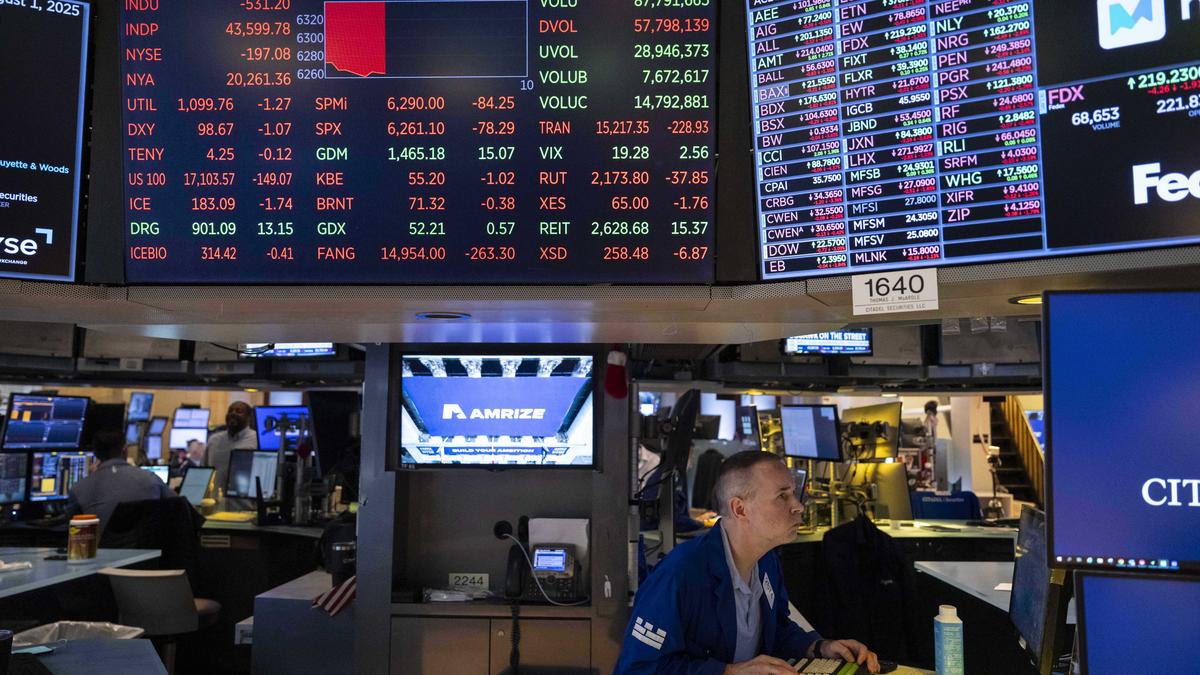
Wall Street Falls the Most Since May After Employers Slash Hiring and Tariffs Roll Out
Wall Street suffered its most severe drop since May as weak employment data and the rollout of new US tariffs sparked broad losses across major indexes. The S&P 500 closed down 1.6%, its steepest decline since May 21, ending a recent streak of record highs. The Dow Jones Industrial Average slid 1.2%, and the tech-heavy Nasdaq Composite dropped 2.2%, reflecting widespread investor concern about the economic outlook.
The market downturn followed a government report showing that US employers added only 73,000 jobs in July—well below expectations. Even more troubling, the Labor Department revised May and June employment gains and cut a combined 258,000 jobs from previous figures. This sudden slowdown in hiring amplified investor fears, pushing expectations of an interest rate cut by the Federal Reserve even higher for September.
Compounding matters, President Donald Trump’s administration implemented a new round of sweeping tariffs affecting dozens of trading partners and major import channels, including increased duties for key allies such as Canada, Laos, Myanmar, and Syria. These measures are part of the administration’s ongoing trade friction strategy, contributing both to inflation pressures and to economic uncertainty for US companies and consumers.
Financial analysts described the situation as a “one-two punch” of disappointing employment data and aggressive new tariff policies. The so-called “fear gauge” (CBOE Volatility Index) rose sharply, signaling growing nervousness on Wall Street as investors digested the implications for economic growth and the path of Fed policy. The yield on benchmark US Treasuries also fell as money flowed into safer assets.
Frequently Asked Questions (FAQ)
What caused Wall Street to fall the most since May 2025?
Wall Street’s sharp losses were triggered by weaker-than-expected job growth in July, large downward revisions to employment over previous months, and the rollout of new US tariffs impacting dozens of countries. These factors combined to stoke fears of an economic slowdown.
How did different indexes react?
The S&P 500 dropped 1.6%, the Dow Jones fell 1.2%, and the Nasdaq Composite was down 2.2%, with broad-based declines across sectors, especially those sensitive to global trade.
What are the new tariffs introduced?
The new policy includes tariffs ranging from 10% to over 40%, affecting many imports from key US trading partners. Canada faces 35% tariffs, while others face rates as high as 41% or more on certain goods. The measures were implemented with little prospect for delay or exemption for most partners.
How did jobs data influence investor sentiment?
US employers added only 73,000 jobs in July, falling far short of forecasts. Combined with downward revisions in previous months and ongoing trade uncertainty, this led investors to believe the Federal Reserve may cut interest rates soon to support the economy.
What is the outlook for the Federal Reserve’s response?
Expectations for a Fed interest rate cut in September have surged following poor jobs data and new tariffs. Markets are now pricing in a high probability of a rate cut to provide economic support.
How do these developments affect ordinary Americans?
Lower job growth can stall wage gains and limit employment opportunities, while tariffs may lead to higher prices for imported goods, affecting consumer spending power and inflation.
Which sectors are most impacted?
Industries with heavy reliance on international trade, such as technology, manufacturing, and retail, are most affected by both the slowdown in hiring and higher tariffs. Tech stocks, in particular, have seen some of the steepest declines.
Will these changes lead to a recession?
While the risks of a recession have increased due to tariffs and weaker job growth, current analysis suggests a slowdown rather than an imminent recession. Much depends on the Federal Reserve’s actions and whether global trade tensions ease in coming months.
Published on: August 2, 2025
Published by: PAVAN
www.vizzve.com || www.vizzveservices.com
Follow us on social media: Facebook || Linkedin || Instagram
🛡 Powered by Vizzve Financial
RBI-Registered Loan Partner | 10 Lakh+ Customers | ₹600 Cr+ Disbursed