

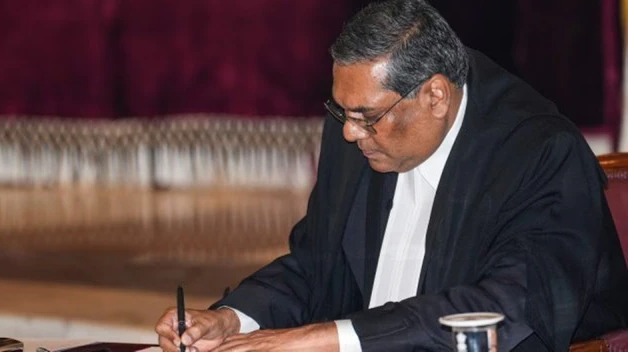
In a significant development surrounding the contentious Waqf Amendment Act, the Chief Justice of India (CJI) has directed the Central Government to present a clear stance on the constitutional validity and implications of the law. During the hearing on multiple petitions challenging the Act, the CJI made it clear that while the court is open to examining legitimate grievances, it would not entertain sweeping arguments without substantiated claims.
Government Under Spotlight
The Supreme Court has sought a detailed explanation from the Union Government on the rationale and objectives behind the recent amendments made to the Waqf Act, 1995. These amendments have been criticized by several petitioners, alleging that they provide unchecked powers to Waqf Boards and infringe on citizens' property rights — especially those belonging to non-Muslim communities.
The CJI remarked, “We need a comprehensive explanation from the government to understand the contours of this amendment and whether it stands the test of constitutional scrutiny.”
Petitioners Told to Focus Arguments
In response to sweeping statements made in court, the CJI cautioned the petitioners not to generalize or politicize the issue. Instead, they were advised to bring forward specific legal concerns backed by evidence and precedents.
“Allegations must be accompanied by legal reasoning. We are here to address constitutional concerns, not broad political commentary,” the bench noted.
What the Petitions Say
The petitions argue that the amended Act:
Enables arbitrary declaration of land as Waqf property.
Undermines the rights of individuals, especially from other faiths, in property disputes.
Violates Articles 14, 15, and 25 of the Indian Constitution.
Some petitioners have also called for an independent authority to adjudicate Waqf-related claims, citing concerns of bias and lack of transparency in the functioning of Waqf Boards.
Broader Implications
This case could have far-reaching implications on how religious endowments are managed in India and how minority rights intersect with property laws and secular governance. With rising public interest and political overtones, the court’s measured approach signals a careful judicial review in the coming weeks.
Waqf Amendment Act,
CJI,
Supreme Court,
Waqf Act Challenge,
Indian Judiciary,
Petitioners,
Legal News,
Government Response,
Constitutional Law,
Waqf Property Dispute