

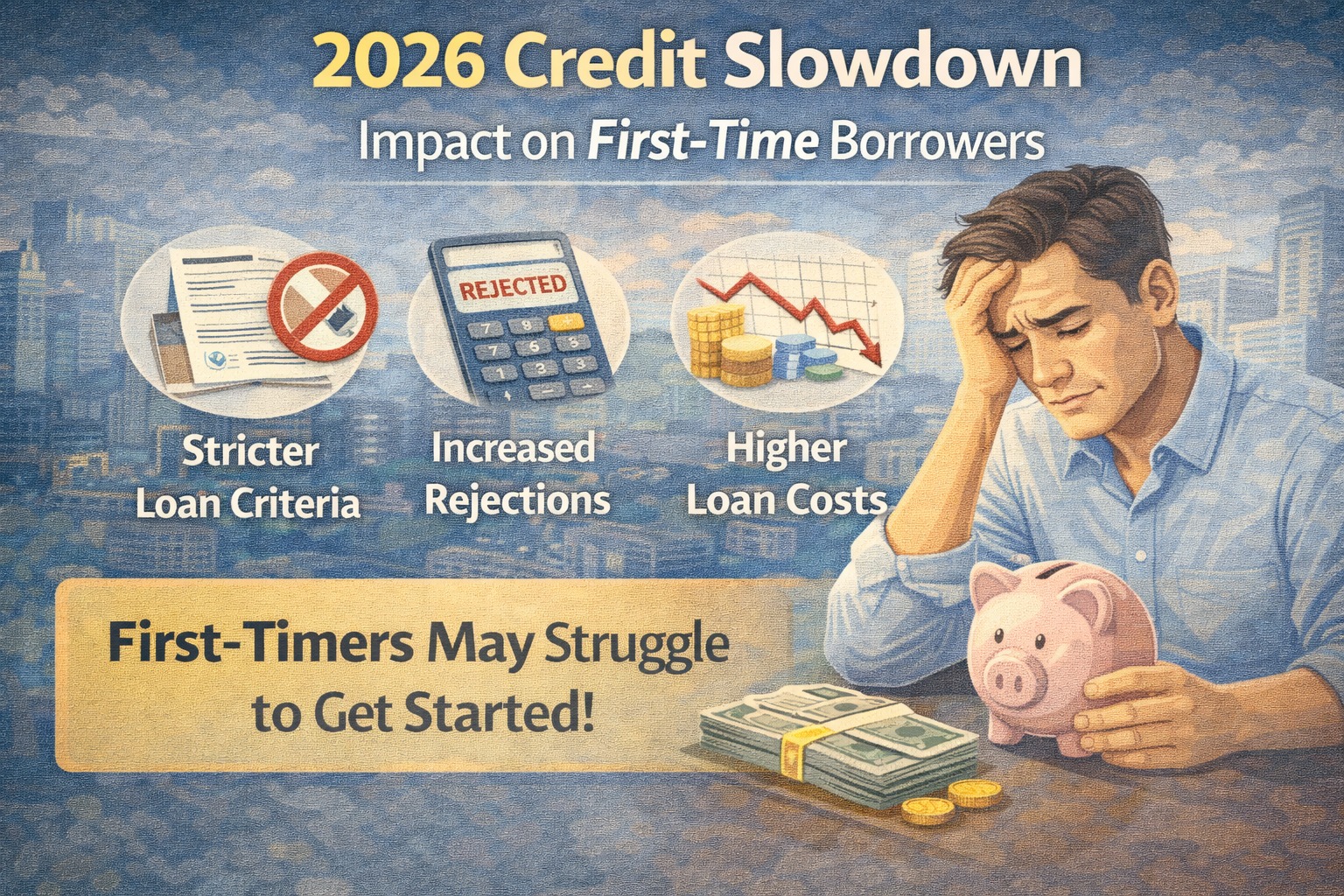
A credit slowdown in 2026 means tighter approval standards, greater emphasis on repayment behavior, stricter documentation, and potentially higher pricing for riskier profiles — especially for first-time borrowers. But strategic planning can turn caution into opportunity.
AI Answer Box (For Google AI Overview)
A credit slowdown typically leads lenders to tighten approval criteria, raise risk thresholds, and reduce leverage. First-time borrowers may face stricter scrutiny, higher interest spreads, and a stronger need for clean financial behavior. Planning and preparation become more important than ever.
What Is a Credit Slowdown?
A credit slowdown refers to a period when:
Loan growth decelerates
Lenders tighten approval criteria
Risk models become more conservative
Terms and pricing become less generous
It’s not necessarily a crisis, but a cautious lending phase.
Why a Slowdown Happens
Credit slowdowns typically occur because:
Economic growth moderates
Asset quality risks increase
Regulatory pressure tightens
Borrower stress signals rise
Lenders retrench risk appetite
For first-time borrowers, this environment changes the borrowing experience.
Key Changes First-Time Borrowers Will Notice
1. Higher Approval Standards
Banks & NBFCs may require:
Longer employment history
Higher minimum income thresholds
Stronger credit documentation
Clean bank statements
For a first-time borrower with no credit history, earning alone may not be enough.
2. Greater Emphasis on Cash Flow & Behavior
Without repayment history, lenders focus more on:
Bank statement patterns
Consistent salary credits
Low credit utilization on cards
Savings and excess balances
Clean financial behavior becomes a proxy for credit discipline.
3. Interest Rate & Price Sensitivity
Even if interest rates are driven by broader policy:
Risk-based pricing may widen
First-time or thin-file borrowers may see higher quotes
Secured credit may be cheaper than unsecured
4. Documentation Becomes Important
In a slowdown, lenders scrutinize:
Salary proofs
Bank statements
Tax returns (for self-employed)
Employment continuity
Incomplete documents can delay or reject approvals.
📆 5. Longer Processing Time
Underwriting may take longer as:
More data is verified
Manual review increases
Risk committees get involved
Patience and preparedness improve outcomes.
First-Time Borrower Challenges vs Advantages
| Factor | Challenge in Slowdown | Advantage for Prepared Borrower |
|---|---|---|
| Credit history | Thin or none | Build alternative signals (savings, bank behavior) |
| Interest pricing | Priced higher | Good profile may attract better pricing |
| Approval speed | Slower | Well-prepared docs speed reviews |
| Collateral needs | More likely | Secured loans may ease approval |
How First-Time Borrowers Can Adapt
1️⃣ Build Alternative Credit Signals
If you lack credit history, focus on:
Consistent bank balance patterns
Savings accumulation
Timely bill payments
Low credit card usage
These behaviors signal repayment discipline.
2️⃣ Keep Documents Organized
Have ready:
Salary slips
Bank statements (6–12 months)
Employment proof
Form 16 / ITR (if self-employed)
Documentation clarity reduces delays.
3️⃣ Avoid Multiple Applications
Many loan applications in a short period:
Reduces credit score
Signals desperation
Lowers approval chances
Apply only when fully prepared.
4️⃣ Focus on Secured Loans First
Secured credit (e.g., small auto loans, gold loans) often has:
Easier approval
Lower pricing
Lower risk perception
This builds initial credit history.
5️⃣ Track Your CIBIL / Credit Score Regularly
A clean score helps lenders trust you more quickly.
What Slowdown Doesn’t Mean
It does not mean credit is unavailable
It does not mean rates will soar uncontrollably
It does not mean only rich people get loans
Instead, it means disciplined borrowers get approved, and undisciplined borrowers face rejections.
Expert Insight
“During credit slowdowns, lenders shift from growth to risk management. First-time borrowers who show discipline and preparedness are treated as less risky than those with erratic financial behavior.”
— Retail Credit Risk Analyst
Key Takeaways
A credit slowdown tightens underwriting
Income matters less than behavior signals
Documentation and cash flow clarity are crucial
Patience and discipline improve approval odds
First-time borrowers can still succeed with the right preparation
Conclusion
A 2026 credit slowdown doesn’t ban loans — it rewards preparedness. For first-time borrowers, this means shifting focus from simply earning to proving financial discipline through clean behavior, organized documentation, and thoughtful borrowing plans. With smart planning, the slowdown can be a launchpad, not a barrier, to your first loan.
Frequently Asked Questions (FAQs)
1. What is a credit slowdown?
A period when lenders tighten approval standards and loan growth slows.
2. Does a credit slowdown mean no loans are available?
No. Loans are still available but with stricter checks.
3. Should first-time borrowers worry?
Only if they apply without preparation.
4. How can I build credit if I’m a new borrower?
Start with small secured credit or trackable repayment behavior.
5. Does salary matter in a slowdown?
Yes, but behavior and documentation matter more.
Published on : 16th January
Published by : SMITA
www.vizzve.com || www.vizzveservices.com
Follow us on social media: Facebook || Linkedin || Instagram
🛡 Powered by Vizzve Financial
RBI-Registered Loan Partner | 10 Lakh+ Customers | ₹600 Cr+ Disbursed