

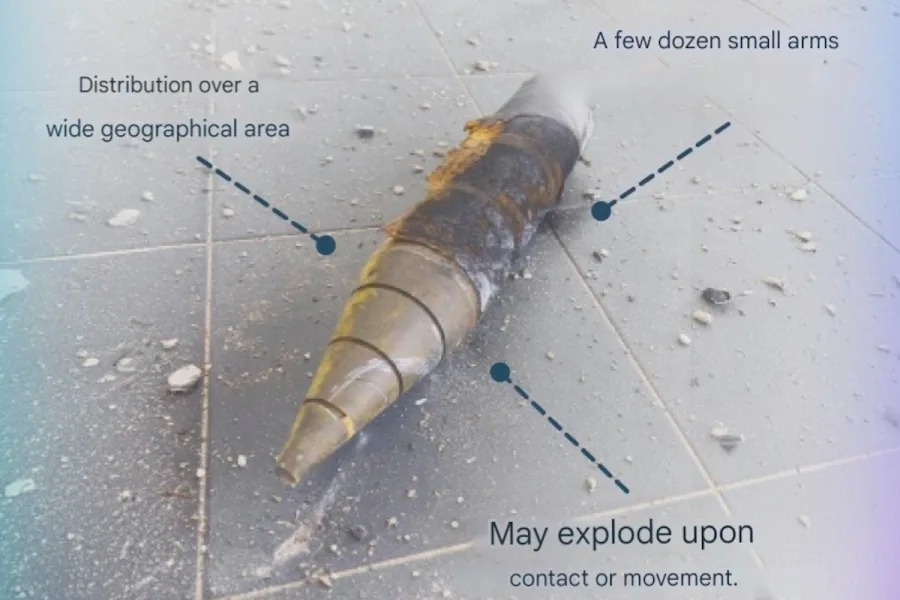
In the latest escalation of tensions between Iran and Israel, reports have emerged that Iran allegedly used cluster munitions during recent attacks. The use of such controversial weapons has sparked renewed global concern due to their devastating and long-lasting effects.
What Are Cluster Bombs?
Cluster bombs, or cluster munitions, are a type of explosive weapon that disperses multiple smaller submunitions—commonly called bomblets—over a wide area. These submunitions are designed to detonate either on impact or after a set delay, targeting military vehicles, personnel, or infrastructure across a broad radius.
Unlike conventional bombs, which impact a specific target, cluster bombs can affect areas the size of several football fields, making them indiscriminate in densely populated or civilian zones.
Why Are Cluster Bombs Controversial?
The controversy stems from two major issues:
Civilian Casualties: Cluster bombs can kill or injure civilians during and long after conflicts. The bomblets often fail to detonate, effectively turning into landmines that pose a threat for years.
Global Bans: More than 120 countries have signed the Convention on Cluster Munitions (CCM), which bans their use, production, and stockpiling. However, key nations like the U.S., Russia, China, Iran, and Israel are not signatories to this treaty.
Iran's Alleged Use of Cluster Munitions Against Israel
According to preliminary intelligence reports and media sources, Iran allegedly fired short-range ballistic missiles and drone-delivered cluster munitions toward military installations in Israel. While the Israeli Defense Forces (IDF) have not fully confirmed the presence of cluster submunitions, intercepted materials reportedly match the characteristics of known Iranian cluster bomb variants.
Iran has previously supplied cluster munitions to proxy groups, such as Hezbollah and the Houthis, raising concerns that its use of such weapons in direct conflict signals a dangerous escalation.
International Reaction and Legal Implications
The use of cluster bombs in populated areas may constitute a violation of international humanitarian law if it leads to disproportionate civilian harm. Human rights organizations and UN officials have condemned any use of such munitions and called for transparent investigations.
Israel, too, has been criticized in the past for deploying cluster munitions during the 2006 Lebanon War, which further complicates the narrative and international diplomacy.
FAQs:
Q1. What are cluster bombs?
A: Cluster bombs are weapons that release multiple smaller explosives, known as submunitions or bomblets, over a wide area. They are designed for anti-personnel and anti-vehicle use but often cause civilian casualties due to their wide dispersal and failure rate.
Q2. Why are cluster bombs considered controversial?
A: Cluster bombs are criticized for their indiscriminate nature and long-term danger. Many bomblets fail to explode on impact, remaining active for years and posing serious risks to civilians—especially children.
Q3. Has Iran officially confirmed the use of cluster bombs on Israel?
A: As of now, Iran has not officially confirmed using cluster bombs. However, defense analysts and intelligence reports suggest their deployment in recent attacks, based on debris patterns and munition types.
Q4. Is the use of cluster bombs legal under international law?
A: More than 120 countries have signed the Convention on Cluster Munitions banning their use. However, Iran and Israel are not signatories. Even so, their use in civilian areas can violate international humanitarian law due to the potential for indiscriminate harm.
Published on 20 june
Publisher : SMITA
www.vizzve.com || www.vizzveservices.com
Follow us on social media: Facebook || Linkedin || Instagram
🛡 Powered by Vizzve Financial
RBI-Registered Loan Partner | 10 Lakh+ Customers | ₹600 Cr+ Disbursed