

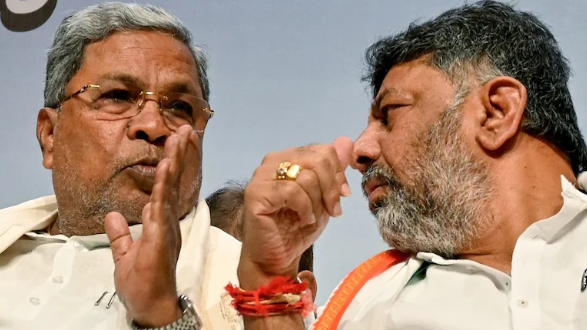
The political corridors of Karnataka are pulsating once again with a familiar tension — a power struggle between the state’s Chief Minister, Siddaramaiah, and his Deputy Chief Minister, D.K. Shivakumar (DKS). Recent developments — from bureaucratic transfers to public posturing and behind-the-scenes lobbying — suggest this is more than casual speculation. As per recent reports decoded by media outlets including NDTV, this tussle centers not only on personal ambition, but on caste equations, regional influence, and long-term political control. www.ndtv.com+2www.ndtv.com+2
In this blog, we unpack what each side wants, the stakes involved, and why this conflict matters — not just for Karnataka’s Congress, but for the future of governance in the state.
What's Behind the Rift: Competing Ambitions & Broken Agreements
Chief Minister’s Authority vs Deputy’s Aspirations
When Congress gained power after the 2023 state elections, there was speculation of a “power-sharing” arrangement: that Siddaramaiah would serve as CM first and then step down midway to let Shivakumar take over.
But as recent months have shown, Siddaramaiah has denied any such deal. He publicly asserted that the CM post is not vacant and ruled out any “50-50 formula.”
Meanwhile, Shivakumar — a key leader with influence over the Vokkaliga community — continues to maintain his ambition, supported by MLA loyalty and community backing. Administrative Control & Bureaucratic Clashes
The tussle has also played out in bureaucratic decisions. For instance, a recent clash erupted when five senior engineers from the Public Works Department — under Shivakumar’s ministry — were transferred by the Personnel Department under Siddaramaiah’s control. Shivakumar shot off a formal letter demanding the withdrawal of the transfer, citing a prior agreement that no such changes be made without his consent.
This episode reflects deeper mistrust and competing control over key departments, appointments and administrative leverage — often the real seat of power behind political office.
Caste and Community Calculus
Caste dynamics also fuel the struggle. Siddaramaiah enjoys strong backing from OBCs, minorities and marginalised communities — key constituencies within the party’s grassroots.
Shivakumar, on the other hand, draws support from the Vokkaliga community — influential in certain southern regions — making him a powerful contender, especially in areas where caste identity shapes political loyalty.
This caste-arithmetic complicates any stable power-sharing arrangement; replacing the CM could risk alienating one community or destabilizing the party’s social base.
Why the Struggle Matters: Governance, Stability & Political Future
Government Stability at Stake: Frequent internal clashes — over transfers, bureaucratic control or leadership ambitions — risk destabilizing the administration and slowing governance.
Public Trust & Delivery: When political infighting dominates headlines, public confidence in the government’s ability to deliver on promises may erode — a point critics from opposition parties have already raised.
Impact on Congress’s Long-Term Prospects: With regional ambitions, caste mobilization, and community loyalties at play, how Congress resolves this tussle could determine its success in upcoming elections.
Political Messaging & Party Unity: A transparent resolution — either reaffirming Siddaramaiah’s leadership or sanctioning a handover — is critical to projecting unity. Continued conflict could lead to defections, factionalism, or weakening of internal discipline.
FAQ
Q: Is there any official power-sharing agreement between Siddaramaiah and Shivakumar?
A: No. While rumours of a “rotational CM formula” existed post-2023, Siddaramaiah has publicly denied any agreement and reiterated that the Chief Minister’s post isn’t vacant.
Q: Why is Shivakumar still considered a strong contender for CM despite being Deputy CM?
A: He carries substantial support from the Vokkaliga community and a segment of MLAs. His influence in party organization and regional politics gives him leverage in any leadership debate.
Q: Has the infighting impacted governance in Karnataka?
A: There are signs that administrative decisions — such as transfers in key departments — are being contested internally, which could hinder smooth governance and erode public trust.
Q: Could this struggle lead to a change in CM mid-term
A: It’s possible — but unlikely unless the party high command intervenes or there’s a shift in MLA loyalties. As of now, both leaders claim to follow the party’s direction
Q: What should citizens watch out for amid this power struggle?
A: Citizens should monitor whether governance remains stable, if administrative decisions are transparent, and whether public issues continue to be addressed — irrespective of political tussles.
source credit : TM Veeraraghav
Published on : 27 th November
Published by : Reddy kumar
Credit: Written by Vizzve Finance News Desk
www.vizzve.com || www.vizzveservices.com
Follow us on social media: Facebook || Linkedin || Instagram
🛡 Powered by Vizzve Financial
RBI-Registered Loan Partner | 10 Lakh+ Customers | ₹600 Cr+ Disbursed