

Introduction
Applying for a loan is only the first step. After you submit your application, the lender usually checks your details, verifies your documents, reviews your credit profile, and decides whether to approve the loan.
Understanding what happens after loan application can help you know what to expect and avoid unnecessary delays.
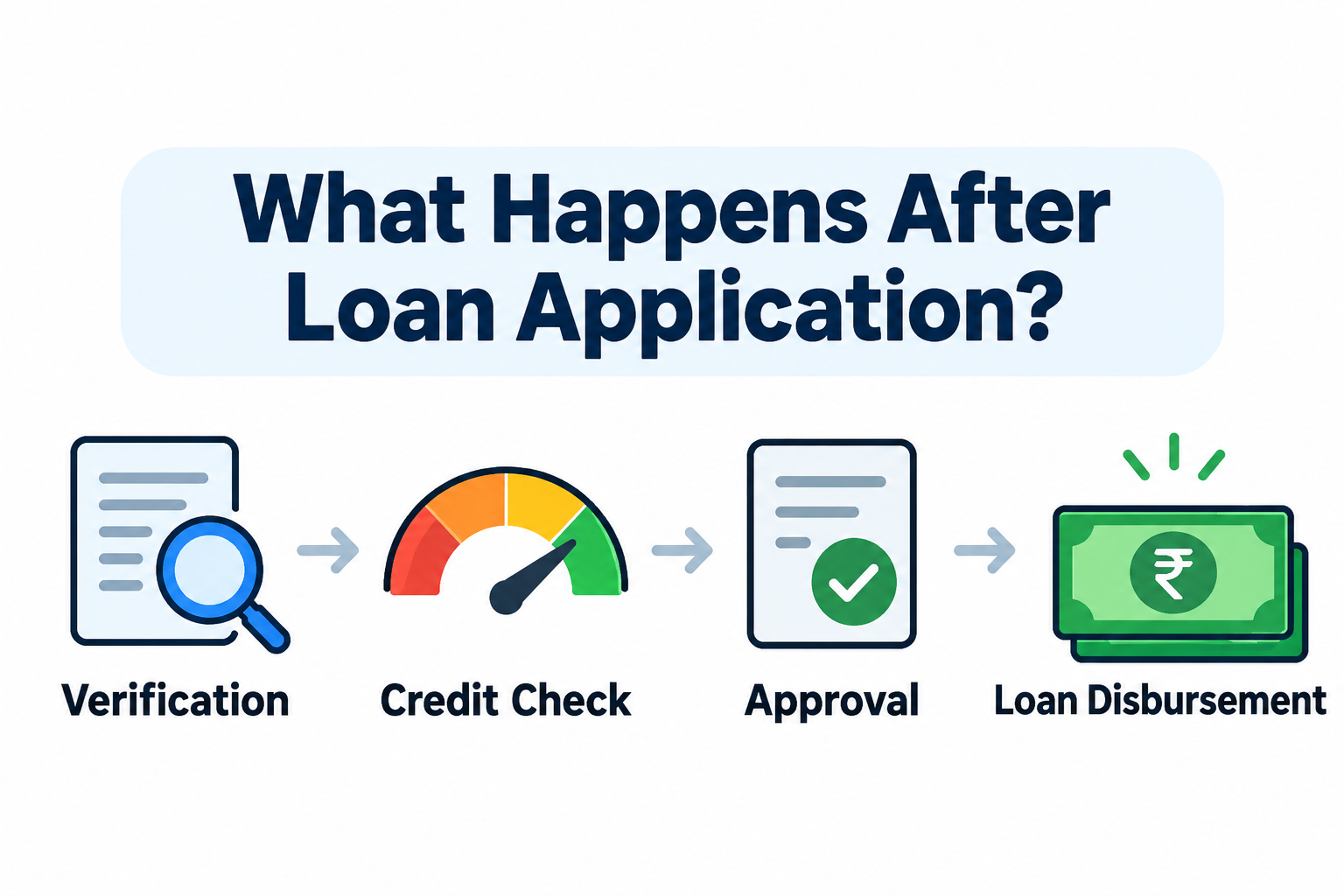
What Happens After Loan Application?
The process may vary between lenders, but it generally follows these steps:
1. Application Review
After submitting your loan application, the lender reviews the information you provided. This may include:
- Personal details
- Employment information
- Income
- Existing loans
- Loan amount requested
- Bank account details
The lender may contact you if any information is missing or needs clarification.
2. Document Verification
The lender checks the documents submitted with your application. Common documents may include:
- Identity proof
- Address proof
- Income proof
- Bank statements
- Salary slips
- Employment details
Accurate and clear documents can help reduce processing delays.
3. Credit Check
The lender may check your credit history and credit score to understand your repayment behavior.
Factors that may be considered include:
- Previous loan repayments
- Credit card payments
- Existing debts
- Credit utilization
- Payment history
A good credit history can improve your chances of getting approved, although approval depends on the lender's eligibility criteria.
4. Eligibility Assessment
The lender evaluates whether you can comfortably repay the loan. Your income, existing financial obligations, employment stability, and requested loan amount may be considered.
The lender may also decide the interest rate, loan amount, and repayment tenure based on its policies.
5. Loan Approval or Rejection
After completing the assessment, the lender makes a decision.
If approved, you may receive details such as:
- Approved loan amount
- Interest rate
- Loan tenure
- EMI amount
- Processing fees
- Other applicable charges
If the application is rejected, the lender may provide a reason depending on its policies.
6. Loan Agreement and Confirmation
Once the loan is approved, you may need to accept the loan terms and complete the required agreement or e-sign process.
Before accepting, carefully check:
- Interest rate
- EMI
- Repayment period
- Processing fees
- Late payment charges
- Prepayment or foreclosure terms
- Other applicable charges
7. Loan Disbursement
After the required formalities are completed, the approved loan amount is disbursed to your registered bank account.
The exact time can vary depending on the lender, verification process, banking systems, and whether any additional checks are required.
How Long Does the Loan Process Take?
There is no single processing time for every loan. Some digital loans may be processed quickly, while traditional loans can take longer because of additional verification.
| Stage | What Happens |
|---|---|
| Application | Details are submitted |
| Verification | Documents and information are checked |
| Credit Assessment | Credit history and eligibility are reviewed |
| Approval | Loan terms are finalized |
| Agreement | Applicant accepts the terms |
| Disbursement | Money is transferred to the bank account |
What Can Delay Loan Approval?
Several factors can cause delays:
- Incorrect information in the application
- Missing documents
- Poor-quality document uploads
- Issues during employment verification
- Mismatch in personal details
- Existing financial obligations
- Additional lender verification
Providing accurate information and required documents can help make the process smoother.
How Can You Check Your Loan Status?
If your lender provides online tracking, you can usually check your application using the registered mobile number, application ID, or login credentials.
You can also contact the lender's official customer support if the status has not changed for an extended period.
What Should You Do After Loan Approval?
After approval, don't immediately spend the entire amount without planning. First:
- Confirm the approved amount.
- Check the interest rate and EMI.
- Read the loan agreement carefully.
- Understand all applicable charges.
- Keep enough funds available for future EMIs.
- Save the loan documents and repayment schedule.
Frequently Asked Questions
1. What happens immediately after applying for a loan?
The lender generally reviews your application and begins verifying your information and documents.
2. Does every loan application require a credit check?
Many lenders use credit information as part of their assessment, although the exact process depends on the lender and loan type.
3. How do I know if my loan is approved?
The lender may notify you through SMS, email, app notification, or its online application portal.
4. What happens if my documents are incomplete?
The lender may ask you to provide additional or corrected documents, which can delay processing.
5. When is the loan amount disbursed?
Disbursement generally happens after approval and completion of the required formalities.
6. Can a loan be rejected after verification?
Yes. Final approval depends on the lender's eligibility and risk assessment.
7. Can I cancel a loan after approval?
This depends on the lender's terms and whether the loan has already been disbursed. Check the agreement and contact the lender promptly.
8. Does loan approval guarantee immediate disbursement?
Not always. Some final documentation or verification may need to be completed before disbursement.
9. Why is my loan application still under review?
The lender may still be verifying documents, credit information, employment details, or other application information.
10. What should I check before accepting a loan?
Check the interest rate, EMI, tenure, processing fees, applicable charges, and other terms before accepting.
Key Takeaways
- Loan application is only the beginning of the process.
- Lenders generally verify your information and documents.
- Credit history and repayment capacity may be assessed.
- Approved applicants may need to complete an agreement or e-sign process.
- The loan is disbursed after required formalities are completed.
- Reading the loan terms carefully can help you make an informed borrowing decision.
Vizzve – Simple Digital Finance
If you are exploring borrowing options, compare the loan amount, interest rate, fees, repayment period, and total repayment cost before choosing a loan. Vizzve aims to make the digital finance experience simple and convenient while helping borrowers understand their available options.
Conclusion:
After submitting a loan application, the lender generally verifies your details, checks eligibility and credit information, approves or rejects the application, completes the required formalities, and then disburses the loan. Knowing these steps can help you track your application and prepare for repayment.
Published on : 16th October 2026
Published by : monisha
www.vizzve.com || www.vizzveservices.com
Follow us on social media: Facebook || Linkedin || Instagram
🛡 Powered by Vizzve Financial
RBI-Registered Loan Partner | 10 Lakh+ Customers | ₹600 Cr+ Disbursed