

Introduction
Missing two consecutive loan EMIs can create financial problems for borrowers. It may lead to late payment charges, a lower credit score and regular repayment reminders from the lender. If the delay continues, it can also affect your future loan eligibility. However, taking the right steps at the right time can help you manage the situation. In this blog, let’s understand what happens when you miss two consecutive loan EMIs and how you can avoid further financial difficulties.
What Happens If You Miss Two Consecutive Loan EMIs? – Complete Guide
Missing one loan EMI can happen due to unexpected expenses, salary delays or financial difficulties. However, missing two consecutive loan EMIs can create bigger financial problems. It may affect your credit score, increase your repayment burden and make it difficult to get loans in the future.
Understanding what happens when you miss two consecutive EMIs can help you take the right steps, avoid unnecessary charges and protect your financial health.
This guide explains the consequences of missing two loan EMIs, how lenders respond and what you can do to manage the situation.
1. What Happens When You Miss Two Consecutive Loan EMIs?
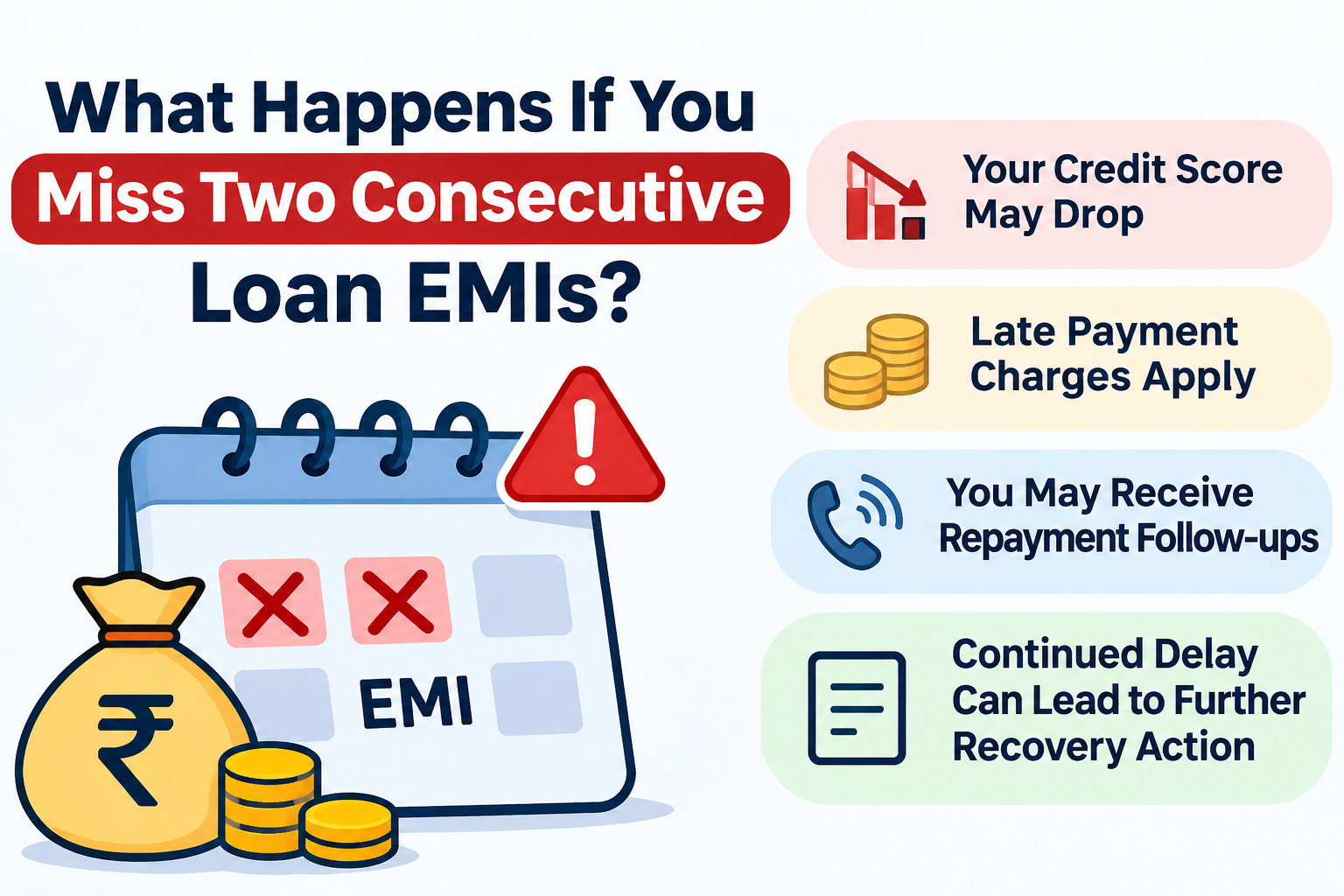
When you fail to pay two consecutive EMIs, your loan account becomes overdue. The lender may start sending payment reminders through SMS, phone calls, emails or other official communication channels.
The consequences may include:
-
Late payment charges: Your lender may charge applicable late fees.
-
Additional interest: Interest may continue to accumulate on the overdue amount as per your loan agreement.
-
Credit score impact: Missed payments may be reported to credit bureaus.
-
Collection follow-ups: The lender may contact you to discuss repayment.
-
Loan account risk: Continued non-payment can lead to further recovery action as permitted by law.
The exact consequences depend on your loan agreement, lender policies and applicable regulations.
2. How Does Missing Two EMIs Affect Your Credit Score?
Your credit score is an important factor that lenders consider when evaluating loan applications.
When you miss two consecutive EMIs, your lender may report the missed payments to credit bureaus such as CIBIL, Experian, Equifax and CRIF High Mark.
This can:
-
Reduce your credit score.
-
Create a negative repayment history.
-
Affect future loan approvals.
-
Make credit card applications more difficult.
-
Result in less favourable loan interest rates.
Important: Even if you pay the overdue EMIs later, the previously reported payment delays may remain in your credit history for the applicable reporting period.
3. Will You Have to Pay Late Payment Charges?
Yes, depending on your loan agreement, missing EMI payments may result in additional charges.
These may include:
-
Late payment fees.
-
Penal charges, where applicable.
-
Applicable overdue interest.
-
Auto-debit or payment return charges, if permitted under the agreement.
Always check your loan statement to understand the exact outstanding amount before making payment.
4. Will the Bank or NBFC Contact You?
Yes. After two consecutive missed EMIs, your lender may increase repayment follow-ups.
You may receive:
-
SMS payment reminders.
-
Phone calls from customer support.
-
Email notifications.
-
Official overdue payment notices.
-
Communication from authorised recovery agents.
Recovery practices must follow applicable RBI guidelines. Borrowers should not be subjected to threats, harassment or inappropriate contact.
5. Can Your Loan Become an NPA After Missing Two EMIs?
Missing two consecutive EMIs does not automatically make every loan account a Non-Performing Asset (NPA).
For most bank term loans, an account generally becomes an NPA when the principal or interest remains overdue for more than 90 days. However, classification rules can vary depending on the loan product and applicable RBI regulations.
Before an account reaches NPA status, the lender may classify it under Special Mention Account (SMA) categories:
|
Loan overdue period |
Classification |
|---|---|
|
Up to 30 days |
SMA-0 |
|
More than 30 days and up to 60 days |
SMA-1 |
|
More than 60 days and up to 90 days |
SMA-2 |
|
More than 90 days |
NPA (generally, for term loans) |
These classifications help lenders monitor repayment delays and potential credit risks.
6. Can the Lender Take Legal Action?
Missing two EMIs does not mean that the lender can immediately take legal action or seize your property.
However, continued non-payment may lead to further recovery measures depending on the loan type and agreement.
Possible actions include:
-
Sending formal overdue notices.
-
Assigning authorised recovery agents.
-
Initiating recovery proceedings under applicable laws.
-
Taking action against secured assets after following the required legal procedure.
For secured loans, such as home loans and vehicle loans, lenders may have rights over the financed asset, subject to applicable laws and procedures.
7. What Should You Do After Missing Two Consecutive EMIs?
If you have missed two EMIs, taking immediate action can help prevent the situation from becoming worse.
Here are some practical steps:
1. Contact Your Lender
Inform your bank or NBFC about the reason for missing the payments. Explain your financial situation honestly.
2. Check Your Outstanding Amount
Ask the lender for an updated loan statement showing missed EMIs, interest and applicable charges.
3. Pay the Overdue EMIs
If you have sufficient funds, try to clear the overdue amount as soon as possible.
4. Request an EMI Restructuring Option
If you are facing temporary financial difficulties, ask whether the lender offers an eligible repayment restructuring option.
5. Avoid Taking Another Loan Immediately
Taking another high-interest loan to repay existing EMIs may increase your financial burden.
6. Maintain Communication
Do not ignore calls, emails or official notices from your lender. Regular communication can help you understand available repayment options.
8. How Can You Avoid Missing Future Loan EMIs?
Managing your monthly budget properly can reduce the risk of missing future payments.
Consider these simple habits:
-
Set up an EMI reminder before the due date.
-
Maintain sufficient balance in your bank account.
-
Create an emergency savings fund.
-
Avoid taking loans beyond your repayment capacity.
-
Track monthly expenses and existing debts.
-
Choose an EMI amount that suits your income.
A little financial planning can help you maintain a healthy repayment history.
9. Does Paying Two Missed EMIs Immediately Improve Your Credit Score?
Paying overdue EMIs is an important step towards improving your financial position. However, your credit score may not recover immediately.
Once the payment is received and reported by the lender, your loan account information can be updated by the credit bureau.
Remember:
-
Clear all pending EMIs.
-
Pay future EMIs on time.
-
Check your credit report regularly.
-
Dispute incorrect repayment information with the lender and credit bureau.
-
Avoid unnecessary loan applications.
Consistent repayment behaviour over time can help rebuild your credit profile.
10. Can You Ask Your Lender for More Time to Pay EMIs?
Yes. You can contact your lender and explain why you are unable to pay the overdue EMIs.
Depending on your financial circumstances and the lender's policies, you may request:
-
Additional time for repayment.
-
EMI restructuring.
-
A revised repayment schedule.
-
Other available hardship-related repayment arrangements.
Approval is not guaranteed, so discuss the available options before your overdue amount increases.
Key Takeaways
-
Missing two consecutive EMIs can negatively affect your credit history.
-
Lenders may charge disclosed and applicable penal charges.
-
Your credit score may decrease due to reported payment delays.
-
Two missed EMIs do not automatically make a loan an NPA.
-
Continued non-payment can result in further recovery action.
-
Contacting your lender early can help you explore repayment options.
-
Paying EMIs on time is essential for maintaining financial stability.
Conclusion
Missing two consecutive loan EMIs can create financial stress, but it does not mean your financial situation cannot improve. The most important thing is to act quickly, understand your outstanding dues and communicate with your lender.
If you are facing repayment difficulties, avoid ignoring the problem. Explore suitable repayment options, manage your monthly budget and focus on making future payments on time.
Frequently Asked Questions (FAQs)
1. What happens if I miss two consecutive loan EMIs?
Your loan account becomes overdue, and you may face late payment charges, credit score damage and repayment reminders.
2. Will missing two EMIs affect my CIBIL score?
Yes. Your lender may report missed payments to credit bureaus, which can negatively affect your CIBIL score.
3. Can I get another loan after missing two EMIs?
You can apply, but lenders may consider your repayment history before approving a new loan.
4. Will I receive calls from recovery agents?
Yes. Your lender may assign authorised recovery agents to contact you regarding overdue payments, following applicable RBI guidelines.
5. Can I pay two missed EMIs together?
Yes. You can generally clear both overdue EMIs together, subject to the lender's payment instructions and outstanding charges.
6. Will my loan become an NPA after two missed EMIs?
No. For most bank term loans, NPA classification generally happens when the amount remains overdue for more than 90 days.
7. Can the lender charge a penalty for missed EMIs?
Yes. Applicable penal charges may be imposed according to the loan agreement and RBI guidelines.
8. Can I request an EMI extension?
Yes. You can contact your lender and request additional time or a suitable repayment arrangement. Approval depends on the lender.
9. Does paying overdue EMIs remove negative credit history?
No. Paying overdue EMIs updates your repayment status, but previously reported delays may remain in your credit history.
10. Can I avoid legal action by contacting my lender?
Early communication can help you explore repayment options, but it does not automatically prevent legal or recovery proceedings.
11. What happens if I miss three consecutive EMIs?
Your overdue amount and potential charges may increase. Your account may also move into a more serious overdue classification depending on the duration of default.
12. How can I avoid missing loan EMIs?
Maintain an emergency fund, set payment reminders, track expenses and borrow only what you can comfortably repay.
Published on : 22nd November 2026
Published by : monisha
www.vizzve.com || www.vizzveservices.com
Follow us on social media: Facebook || Linkedin || Instagram
🛡 Powered by Vizzve Financial
RBI-Registered Loan Partner | 10 Lakh+ Customers | ₹600 Cr+ Disbursed