

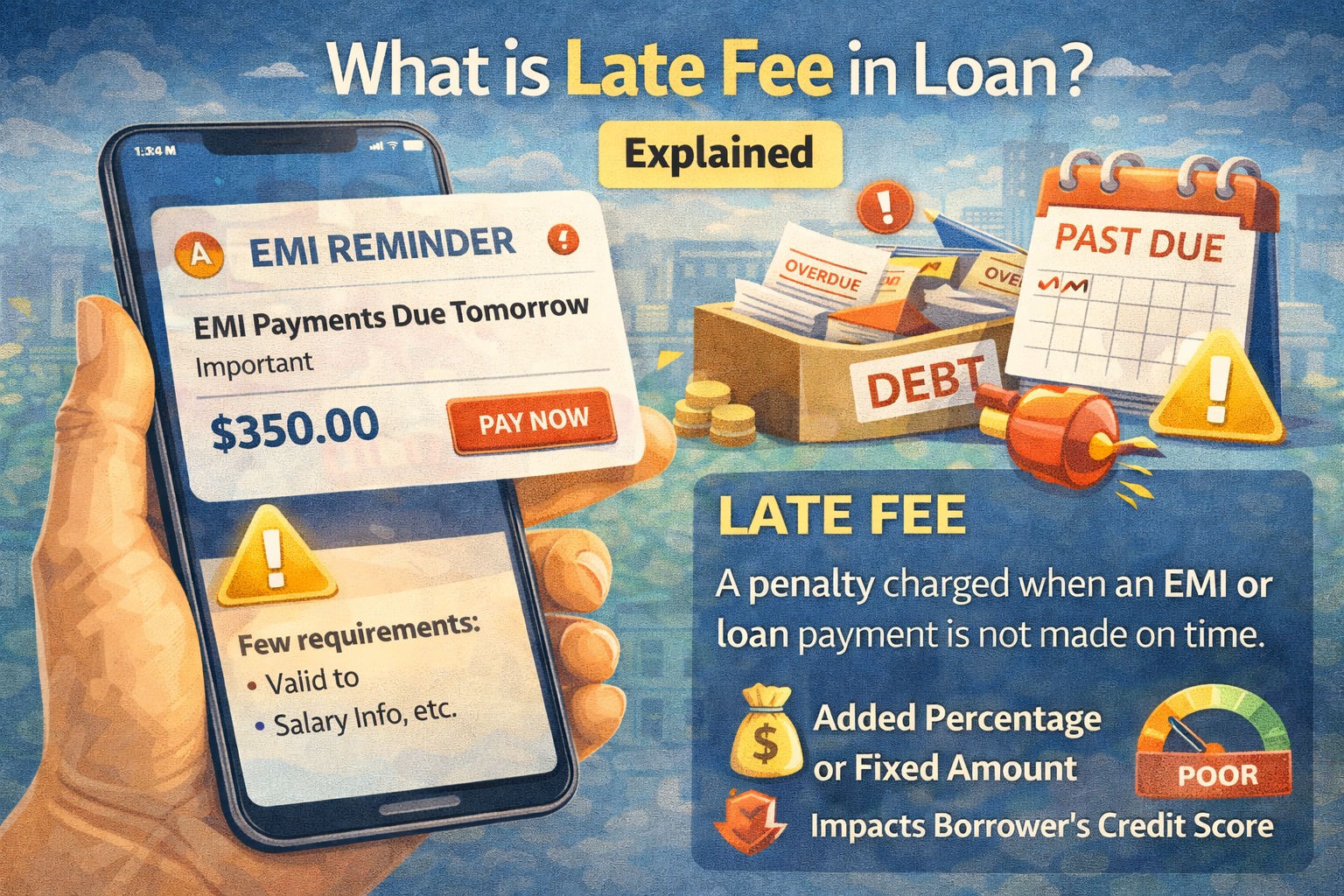
A late fee is a penalty charged by a lender when you fail to pay your loan EMI on or before the due date. It is an extra cost added to your loan repayment.
AI Answer Box (For Google AI Overview & AI Search)
A late fee in a loan is a penalty imposed when an EMI is paid after the due date or grace period. Repeated late fees increase loan cost and can eventually hurt credit score if delays continue.
Why Do Banks Charge a Late Fee?
Banks charge late fees to:
Encourage on-time repayment
Cover administrative and follow-up costs
Discourage careless EMI delays
Late fees are not interest — they are penalties.
What Triggers a Late Fee?
A late fee is charged when:
EMI is not paid on the due date
Auto-debit fails due to low balance
Payment is made after the grace period
Bank details are incorrect or outdated
⚠️ Even a 1-day delay can trigger a late fee.
What Is a Grace Period?
Some lenders offer a grace period:
Usually 2–5 days after EMI due date
No late fee if paid within this window
👉 Not all loans have a grace period. Always check loan terms.
How Much Is the Late Fee? (Indicative)
| Loan Type | Typical Late Fee |
|---|---|
| Personal Loan | ₹300 – ₹1,000 |
| Home Loan | ₹500 – ₹2,000 |
| Car / Two-Wheeler Loan | ₹400 – ₹1,500 |
| Credit Card EMI | ₹500 – ₹1,200 |
| Digital / BNPL Loans | Fixed fee or % of EMI |
📌 GST may be added to the late fee amount.
Does a Late Fee Affect Credit Score?
Short Answer: Yes, if repeated or prolonged
| Delay Duration | Credit Impact |
|---|---|
| 1–5 days (rare) | Usually none |
| Repeated delays | Negative impact |
| 30+ days delay | Credit score drops |
| 90+ days | Loan may turn NPA |
A late fee is a warning signal, not a default.
Late Fee vs Default vs NPA (Simple)
| Term | Meaning |
|---|---|
| Late Fee | Penalty for delayed EMI |
| Default | Repeated non-payment |
| NPA | 90+ days unpaid loan |
Late fees can lead to default if ignored.
Real-Life Example
EMI due: 5th of every month
Paid on: 10th
Result:
Late fee charged
EMI counted as delayed
No major credit impact (if rare)
But if this happens every month, banks take notice.
How to Avoid Late Fees
✅ Enable auto-debit
✅ Maintain 1 EMI buffer in account
✅ Track EMI dates
✅ Update bank details on time
✅ Pay before due date — not on last day
Expert Insight
“Most serious loan problems start with small delays. Late fees are early warning signs that borrowers should not ignore.”
— Retail Credit Analyst
Key Takeaways
Late fee = penalty for EMI delay
Charged even for short delays
Repeated late fees hurt credit profile
Not interest, but extra cost
On-time payment avoids all penalties
Conclusion
A late fee may look small, but it’s a signal of financial stress. Ignoring repeated late fees increases loan cost, damages credit score, and can eventually lead to default or NPA. Paying EMIs on time is the cheapest and safest loan strategy.
Frequently Asked Questions (FAQs)
1. Is late fee charged immediately after EMI due date?
Yes, if there is no grace period.
2. Can banks waive late fees?
Sometimes — for first-time delays, on request.
3. Is late fee the same as interest?
No. It is a penalty, not interest.
4. Does one late fee affect credit score?
Usually no, unless delays repeat.
5. Can late fees turn into default?
Yes, if EMIs remain unpaid repeatedly.
Published on : 16th January
Published by : SMITA
www.vizzve.com || www.vizzveservices.com
Follow us on social media: Facebook || Linkedin || Instagram
🛡 Powered by Vizzve Financial
RBI-Registered Loan Partner | 10 Lakh+ Customers | ₹600 Cr+ Disbursed