

Introduction
In today's digital banking environment, applying for a loan has become easier through mobile apps and online platforms. Behind many of these digital lending services is an important participant known as a Lending Service Provider (LSP).
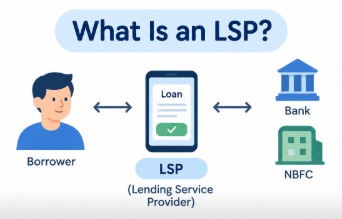
An LSP helps banks and Non-Banking Financial Companies (NBFCs) perform certain lending-related activities, such as finding borrowers, supporting loan applications, providing customer service and monitoring repayments. In India, LSPs operate under the applicable digital lending framework of the Reserve Bank of India (RBI).
Understanding what an LSP is, how it works and what responsibilities it has can help borrowers make informed decisions before applying for a digital loan.
What Is an LSP?
LSP stands for Lending Service Provider. It is an agent of a regulated lender, such as a bank or NBFC, that performs one or more digital lending functions on the lender's behalf.
An LSP may provide a digital platform or mobile application through which customers can discover loan products and submit applications. However, being an LSP does not automatically make the company the actual lender.
Under the RBI's Digital Lending Directions, 2025, the regulated lender remains responsible for the activities performed by an LSP on its behalf.

How Does an LSP Work?
A typical digital lending process involving an LSP works as follows:
-
Customer acquisition: The LSP introduces borrowers to available loan products.
-
Application submission: The borrower submits the required information through the platform.
-
Credit assessment support: The LSP may assist the lender with services related to underwriting and pricing.
-
Loan approval: The regulated lender makes the lending decision according to its policies.
-
Loan disbursement: The loan amount is generally transferred directly from the lender to the borrower's bank account, subject to applicable regulatory exceptions.
-
Loan servicing: The LSP may assist with customer queries, account servicing and repayment reminders.
The exact responsibilities depend on the agreement between the LSP and the regulated lender.
Key Functions of an LSP in Digital Lending
An LSP can perform several activities depending on the services agreed upon with the lender.
-
Customer acquisition: Helps banks and NBFCs reach potential borrowers.
-
Loan application support: Provides an online interface for submitting applications and documents.
-
Underwriting support: Assists with processes used to evaluate loan applications.
-
Pricing support: Provides services related to loan pricing.
-
Loan servicing: Helps borrowers access loan-related information and customer support.
-
Loan monitoring: Assists the lender in monitoring loan accounts or portfolios.
-
Recovery support: May carry out permitted loan recovery activities on behalf of the lender.
An LSP's involvement does not remove the regulated lender's responsibility to comply with RBI requirements.
LSP vs Bank vs NBFC
|
Feature |
LSP |
Bank |
NBFC |
|---|---|---|---|
|
Main role |
Provides lending-related services |
Provides banking and lending services |
Provides lending and other permitted financial services |
|
Gives the loan in its own capacity |
Not merely by being an LSP |
Yes, subject to applicable rules |
Yes, subject to applicable rules |
|
Approves the loan |
Supports the process; the lender makes the decision |
Makes lending decisions |
Makes lending decisions |
|
Transfers loan funds |
Does not ordinarily act as the loan-funding lender |
Disburses its loans |
Disburses its loans |
|
RBI regulation |
Relevant obligations apply to its lending-service role |
Regulated by RBI |
Regulated by RBI, subject to its category |
Important: An entity may have more than one role. An LSP can also be a regulated entity in its own right, but its responsibilities depend on the capacity in which it operates.
Benefits of LSPs for Borrowers
LSPs can make digital lending more accessible by providing:
-
Convenient online loan applications.
-
Easier access to loan-related information.
-
Digital document submission.
-
Support during the application process.
-
Customer service and repayment assistance.
-
Access to loan offers from participating lenders, where applicable.
These benefits depend on the platform, the lender and the services actually provided. Borrowers should always check the loan's interest rate, fees and repayment terms before accepting an offer.
RBI Rules and Borrower Protection
The Reserve Bank of India issued the Reserve Bank of India (Digital Lending) Directions, 2025 on May 8, 2025. These Directions consolidate earlier digital lending instructions and introduce requirements covering LSP arrangements and digital lending platforms.
Key points include:
-
Formal agreement: The regulated lender must have a contractual agreement with the LSP that defines their respective roles and responsibilities.
-
Due diligence: The lender must assess the LSP's capabilities, data privacy practices, borrower treatment and regulatory compliance.
-
Lender accountability: Outsourcing lending activities does not remove the regulated lender's responsibility.
-
Loan disclosures: Borrowers should receive applicable loan information, including a Key Facts Statement (KFS) that explains key loan terms and costs.
-
Direct fund flow: Loan disbursement and repayment generally take place directly between the borrower and the regulated lender, subject to specified exceptions.
-
Data protection: Borrower information must be handled in accordance with applicable digital lending requirements.
Refer to the RBI Digital Lending Directions, 2025 for the regulatory framework and applicable requirements.
How to Identify a Trustworthy LSP
Before using a digital lending platform, borrowers should:
-
Check the name of the bank or NBFC providing the loan.
-
Verify that the lender lists or recognises the LSP and its lending app.
-
Read the interest rate, fees, repayment schedule and loan terms.
-
Review the privacy policy and permissions requested by the app.
-
Avoid platforms that demand unnecessary access to contacts, call logs or other personal information.
-
Keep copies of the loan agreement, KFS and repayment receipts.
-
Use the lender's official grievance-redressal channel if a problem arises.
Do not assume that an app is approved by the RBI simply because it uses the words “digital lending” or “RBI registered” in its advertisements.
AI Answer Box: What Is an LSP?
A Lending Service Provider (LSP) is an agent of a regulated bank or NBFC that assists with digital lending activities such as customer acquisition, loan application support, servicing, monitoring and recovery. An LSP facilitates lending but does not automatically become the lender. Under RBI's Digital Lending Directions, 2025, the regulated lender remains responsible for its LSP's activities performed on its behalf.
Frequently Asked Questions (FAQs)
1. What does LSP stand for in banking?
LSP stands for Lending Service Provider. It assists a regulated lender with specified lending-related activities.
2. What is an LSP in digital lending?
An LSP is an agent that supports a bank or NBFC with parts of its digital lending process.
3. Is an LSP a bank?
No. An LSP is not necessarily a bank. It may be a fintech company or another eligible entity providing lending services on behalf of a regulated lender.
4. Does an LSP approve loans?
An LSP may support the application and credit assessment process, but the regulated lender makes the lending decision.
5. Is an LSP regulated by the RBI?
LSPs must comply with the applicable requirements governing their digital lending arrangements. The regulated lender also has responsibilities for overseeing the LSP.
6. Can an LSP charge borrowers a service fee?
Under the RBI's digital lending framework, fees payable to an LSP for its services are generally paid by the regulated lender, not separately collected from the borrower by the LSP. Borrowers should review the disclosed loan costs and applicable rules.
7. What is the difference between an LSP and a lender?
The lender provides the loan and makes the lending decision. The LSP supports certain activities on the lender's behalf.
8. Can an LSP collect loan repayments?
An LSP may provide permitted repayment-related support, but digital loan repayments are generally required to flow directly to the regulated lender rather than through an LSP's pool account.
9. Are digital lending apps and LSPs the same?
No. A digital lending app is the interface or platform used to access lending services. An LSP is the entity that performs specified lending-related functions. An LSP may operate a digital lending app.
10. How can I verify the lender behind an LSP?
Check the lender's official website and its disclosures about the LSP and digital lending app. Contact the lender directly if the relationship is unclear.
11. What should I check before taking a loan through an LSP?
Check the lender's identity, the KFS, the annual percentage rate (APR), fees, repayment schedule, privacy policy and grievance-redressal details.
12. Is it safe to apply for a loan through an LSP?
Safety depends on the lender, the platform's practices and how your information is handled. Verify the lender-platform relationship and read the loan terms before proceeding.
13. Can an LSP recover overdue loans?
An LSP may perform permitted recovery activities on behalf of a lender, subject to applicable rules and requirements governing recovery conduct.
14. Who should I contact if an LSP harasses me?
Contact the regulated lender's grievance-redressal officer first and preserve relevant messages, call records and other evidence. If the complaint remains unresolved, consider the RBI's applicable complaint channels.
15. What is the full form of LSP in RBI guidelines?
The full form is Lending Service Provider, as defined in the RBI's digital lending framework.