

What Is an Online Loan Application? Steps, Meaning, Eligibility and Key Facts
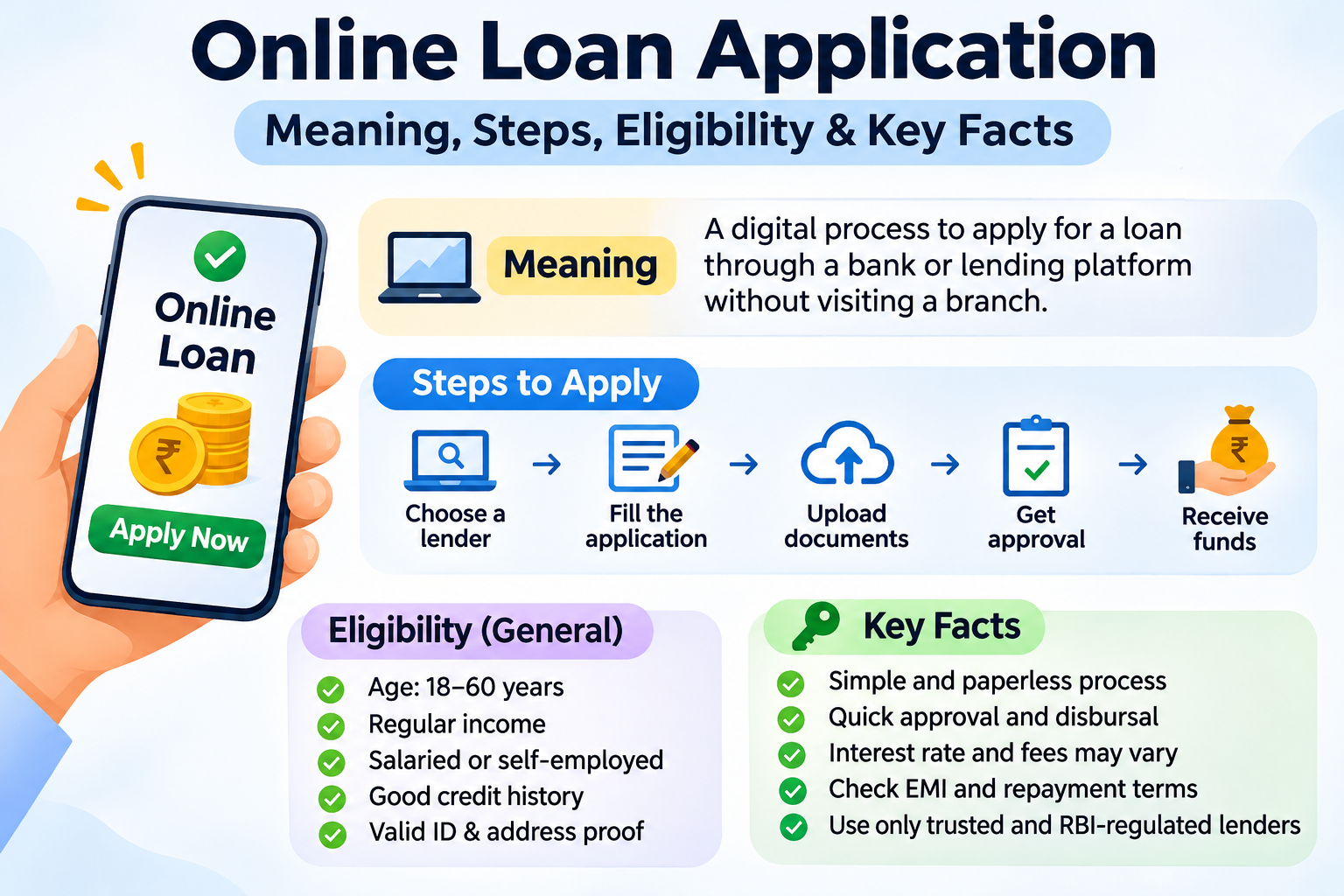
An online loan application is a simple digital process that allows individuals to apply for a loan through a bank's website, mobile application, or authorised lending platform without visiting a branch. It saves time, reduces paperwork and makes loan applications more convenient.
In India, online loan applications are commonly used for personal loans, business loans, education loans and other financial needs. However, applicants should understand the eligibility requirements, interest rates, repayment terms and important conditions before applying.
Here is a beginner-friendly guide to understanding online loan applications, how they work and what to check before submitting an application.
1. What Is an Online Loan Application?
An online loan application is a digital form used to request financial assistance from a bank, NBFC (Non-Banking Financial Company) or authorised lending platform.
Applicants can provide personal details, employment information, income details and required documents online.
After receiving the application, the lender reviews the information, checks eligibility and credit history, and decides whether to approve or reject the loan.
Example: If someone needs ₹50,000 for an emergency, they can visit a lender's official website, complete the application, upload the required documents and wait for the lender's decision.
2. How Does the Online Loan Application Process Work?
The online loan application process generally involves the following steps:
Step 1: Choose a Trusted Lending Platform
Select a bank, NBFC or authorised digital lending platform. Check the lender's reputation and official website before applying.
Step 2: Check Loan Eligibility
Review the lender's eligibility requirements, including age, income, employment status and credit history.
Step 3: Fill Out the Online Application Form
Enter the required information, such as:
-
Full name
-
Mobile number
-
Email address
-
Residential address
-
Monthly income
-
Employment details
-
Loan amount required
Step 4: Upload Required Documents
Submit the necessary documents for identity verification, address verification and income assessment.
Step 5: Complete Verification
The lender may verify your identity, income, employment details and credit profile.
Step 6: Review Loan Approval and Terms
If approved, carefully check the interest rate, processing fees, repayment period, EMI and other applicable charges.
Step 7: Accept the Loan Agreement
Read the loan agreement and provide your consent before accepting the offer.
Step 8: Receive the Loan Amount
After completing the required formalities, the lender disburses the approved loan amount to your bank account.
Note: The actual process and approval time vary depending on the lender, loan type and verification requirements.
3. Online Loan Application Eligibility Criteria
Eligibility requirements vary from one lender to another. However, most lenders consider the following factors:
|
Eligibility factor |
General requirement |
|---|---|
|
Age |
Usually 18–21 years or above |
|
Income |
Regular and sufficient income |
|
Employment |
Salaried or self-employed |
|
Credit score |
A good credit history may improve approval chances |
|
Residency |
Valid residential address in India |
|
Bank account |
Active bank account |
|
Identity |
Valid identity and address documents |
Important: These are general guidelines, not universal requirements. Some lenders may have different age limits, minimum income requirements and credit score policies.
4. Documents Required for an Online Loan Application
Most lenders request documents to verify the applicant's identity, address and financial position.
Commonly required documents include:
-
Aadhaar card or another accepted identity document
-
PAN card
-
Recent salary slips (for salaried applicants)
-
Bank statements
-
Address proof
-
Passport-size photograph, if required
-
Income tax returns (for some self-employed applicants)
Some lenders offer paperless verification through authorised digital processes.
5. Benefits of Applying for a Loan Online
Online loan applications offer several advantages.
1. Convenient Application Process
Applicants can submit applications using a smartphone or computer.
2. Less Paperwork
Digital document submission can reduce the need for physical paperwork.
3. Time-Saving
Applicants can complete the process without travelling to a bank branch.
4. Easy Application Tracking
Some lenders provide online application status updates.
5. Multiple Loan Options
Applicants can compare loan products from different lenders before making a decision.
6. Digital Documentation
Loan-related documents can be received and stored electronically.
6. Important Things to Check Before Applying Online
Before submitting your application, consider these important factors:
-
Interest rate: Understand how much interest you will pay.
-
APR: Check the Annual Percentage Rate, which reflects the overall annualised borrowing cost.
-
Processing fees: Check applicable charges and deductions.
-
Loan tenure: Choose a repayment period that suits your budget.
-
EMI amount: Make sure you can comfortably pay the monthly instalments.
-
Late payment charges: Understand the consequences of missing an EMI.
-
Loan agreement: Read all terms and conditions before accepting the offer.
The RBI's Digital Lending Directions, 2025 require regulated lenders to provide borrowers with a Key Facts Statement (KFS) and relevant loan disclosures. The KFS helps borrowers understand the loan's important terms and costs.
7. Key Facts About Online Loan Applications
Here are some important facts every borrower should know:
-
Online loan applications can be submitted at any time, but processing depends on the lender.
-
Loan approval is not guaranteed just because an application is submitted.
-
A lender may check your credit history before approving a loan.
-
Incorrect personal or financial information can result in rejection.
-
Interest rates and repayment periods differ between lenders.
-
A digital loan is still a financial obligation that must be repaid.
-
Applicants should use official websites or verified applications.
-
Never share your OTP, PIN or banking password with anyone.
-
Check the lender's association with an RBI-regulated bank or NBFC.
-
Read the loan agreement and KFS before accepting the loan.
The RBI advises borrowers to verify digital lending apps through the websites of the associated regulated banks or NBFCs and avoid suspicious links received through SMS or social media.
8. Common Mistakes to Avoid When Applying for a Loan Online
Avoid these mistakes to make better borrowing decisions:
-
Applying through unknown loan applications.
-
Providing incorrect personal information.
-
Ignoring processing fees and additional charges.
-
Selecting a loan without checking the EMI.
-
Applying for more money than necessary.
-
Ignoring repayment dates.
-
Accepting loan terms without reading the agreement.
-
Sharing confidential banking information with strangers.
9. Advantages and Limitations of Online Loan Applications
|
Advantages |
Limitations |
|---|---|
|
Convenient application |
Approval is not guaranteed |
|
Less paperwork |
Requires internet access |
|
Saves travelling time |
Verification may take time |
|
Digital document access |
Risk of fraudulent apps |
|
Easy application tracking |
Eligibility conditions vary |
10. How to Apply Safely for an Online Loan in India
Follow these safety practices:
-
Visit the official lender website.
-
Verify the bank or NBFC providing the loan.
-
Check the lender's digital lending app details.
-
Understand the interest rate and total repayment amount.
-
Read the KFS and loan agreement.
-
Avoid paying suspicious advance fees to unknown individuals.
-
Never share OTPs or passwords.
-
Keep a copy of the sanction letter and loan agreement.
Remember that a genuine lender should clearly disclose its identity, loan terms, charges and grievance redressal process.
11. Online Loan Application Example
Consider an individual who wants to borrow ₹50,000 for an unexpected expense.
|
Particulars |
Example |
|---|---|
|
Loan amount |
₹50,000 |
|
Interest rate |
12% per annum |
|
Loan tenure |
12 months |
|
Approximate monthly EMI |
₹4,442 |
|
Approximate total repayment |
₹53,304 |
Illustrative calculation assuming a reducing-balance interest rate, excluding additional fees and charges. Actual offers may differ.
This example shows why borrowers should calculate their EMI and repayment capacity before accepting a loan.
12. Key Takeaways
-
An online loan application allows borrowers to apply digitally.
-
The process generally includes registration, document submission and verification.
-
Eligibility depends on income, age, employment and creditworthiness.
-
Applicants should compare interest rates, APR, fees and repayment periods.
-
Always verify the lender before sharing personal information.
-
Read the KFS and loan agreement before accepting the loan.
-
Borrow only what you can comfortably repay.
13. Frequently Asked Questions (FAQs)
1. What is an online loan application?
An online loan application is a digital process that allows individuals to request a loan through a bank website, mobile app or authorised lending platform.
2. How can I apply for a loan online?
Visit the lender's official website, check eligibility, complete the application form, upload the required documents and submit your application.
3. What documents are required for an online loan?
Common documents include PAN card, Aadhaar or other accepted identity proof, bank statements, address proof and income proof.
4. Can I apply for a loan using my mobile phone?
Yes. You can apply using a smartphone through an official lender website or authorised mobile application.
5. Is a credit score important for online loan approval?
Yes. Many lenders consider credit history and credit scores when assessing loan applications. However, requirements vary.
6. Can salaried employees apply for online loans?
Yes. Salaried employees can apply if they meet the lender's income, age and other eligibility requirements.
7. Can self-employed individuals apply for online loans?
Yes. Many lenders accept applications from self-employed individuals after assessing their income and financial records.
8. How long does online loan approval take?
It depends on the lender, verification process and loan type. Some applications may be processed quickly, while others take longer.
9. Is applying for a loan online safe?
It can be safe when using an official website or verified application associated with an RBI-regulated lender.
10. Can I get a loan without income proof?
Some lenders may use alternative verification methods, but they still need to assess your ability to repay.
11. Does applying for an online loan affect my credit score?
A lender's hard credit enquiry may affect your credit score. The impact depends on your credit profile and the enquiry.
12. What happens if my online loan application is rejected?
The lender may reject your application because of eligibility issues, insufficient income, credit history or incomplete documentation.
13. Can I cancel an online loan application?
You may be able to withdraw an application before disbursement. After accepting the loan, cancellation depends on the agreement and applicable cooling-off provisions.
14. What is a Key Facts Statement (KFS)?
A KFS is a document that explains important loan information, including interest rates, APR, repayment details and applicable charges.
15. Can I apply for multiple online loans?
You can apply to different lenders, but multiple applications and credit enquiries may affect your credit profile. Borrow responsibly.
14. Conclusion
An online loan application makes borrowing more convenient by allowing individuals to apply for financial assistance digitally. Understanding the application process, eligibility requirements, documentation and repayment conditions can help borrowers make informed financial decisions.
Before applying, always compare loan offers, check the total borrowing cost and verify the lender. Responsible borrowing and timely EMI payments are important for maintaining financial stability.
Published on : 24th Novemebr
Published by : monisha
www.vizzve.com || www.vizzveservices.com
Follow us on social media: Facebook || Linkedin || Instagram
🛡 Powered by Vizzve Financial
RBI-Registered Loan Partner | 10 Lakh+ Customers | ₹600 Cr+ Disbursed