

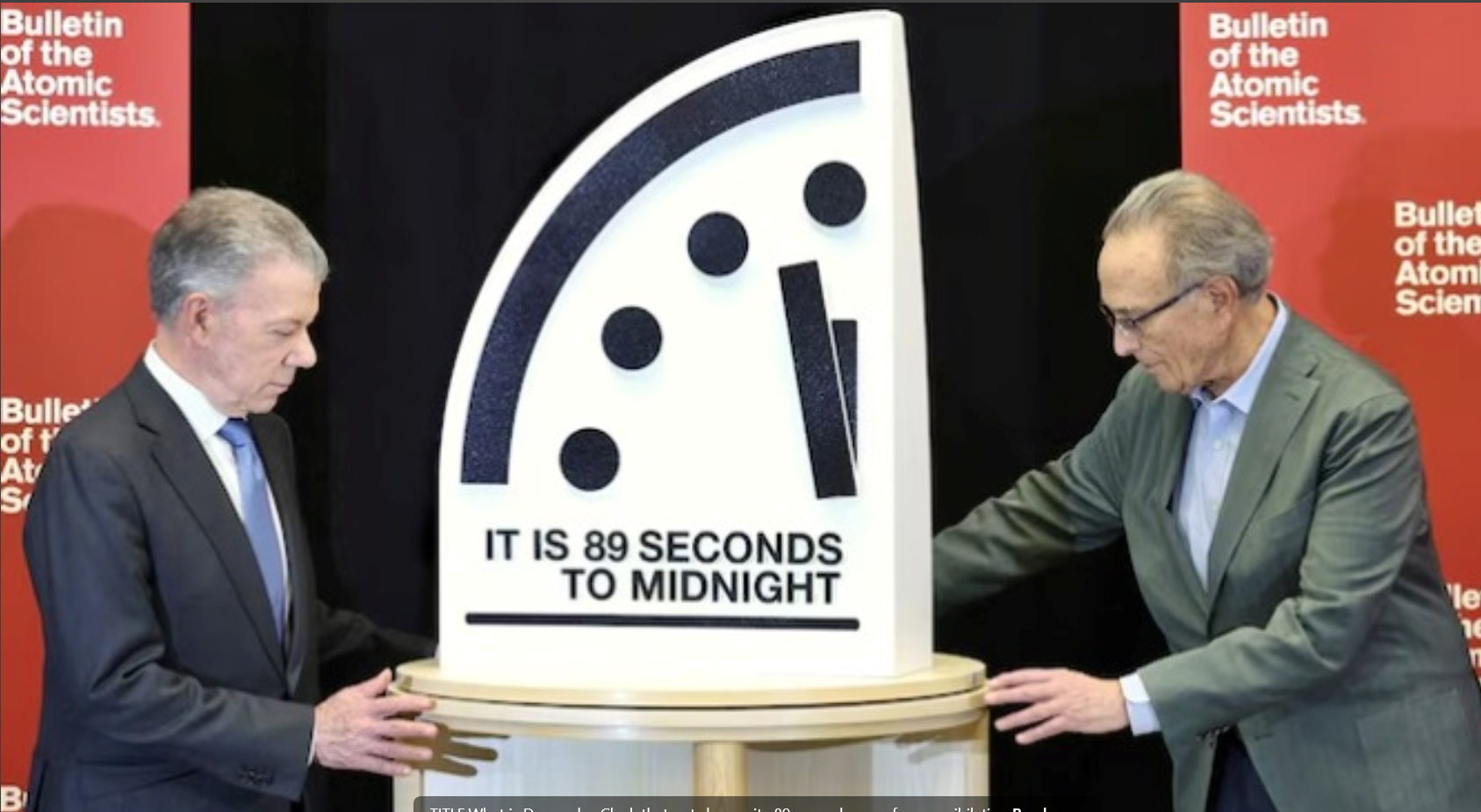
The *Doomsday Clock* is a symbolic representation of how close humanity is to a global catastrophe. Maintained by the *Bulletin of the Atomic Scientists*, the clock was originally created in 1947 to warn the world about nuclear threats. Over time, it has evolved to include risks like climate change, biological threats, and disruptive technologies.
In its latest update for *2024, the Doomsday Clock has been set to 89 seconds to midnight, the closest it has ever been to global annihilation. The move reflects growing concerns over nuclear tensions, climate disasters, and artificial intelligence risks.
What is the Doomsday Clock?
The Doomsday Clock is a metaphorical clock that measures how close humanity is to self-destruction. "Midnight" symbolizes a global catastrophe, such as nuclear war or environmental collapse. Scientists and experts adjust the clock annually based on world events, technological advancements, and geopolitical tensions.
Why is the Clock at 89 Seconds to Midnight?
Several factors contributed to the latest setting of the Doomsday Clock:
1. Nuclear Threats – Rising tensions between major powers, including conflicts involving Russia, the U.S., and China, have increased fears of nuclear escalation. The ongoing war in Ukraine and North Korea’s missile tests add to global instability.
2. Climate Crisis – Unprecedented heatwaves, wildfires, and extreme weather events signal worsening climate conditions. The failure of governments to meet emission reduction targets accelerates the global crisis.
3. Biological & AI Risks – The COVID-19 pandemic highlighted vulnerabilities in global health security. Additionally, unregulated artificial intelligence advancements raise concerns about misinformation, autonomous weapons, and job displacement.
4. Geopolitical Conflicts – Unresolved conflicts and rising nationalism contribute to global uncertainty, increasing the likelihood of war, economic instability, and social unrest.
History of the Doomsday Clock*
1947 – Created at *7 minutes to midnight* due to nuclear tensions.
1953 – Moved to *2 minutes to midnight* after the U.S. and USSR tested hydrogen bombs.
1991– Pushed back to *17 minutes to midnight*, the safest point in history, after the Cold War ended.
2020 – Set at *100 seconds to midnight*, reflecting nuclear risks, climate change, and misinformation threats.
2023-2024– Moved to *89 seconds to midnight*, the closest ever, amid heightened global risks.
Can the Clock Move Back?
Yes, the Doomsday Clock can be adjusted backward if global risks decrease. Actions that could push the time back include:
- Strengthening nuclear arms control agreements.
- Taking aggressive climate action to reduce carbon emissions.
- Regulating AI and emerging technologies responsibly.
- Strengthening global cooperation to resolve conflicts peacefully.
Conclusion
The Doomsday Clock serves as a stark reminder of the existential threats humanity faces. While it does not predict an actual catastrophe, it highlights the urgency of addressing nuclear risks, climate change, and global security challenges. The world must take decisive action to turn back the clock before it's too late.