

Introduction
Loan foreclosure is the process of repaying the entire outstanding loan amount before the scheduled end of the loan tenure. It allows borrowers to close their loans early instead of continuing to pay monthly EMIs until the final due date.
Whether you have a personal loan, home loan, car loan or another type of loan, foreclosure can help you reduce future interest costs. However, before closing a loan, it is important to understand the outstanding balance, applicable charges and the impact on your finances.
In this guide, we explain the meaning of loan foreclosure, how it works, its benefits, possible disadvantages and the steps borrowers should follow.
What Is Loan Foreclosure?
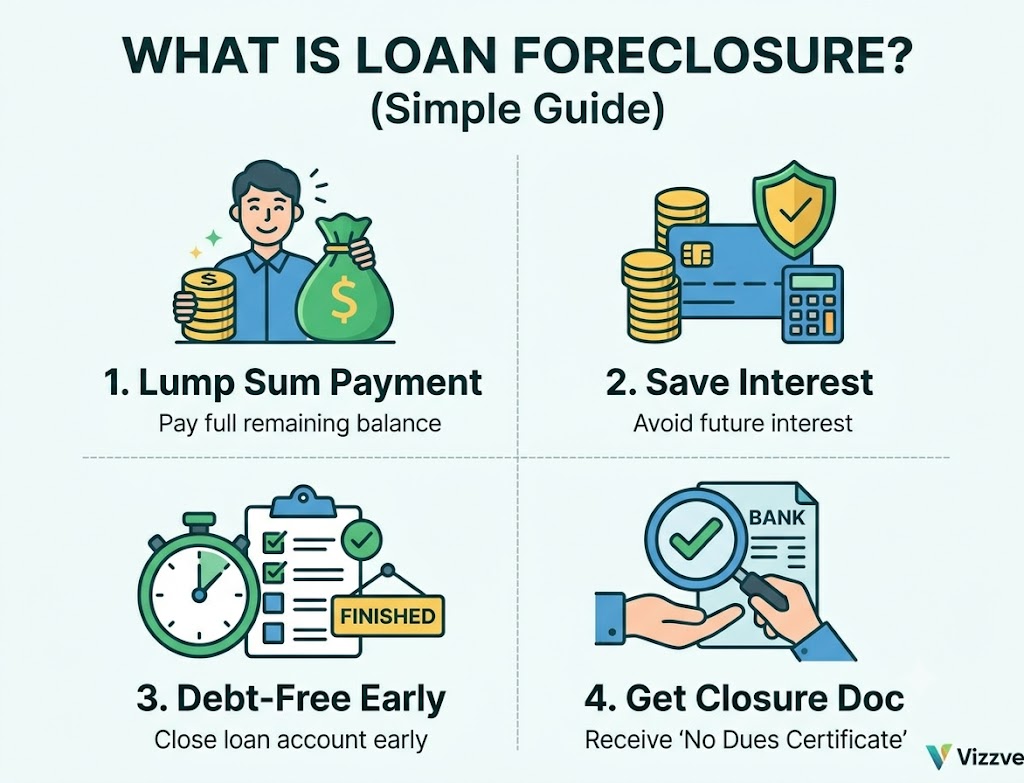
Loan foreclosure means paying the remaining amount owed to a lender in one lump sum before the loan's original maturity date.
The foreclosure amount generally includes the outstanding principal, interest payable up to the closure date and any applicable fees or charges.
Example: Suppose you take a personal loan of ₹5,00,000 for five years. After paying EMIs for three years, you decide to repay the remaining balance in full. Once the lender receives the required amount and completes the closure process, your loan is considered foreclosed.
How Does Loan Foreclosure Work?
The foreclosure process usually involves the following steps:
-
Contact your lender: Ask your bank or financial institution whether your loan is eligible for foreclosure.
-
Request a foreclosure statement: Obtain the exact amount payable on a specific date.
-
Check applicable charges: Review any permitted foreclosure fees, taxes or other outstanding dues.
-
Arrange the payment: Pay the total amount using the lender's approved payment methods.
-
Collect confirmation: Obtain a loan closure letter or no-dues certificate.
-
Check your credit report: Verify that the loan status is updated after the lender reports the closure.
The exact procedure may vary depending on the lender and type of loan.
Benefits of Loan Foreclosure
1. Save on Future Interest
Closing a loan early can help you avoid interest that would otherwise have been payable during the remaining tenure.
2. Become Debt-Free Earlier
Foreclosure removes the obligation to continue paying EMIs for that loan after the account is properly closed.
3. Improve Monthly Cash Flow
Once the loan is closed, the money previously used for EMIs can be redirected towards savings, investments or other financial goals.
4. Reduce Financial Obligations
Having fewer outstanding loans may make it easier to manage your monthly budget and plan future borrowing.
Disadvantages of Loan Foreclosure
Although foreclosure has benefits, it may not be suitable for everyone.
-
Possible foreclosure charges: Some loans may carry permitted charges for early repayment.
-
Reduced savings: Using a large amount of money to close a loan may leave you with insufficient emergency funds.
-
Opportunity cost: The money used for foreclosure could otherwise support other financial goals.
-
Limited liquidity: You may have less cash available for unexpected expenses.
Before making a decision, compare the interest you could save with the costs and financial flexibility you would give up.
Loan Foreclosure Charges in India
Foreclosure charges are fees that a lender may apply when a borrower closes a loan before its scheduled end date. Whether these charges are permitted depends on the loan type, lender category, interest-rate structure and applicable RBI rules.
The Reserve Bank of India's pre-payment directions effective from January 1, 2026, provide specific protections against pre-payment charges for covered floating-rate loans. For example, covered floating-rate loans to individuals for purposes other than business generally cannot attract pre-payment charges under the applicable directions. Fixed-rate loans and other categories may be subject to different rules. Always verify the provisions applicable to your particular loan and lender.
Read the terms in your loan agreement and Key Facts Statement (KFS), where applicable, before making payment.
Loan Foreclosure vs Loan Prepayment
| Feature | Loan Foreclosure | Loan Prepayment |
|---|---|---|
| Meaning | Repaying the entire outstanding loan | Repaying part or all of the loan early |
| Payment | Full remaining amount | Partial amount or full amount |
| Loan status | Closes after all dues are settled | Usually remains active after partial repayment |
| Interest impact | Can eliminate future interest on the closed balance | Can reduce future interest on the prepaid balance |
| EMI obligation | Ends after proper closure | May continue, depending on the repayment arrangement |
When Should You Foreclose a Loan?
Loan foreclosure may be worth considering when:
-
You have sufficient savings to repay the loan.
-
You can retain an adequate emergency fund after payment.
-
The expected interest savings exceed any applicable foreclosure costs.
-
You want to reduce monthly financial commitments.
-
You have compared foreclosure with other uses for your money.
Avoid using all your savings simply to become debt-free if doing so would leave you financially vulnerable.
Documents to Collect After Loan Foreclosure
After completing the repayment, keep the following documents safely:
-
Loan closure letter or no-dues certificate.
-
Final loan account statement.
-
Payment receipt or transaction confirmation.
-
Release documents for any collateral, where applicable.
-
Confirmation of removal of any registered charge, where applicable.
For secured loans, ask your lender about the return of original property documents and any required release formalities.
Frequently Asked Questions (FAQs)
1. What is loan foreclosure in simple words?
Loan foreclosure means paying off the entire remaining loan amount before the scheduled end of the loan.
2. Is loan foreclosure good or bad?
It can be beneficial if the interest saved exceeds the associated costs and you retain enough emergency savings.
3. Can I foreclose a personal loan?
Many lenders allow personal loan foreclosure, subject to the loan agreement and applicable regulations.
4. Does loan foreclosure reduce interest?
Yes. Closing a loan early generally prevents future interest from accumulating on the repaid balance.
5. Are foreclosure charges mandatory?
No. Charges depend on applicable RBI directions, the loan category and the lender's permitted terms.
6. Does loan foreclosure affect my CIBIL score?
Foreclosure itself does not automatically mean your score will increase or decrease. Your credit report should accurately reflect that the loan has been closed.
7. Can I foreclose a home loan early?
Yes, subject to the terms and applicable rules. Certain floating-rate home loans have specific protections against pre-payment charges.
8. What is a foreclosure statement?
It is a document from the lender showing the total amount required to close the loan on a specified date.
9. What is the difference between foreclosure and loan settlement?
Foreclosure generally means repaying all dues in full. Settlement usually involves an agreement to pay less than the full amount owed and can have a negative impact on your credit history.
10. What happens after loan foreclosure?
After all required dues are paid and processed, the lender closes the loan account and provides appropriate closure confirmation.
Conclusion
Loan foreclosure can be an effective way to reduce future interest costs, close outstanding debt and free up monthly income. However, borrowers should check the foreclosure amount, applicable rules and their remaining savings before proceeding.
Always obtain written confirmation from your lender and keep the closure documents safely. A well-planned foreclosure decision can support better financial management without compromising your emergency fund or other important goals.
Published on : 21st October 2026
Published by : monisha
www.vizzve.com || www.vizzveservices.com
Follow us on social media: Facebook || Linkedin || Instagram
🛡 Powered by Vizzve Financial
RBI-Registered Loan Partner | 10 Lakh+ Customers | ₹600 Cr+ Disbursed