

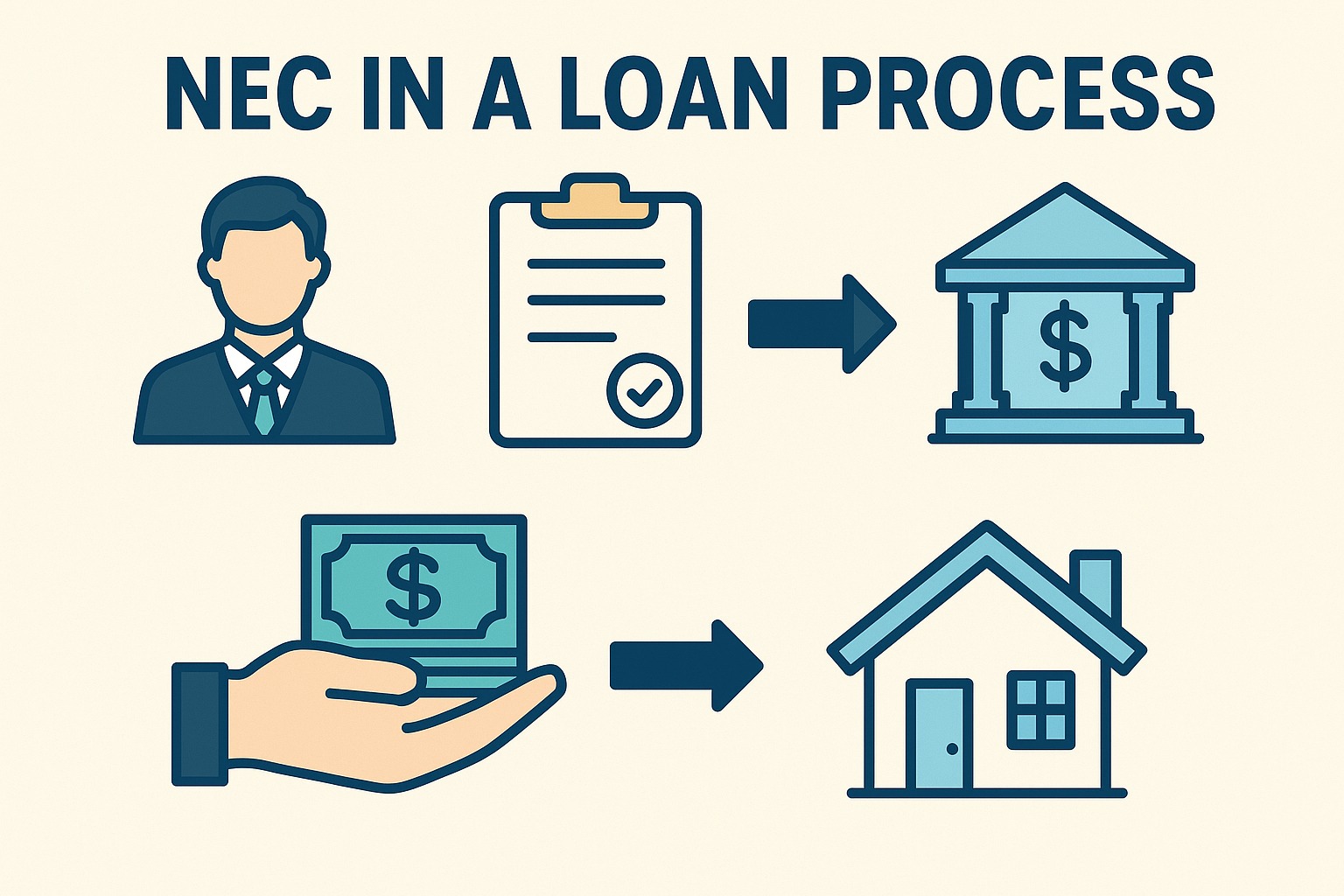
If you are applying for a loan, you may come across the term NEC in documents or bank communications. NEC stands for National Electronic Clearing, which is part of India’s electronic payment system designed to make fund transfers efficient, secure, and automated.
In simple terms, NEC is a mode of electronically transferring funds from one bank to another, often used by banks and government departments for collecting loan EMIs, interest, or other payments.
How NEC Works in Loans
When you take a loan, the bank usually sets up a repayment system. NEC allows your EMIs or interest payments to be automatically debited from your account on the due date and credited to the lender.
Steps Involved:
Borrower gives bank account details and mandate to the lender.
Bank initiates NEC instructions for automatic deduction.
EMI is debited from borrower’s account and credited to the lender on the scheduled date.
This eliminates manual intervention, reduces errors, and ensures timely repayment.
Key Features of NEC in Loans
Automatic Payment – EMIs and loan dues are debited automatically from your account.
Secure Transfer – Uses RBI-regulated electronic systems to transfer funds.
Reduced Delays – Prevents late payments and helps avoid penalties.
Convenient for Borrowers – No need to remember payment dates; reduces the risk of missed payments.
Traceable – Every transaction is recorded and traceable for verification.
Benefits of NEC for Borrowers
Timely Repayments – Helps maintain a good credit score.
Minimizes Errors – Reduces risk of manual mistakes in payments.
Convenience – Once set up, no further action is needed from the borrower.
Transparency – Clear records of all debited EMIs in your bank account statement.
Things to Keep in Mind
Ensure sufficient balance in your account on the EMI due date.
Always verify the bank account details submitted to the lender.
NEC instructions are generally revocable with notice, but cancelling without informing the bank may result in penalties.
Monitor statements regularly to ensure correct EMI amounts are debited.
Final Thoughts
NEC is a convenient, secure, and automated payment system used in loan processes to simplify EMI collection and reduce delays. By enabling automatic debits, NEC protects borrowers from missing payments, helps banks maintain smooth cash flow, and ensures transparency in financial transactions. Understanding how NEC works can help you manage loans efficiently and avoid unnecessary penalties.
FAQs
Q1. Is NEC mandatory for all loans?
No, but most banks prefer it for automated and error-free EMI collection.
Q2. Can I stop NEC if I want to pay manually?
Yes, but you must inform the bank and ensure alternative payment arrangements.
Q3. Does NEC affect my credit score?
Timely debits via NEC help maintain a good credit score; missed payments may negatively affect it.
Q4. How fast are NEC transactions processed?
Typically, NEC transactions are processed on the same day or the next business day.
Q5. Is NEC safe for online banking?
Yes, NEC is RBI-regulated and uses secure channels for fund transfer.
Published on : 7th November
Published by : SMITA
www.vizzve.com || www.vizzveservices.com
Follow us on social media: Facebook || Linkedin || Instagram
🛡 Powered by Vizzve Financial
RBI-Registered Loan Partner | 10 Lakh+ Customers | ₹600 Cr+ Disbursed