

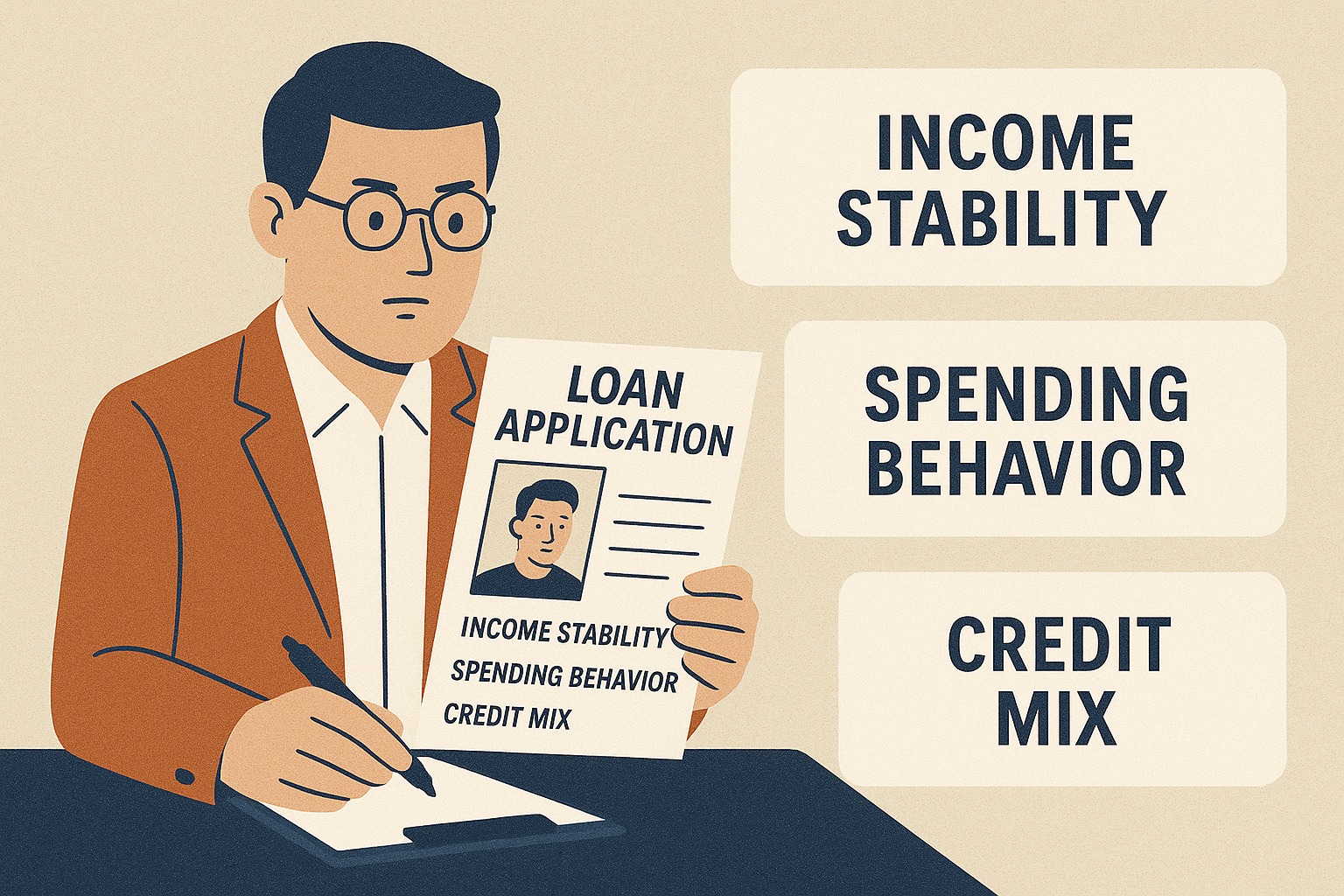
Your credit score is often treated as the golden number for loan approval — the higher, the better.
But here’s the truth: it’s not the whole picture.
A credit score (like CIBIL, Experian, or Equifax) gives lenders a snapshot of your repayment history.
However, it doesn’t tell your full financial story — which is why lenders dig deeper before deciding to trust you with credit.
Let’s uncover what your score doesn’t reveal — and why it matters just as much as the number itself.
1️⃣ Income Stability and Source of Earnings
Your credit score shows how you handle debt, but not how steady your income is.
Lenders care about:
Employment type (salaried vs. self-employed)
Income consistency (regular salary vs. fluctuating earnings)
Industry stability (tech, healthcare, government vs. high-risk sectors)
📊 Example:
Two people may both have a CIBIL score of 780 —
but a salaried employee with a stable job may get a better rate than a freelancer with irregular income.
✅ Tip: Maintain steady income documentation — salary slips, tax returns, and bank statements help boost trust.
2️⃣ Debt-to-Income Ratio (DTI)
A high credit score doesn’t mean you can afford more debt.
Lenders calculate your DTI ratio — the portion of your income that goes toward EMIs.
If your DTI exceeds 40–45%, banks may hesitate to approve more credit, even if your score is high.
📊 Example:
If you earn ₹1 lakh/month but pay ₹50,000 in EMIs, your DTI is 50%.
Despite a good score, this signals limited repayment capacity.
✅ Tip: Keep total EMIs under 40% of your income to appear financially sound.
3️⃣ Employment & Career History
Your credit report won’t mention how long you’ve worked at your job or in your current industry — but lenders check this for stability.
A borrower switching jobs frequently or working in volatile sectors may be seen as a higher risk, even with a perfect score.
✅ Tip: If you’re planning a major loan (like a home loan), avoid changing jobs 3–6 months before applying.
4️⃣ Existing Relationship with the Bank
Your credit score is external — but your relationship with a specific lender is personal.
Banks track:
Your savings account behavior (average balance, regular deposits)
Credit card discipline (if issued by the same bank)
Previous loan performance with them
Strong internal data can offset a slightly lower score — meaning loyal customers often get preferential loan terms.
✅ Tip: Maintain good standing with at least one bank for long-term benefits.
5️⃣ Credit Mix and Credit Depth
Credit scores reflect payment history but not the diversity of your credit experience.
Lenders prefer borrowers who have handled both:
Revolving credit (credit cards)
Installment loans (home, car, or personal loans)
This demonstrates financial versatility.
Someone who’s only used credit cards may seem less reliable than one who has responsibly managed multiple loan types.
✅ Tip: Build a balanced credit mix to strengthen your financial profile.
6️⃣ Behavioral Patterns and Spending Habits
Modern lenders — especially fintech platforms — use AI and alternative data to assess behavior beyond your score:
Bill payment timeliness
Digital spending trends
Lifestyle patterns from bank statements
Even with a high score, overdrafts, bounced cheques, or high cash withdrawals can signal risk.
✅ Tip: Keep consistent digital financial behavior — it now plays a growing role in creditworthiness.
Final Thoughts
Your credit score is important — but it’s just one chapter in your financial story.
Banks and lenders look at the complete picture: your income, spending habits, job stability, and existing obligations.
A high score might open the door, but your financial behavior keeps it open.
So, while you work to raise your CIBIL score, also build what lenders truly value — credibility, consistency, and control.
Because in the end, trustworthiness beats the number.
❓ Frequently Asked Questions (FAQ)
1. Is credit score the only factor for loan approval?
No. Lenders also assess income stability, repayment capacity, employment history, and relationship with the bank.
2. Can I get a loan with a good income but a low credit score?
Possibly. A strong income and job stability can sometimes offset a low score, though interest rates may be higher.
3. What is a good credit score in India?
A score above 750 is considered good for most banks and NBFCs. It indicates responsible credit behavior.
4. How does my debt-to-income ratio affect my loan eligibility?
A high DTI means most of your income goes toward EMIs, signaling repayment risk — even with a high credit score.
5. Can loyalty with a bank improve my loan chances?
Yes. Having a long-standing account or previous loan with timely repayments builds trust and improves approval odds.
Published on : 10th November
Published by : SMITA
www.vizzve.com || www.vizzveservices.com
Follow us on social media: Facebook || Linkedin || Instagram
🛡 Powered by Vizzve Financial
RBI-Registered Loan Partner | 10 Lakh+ Customers | ₹600 Cr+ Disbursed