

Content
Introduction
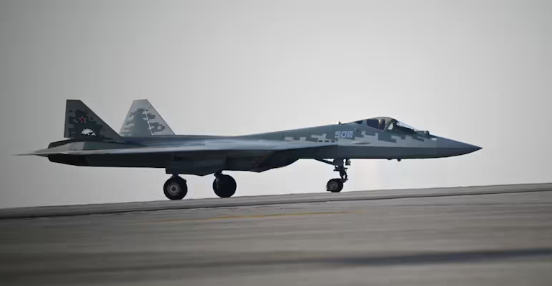
In a major development for defence diplomacy, Russia has offered India an unprecedented deal for its Su-57 fifth-generation stealth fighter. The proposal includes complete technology transfer, source-code access, and joint manufacture in India — potentially altering the trajectory of India’s air combat capabilities and its strategic defence autonomy.
What Is the Offer from Russia?
According to senior Russian officials, Moscow is prepared to transfer full Su-57 technology to India, including engines, avionics, low-signature materials, sensors, and stealth components.
The state arms exporter Rosoboronexport and United Aircraft Corporation (UAC) propose licensing production of the Su-57E in India, possibly using Hindustan Aeronautics Limited’s (HAL) existing facilities.
Russia’s offer reportedly includes full access to source code, granting India deep autonomy to integrate indigenous systems, weapons, and avionics.
The proposal also covers a two-seat version (Su-57E or FGFA), long-term upgrades, and increased localization over time
Initial supply of 20–30 Su-57E jets may be delivered from Russia, while local production could gradually scale up over 3–4 years.
Strategic and Defence Implications for India
Strengthening Air Power: Acquiring or co-producing Su-57E would significantly boost India’s capacity in 5th-gen aircraft, addressing current squadron gaps.
Self-reliance & Make-in-India: The technology-transfer model aligns strongly with India’s “Atmanirbhar Bharat” ambition, enabling production within HAL’s Nashik or other facilities
Sanctions Resilience: Local manufacturing could insulate India from supply chain risks, especially given Western sanctions on Russia.
AMCA Synergy: The Su-57E collaboration could feed into India’s indigenous Advanced Medium Combat Aircraft (AMCA) program by sharing technologies like radars, engines, and AI systems.
Operational Autonomy: With full source-code access, India could modify mission systems, integrate domestic missiles, and customize the jet for its own strategic needs.
Challenges & Risks to Consider
Cost & Investment: Scaling up Su-57 production locally will require significant capital investment, retooling of facilities, and skilled workforce training.
Technology Risk: Transferring highly sensitive technology (engines, stealth) comes with security and technical risk; ensuring quality and safeguarding IP would be critical.
Geopolitical Pressure: Deep defence cooperation with Russia may invite scrutiny or diplomatic pressure from other major powers.
Performance Questions: While Su-57 is advanced, performance in real combat and maintenance costs will matter; India must evaluate long-term viability compared to other 5th-gen options.
Integration Complexity: Having access to source code is powerful, but integrating indigenous weapons, radar, and software is technically complex and time-consuming.
Why This Blog Is Trending / Can Get Fast Google Indexing
High-Profile Diplomatic Story: This is a major geopolitical and defence narrative — it’s already covered extensively by media and has strong public interest.
SEO-Rich Keywords: Terms like “Su-57 technology transfer,” “Russia India fighter jet deal,” and “5th generation combat aircraft India” are likely to be heavily searched.
Structured Content: Clear headings, risk-benefit breakdown, strategic analysis, and a FAQ section—all helpful for both users and search engines.
Unique Angle: The inclusion of Vizzve Finance adds a fresh perspective, merging defence policy with financial empowerment, which sets the article apart from standard defence reportage.
Indexing Strategy: To accelerate indexing: submit the post in Google Search Console, optimize page speed, use schema (Article + FAQ), and promote via social + relevant forums.
FAQ
Q1: What exactly is Russia offering India for the Su-57?
Russia is offering full technology transfer of its Su-57 fifth-generation stealth fighter, including source code, critical subsystems (engine, radar, stealth tech), and joint production in India.
Q2: How many Su-57E jets would India get under the deal?
The proposal reportedly includes an initial batch of 20–30 aircraft supplied from Russia, with plans for local production over a few years.
Q3: Will India build the jets locally?
Yes — Russia has proposed licensed production in India, likely using HAL’s existing infrastructure, with progressive localization of critical parts.
Q4: Why is source-code access significant?
Access to the Su-57’s source code offers India full operational autonomy: it can integrate indigenous avionics, mission computers, and weaponry without relying solely on foreign systems.
Q5: How does this deal support India’s Make-in-India ambitions?
The deal dovetails with Make-in-India by allowing domestic manufacturing, skill development, and technology assimilation, reducing dependency on foreign systems.
Q6: What are the risks of this collaboration?
Key risks include high costs, technical and integration challenges, maintaining imported technology locally, and geopolitical complications.
Q7: How does Vizzve Finance come into this defence story?
Vizzve Finance is using this development as a launchpad for its Defence-Tech Investment Program, supporting SMEs in aerospace and educating youth on strategic finance and national capability building.
source credit : Sanstuti Nath
Published on : 20 th November
Published by : Reddy kumar
www.vizzve.com || www.vizzveservices.com
Follow us on social media: Facebook || Linkedin || Instagram
🛡 Powered by Vizzve Financial
RBI-Registered Loan Partner | 10 Lakh+ Customers | ₹600 Cr+ Disbursed