

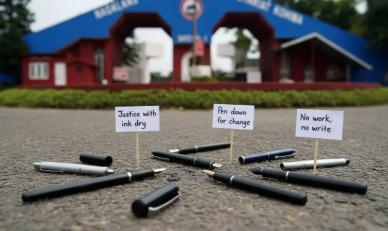
In Nagaland, the sound of silence has replaced the usual buzz inside government offices. Desks remain occupied, but pens have stopped moving — as employees join a pen-down strike to protest pending demands and unresolved grievances.
The protest, though peaceful, has sent ripples through the state administration and revived discussions on public sector accountability, labour rights, and the efficiency of India’s governance systems.
Why Did the Strike Begin?
The current pen-down strike in Nagaland was initiated by a coalition of government employee associations demanding the implementation of pending pay revisions, timely promotions, and improved working conditions. Many workers argue that despite years of service, their concerns remain unheard, leading to a growing sense of neglect.
By refusing to perform clerical and administrative duties, employees have chosen a non-violent yet impactful form of protest — one that halts paperwork, delays approvals, and disrupts essential services without resorting to aggressive demonstrations.
Impact on Public Services
From revenue offices to district secretariats, the effects of the strike are visible everywhere. Public document processing, salary disbursement, and approval files have come to a standstill, inconveniencing citizens who depend on daily administrative work.
The strike has also highlighted the fragile balance between citizen service delivery and employee welfare, revealing how deeply interconnected India’s governance ecosystem is.
The Bigger Picture — A Reflection of Systemic Frustration
This pen-down strike is not an isolated event. Across India, similar protests have emerged in recent years — often tied to delayed pay scales, job insecurity, and policy uncertainty.
In many ways, the situation in Nagaland mirrors a larger national challenge: how to maintain efficient governance while ensuring fair treatment and morale of public employees.
When the workforce that keeps the state machinery running feels unheard, administrative paralysis becomes inevitable. The “silent protest” thus transforms into a powerful message of resistance.
Possible Pathways Forward
Experts and civil society groups suggest dialogue as the only sustainable resolution. Governments need to engage with employee bodies transparently, review outdated policies, and build mechanisms to address grievances before they escalate.
Meanwhile, citizens — the ultimate stakeholders — are calling for both sides to prioritize public interest. A balanced approach that protects both worker rights and administrative continuity is crucial.
If handled wisely, this episode could spark meaningful reforms in India’s public service culture — one that values both duty and dignity.
FAQs:
Q1. What is a pen-down strike?
A1. A pen-down strike is a peaceful form of protest where government employees attend office but refuse to perform their duties, halting administrative work without leaving their workplace.
Q2. Why are Nagaland’s government workers on strike?
A2. Employees are demanding pay revisions, timely promotions, and better working conditions that have been pending for years.
Q3. How does a pen-down strike affect citizens?
A3. It leads to administrative delays in document approvals, public services, and financial disbursements, causing inconvenience to citizens and slowing governance processes.
Q4. Can such strikes bring positive change?
A4. Yes — if followed by constructive dialogue, pen-down strikes can pressure authorities to implement overdue reforms and improve employee welfare systems.
Published on : 21st October
Published by : SMITA
www.vizzve.com || www.vizzveservices.com
Follow us on social media: Facebook || Linkedin || Instagram
🛡 Powered by Vizzve Financial
RBI-Registered Loan Partner | 10 Lakh+ Customers | ₹600 Cr+ Disbursed
https://play.google.com/store/apps/details?id=com.vizzve_micro_seva&pcampaignid=web_share