

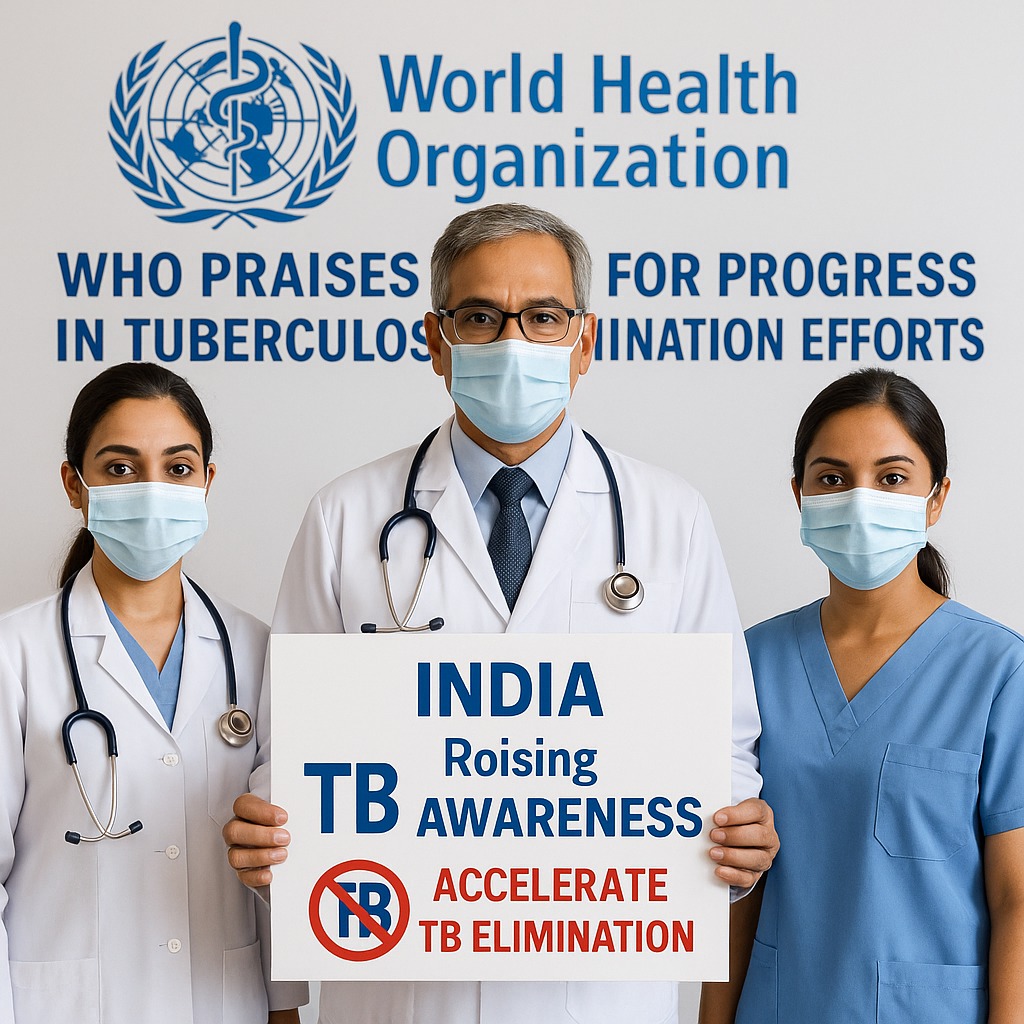
In a significant global recognition, the World Health Organization (WHO) has praised India for making “encouraging gains” in its mission to eliminate tuberculosis (TB). The acknowledgment reflects the country’s strengthened surveillance, improved diagnosis rates, expanded treatment access and aggressive public health interventions.
India, which bears one of the world’s largest TB burdens, has undertaken an ambitious target to eliminate tuberculosis ahead of global timelines, and this progress is seen as a major milestone in public health.
India’s Progress in TB Control
1. Improved Case Detection
India has significantly upgraded its TB detection infrastructure with large-scale deployment of rapid molecular tests, AI-based X-ray screening, and digital reporting systems. This has helped identify cases earlier and ensure timely treatment.
2. Expanded Access to Free Treatment
Through initiatives like Ni-Kshay Mitra and Ni-Kshay Poshan Yojana, patients are receiving nutritional support, treatment supervision and community assistance, improving adherence and outcomes.
3. Strengthened Community Engagement
Partnerships with NGOs, community health workers and local governance bodies have created awareness and reduced stigma around TB, encouraging early reporting.
4. Technological Innovations
India has adopted digital tools for surveillance, treatment monitoring and supply chain management. These innovations have supported real-time tracking and improved program transparency.
Why WHO’s Appreciation Matters
The WHO’s acknowledgment serves as a testimony to India’s sustained political commitment, increased investment in public health and result-oriented strategies. The appreciation is especially meaningful because:
India contributes a substantial share to the global TB burden
The country’s progress impacts overall global elimination timelines
Strong performance boosts international collaboration and funding
It reinforces confidence in India's health systems
Remaining Challenges
While India has achieved substantial progress, certain challenges remain:
Drug-resistant TB continues to require specialized interventions
Rural and remote populations still face accessibility barriers
Ensuring consistent nutrition and treatment adherence is crucial
Strengthening post-treatment support and relapse prevention
Addressing these gaps will be essential for India to achieve complete TB elimination.
Frequently Asked Questions (FAQs)
1. Why did WHO praise India?
Because India has made “encouraging gains” in TB detection, treatment access, technological innovation and community engagement.
2. What is India’s target year for TB elimination?
India has set an ambitious target to eliminate TB earlier than the global goal of 2030.
3. What are key initiatives supporting TB elimination?
Ni-Kshay Mitra, Ni-Kshay Poshan Yojana, expanded diagnostics and digital surveillance systems.
4. Does TB remain a major public health challenge in India?
Yes, drug-resistant TB and access disparities remain ongoing concerns.
5. What more needs to be done?
Strengthening local healthcare systems, nutrition support and targeted interventions for high-risk groups.
Published on : 19th November
Published by : SMITA
www.vizzve.com || www.vizzveservices.com
Follow us on social media: Facebook || Linkedin || Instagram
🛡 Powered by Vizzve Financial
RBI-Registered Loan Partner | 10 Lakh+ Customers | ₹600 Cr+ Disbursed
Source Credit :Content based on report from PTI