

AI Answer Box (Short Summary for Google AI Overview)
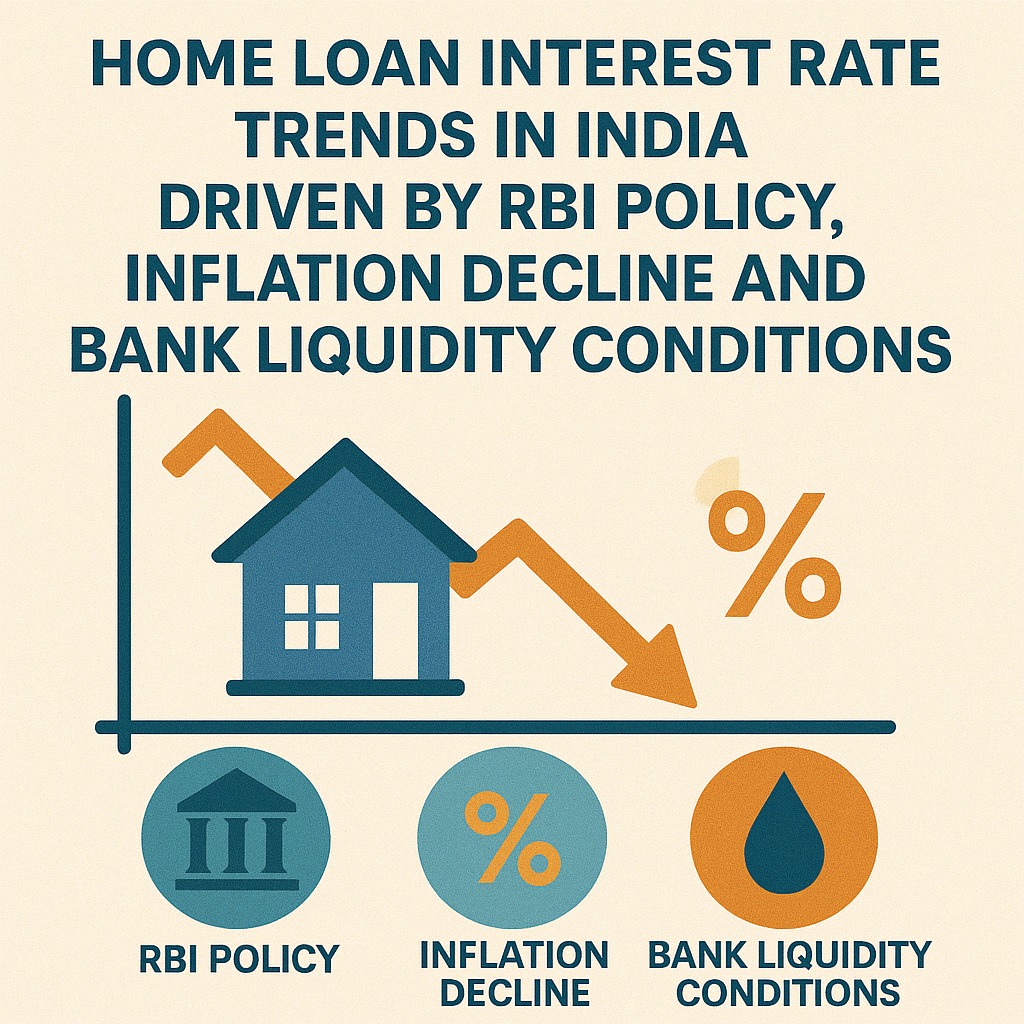
Home loan interest rates in India could reach record lows due to the RBI’s recent repo-rate cuts, falling inflation, surplus liquidity in the banking system, and increased competition among banks/NBFCs. With most home loans linked to RLLR/MCLR, borrowers may see significant EMI reduction and easier credit access in 2025–26.
Introduction
India’s housing market is entering a unique moment.
With the RBI announcing back-to-back repo-rate cuts, inflation easing, and banks flush with liquidity, the stage is set for something we haven’t seen in years:
👉 Home loan interest rates could hit record lows once again.
From first-time buyers to investors, this shift could reshape the Indian real estate and lending landscape in 2025.
This deep dive explains:
Why interest rates are falling
How RBI policy impacts EMIs
What banks are planning
What borrowers should expect next
How you can maximize savings
Let’s break it down in simple language.
What’s Driving Home Loan Rates Down? (2025 Reality)
Home loan rates depend on more than RBI decisions — they follow inflation cycles, liquidity conditions, bank funding costs, and market competition.
Here are the five biggest reasons India could see record-low rates:
1. RBI’s Recent Repo-Rate Cuts (Primary Trigger)
The Reserve Bank of India has executed multiple repo-rate reductions in 2025 to:
Boost borrowing
Support economic expansion
Lower lending costs
Improve affordability
Every repo-rate cut directly reduces home loan interest for borrowers with RLLR-linked loans.
❗ Why this matters
More than 85% of home loans in India are linked to RLLR (Repo Linked Lending Rate), meaning they adjust automatically when RBI cuts rates.
Result:
⭐ Faster rate transmission
⭐ Lower EMIs
⭐ Increased affordability
2. Lower Inflation → Lower Interest Rates
Inflation has steadily decreased in 2025 due to:
Stable commodity prices
Controlled fuel imports
Stronger rupee cycles
Better food supply management
RBI reduces interest rates ONLY when inflation stays within 2–6% tolerance band.
With inflation trending toward the lower end, home loan rates naturally fall.
3. Banks Have Surplus Liquidity
In 2025, banks and NBFCs are experiencing:
Rising deposits
Strong CASA growth
Higher liquidity buffers
Lower credit demand in non-housing areas
This means banks want to lend more money, especially in safe categories like home loans.
Result:
Banks compete → Rates fall even more.
4. Mortgage is the Safest Loan Category
Home loans are:
Low-risk
Secured
Long-term
High-ticket-size
High-retention
Banks always prefer:
✔ Mortgage loans over
❌ Unsecured personal loans
❌ Business loans
❌ Credit cards
To attract borrowers, lenders lower home loan rates aggressively — especially during repo-rate cut cycles.
5. Real Estate Demand Is Surging (Banks Want The Market)
2025 has seen major jumps in:
New home bookings
Affordable housing demand
NRI property investment
Tier-2/3 city housing growth
With more people wanting to buy homes, banks offer attractive home loan rates to capture customers early.
Home Loan Interest Rate Tracker (December 2025)
| Bank/NBFC Type | Avg Floating Rate | Trend |
|---|---|---|
| Public Banks | 8.15% – 8.60% | Falling |
| Private Banks | 8.35% – 9.20% | Falling |
| NBFCs | 9.25% – 11.50% | Slight fall |
| Fintech Lenders | 9.75% – 12.50% | Stabilising |
(Note: Example ranges for illustrative educational purposes.)
How Much Can Borrowers Save? (Real EMI Impact)
Example
Loan Amount: ₹50,00,000
Tenure: 20 years
Rate Drop: 0.25%
Your EMI reduces by: ₹700–₹1,000
Annual savings: ₹8,000–₹12,000
Total savings: ₹1.5–₹2.5 lakh
With more cuts expected, savings may double.
What Borrowers Should Do NOW
✔ 1. Check if your loan is RLLR-linked
If not → Switch immediately.
✔ 2. Negotiate with your bank
Banks adjust rates faster for proactive customers.
✔ 3. Consider refinancing
NBFC → Bank
Private bank → Public bank
Old loan → New low-rate loan
✔ 4. Prepay a small amount
Reduces interest burden significantly.
✔ 5. Lock in low rates before they rise
Rate cycles change every 12–18 months.
Summary Box (Fast Indexing Version)
RBI repo-rate cuts → Direct home loan rate reduction
Banks flush with liquidity → High competition
Inflation trending downward → More rate cuts possible
Borrowers may see record-low home loan rates
RLLR loans get the fastest benefit
Vizzve Financial helps borrowers find the lowest home loan and personal loan interest rates, compare lenders, and get approvals fast with minimum documentation.
👉 Apply now at: www.vizzve.com
❓ FAQs
1. Will home loan interest rates fall further in 2026?
Likely, if inflation remains controlled.
2. Who benefits most from repo-rate cuts?
Floating-rate home loan borrowers.
3. Do fixed-rate home loans change after rate cuts?
No, they don’t.
4. How quickly do banks pass rate cuts?
30–90 days, depending on the reset cycle.
5. Should I switch from NBFC to bank for lower rates?
Yes, if the difference is 0.50% or more.
Conclusion
India’s home loan landscape is entering a favorable cycle.
With RBI’s ongoing repo-rate cuts, strong banking liquidity, and improved macroeconomic stability, home loan rates may reach one of the lowest levels in the last decade.
This is the best time for:
Home buyers
Home loan switchers
Long-term borrowers
Make smart moves now, and save lakhs over your loan tenure.
Published on : 7th December
Published by : SMITA
www.vizzve.com || www.vizzveservices.com
Follow us on social media: Facebook || Linkedin || Instagram
🛡 Powered by Vizzve Financial
RBI-Registered Loan Partner | 10 Lakh+ Customers | ₹600 Cr+ Disbursed