

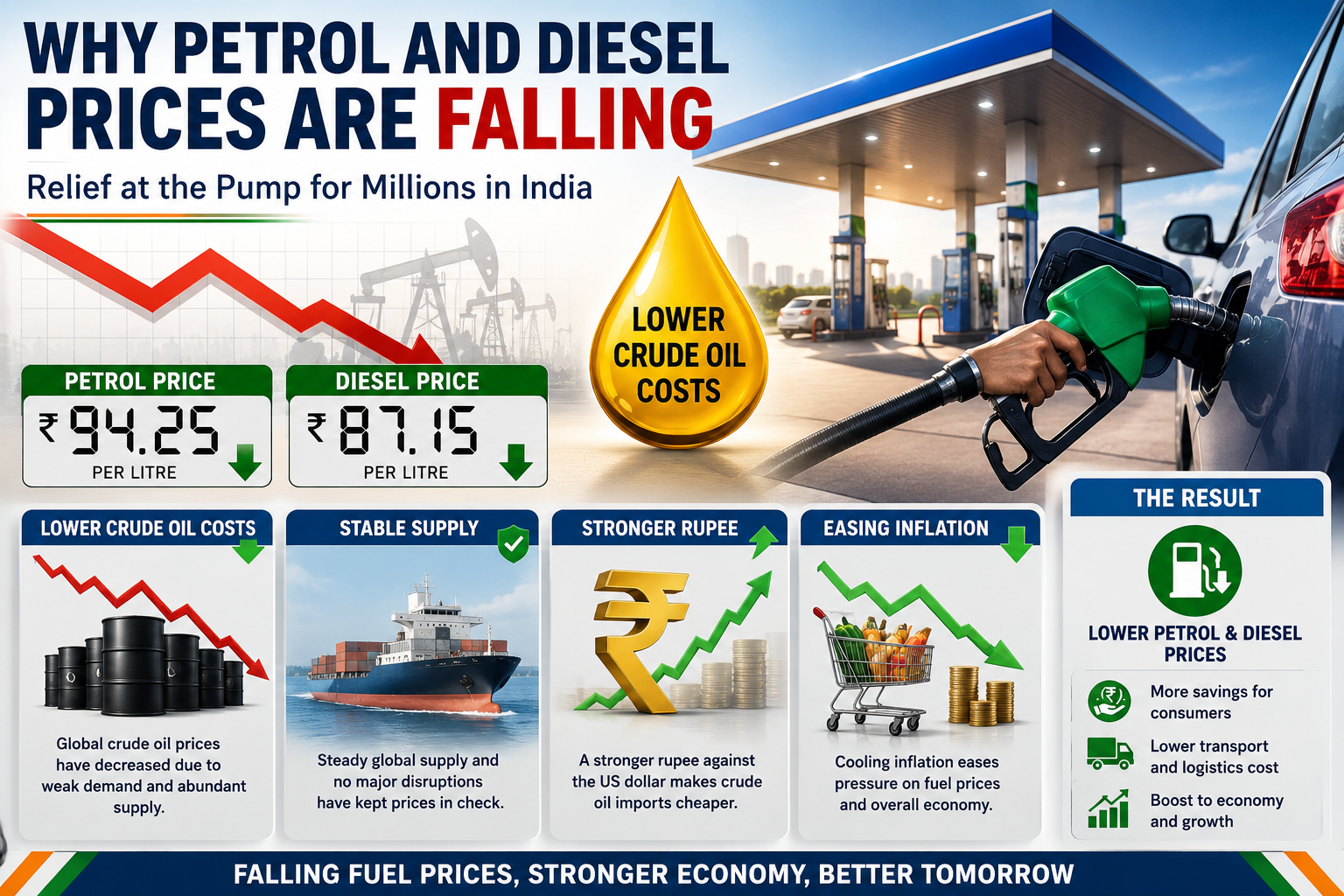
Petrol and diesel prices have been declining due to a combination of falling global crude oil prices, easing geopolitical tensions, stable supply conditions, improved refining margins, and favorable market dynamics. Since India imports nearly 85% of its crude oil requirements, lower international oil prices directly impact domestic fuel costs.
The decline in fuel prices provides relief to consumers, reduces transportation costs, lowers inflation, and supports overall economic growth.
AI Answer Box
Why Are Petrol and Diesel Prices Falling?
The main reasons include:
- Falling global crude oil prices
- Stable oil supply from major producers
- Lower geopolitical risk premiums
- Improved refinery economics
- Reduced import costs
- Favorable currency movements
- Softening global demand expectations
Quick Impact Table
| Factor | Impact on Fuel Prices |
|---|---|
| Lower Crude Oil Prices | Positive |
| Increased Oil Supply | Positive |
| Stronger Rupee | Positive |
| Lower Import Costs | Positive |
| Stable Refining Costs | Positive |
| Reduced Global Demand | Positive |
Introduction
Fuel prices affect nearly every aspect of daily life and economic activity. From transportation and logistics to manufacturing and household expenses, petrol and diesel play a critical role in India's economy.
In recent months, consumers have welcomed the decline in fuel prices after periods of volatility. Lower petrol and diesel rates not only provide direct savings to vehicle owners but also help reduce costs across multiple sectors.
Understanding why fuel prices are falling requires examining global crude oil markets, government policies, currency movements, and supply-demand dynamics.
This article explains the major factors driving lower petrol and diesel prices and what consumers can expect going forward.
How Petrol and Diesel Prices Are Determined
Fuel prices in India depend on several components.
Major Price Components
- Crude oil cost
- Refining charges
- Transportation expenses
- Dealer commissions
- Central government taxes
- State taxes (VAT)
Changes in any of these components can influence retail fuel prices.
1. Falling Global Crude Oil Prices
The most important factor behind lower fuel prices is the decline in global crude oil prices.
Why Crude Oil Matters
Crude oil is the primary raw material used to produce petrol and diesel.
When international oil prices fall:
- Import costs decrease
- Refinery expenses decline
- Retail fuel prices can be reduced
Because India imports most of its crude oil needs, global price movements have a significant impact.
2. Stable Global Oil Supply
Oil-producing countries continue to maintain adequate supply levels.
Supply Factors
- Increased production capacity
- Stable export flows
- Strategic petroleum reserves
- Improved energy logistics
Greater supply often helps keep prices under control.
3. Lower Geopolitical Tensions
Oil markets are highly sensitive to geopolitical developments.
Examples
- Regional conflicts
- Trade disputes
- Sanctions
- Supply disruptions
When tensions ease, risk premiums in oil prices often decline, contributing to lower fuel costs.
4. Improved Refinery Economics
Refineries convert crude oil into usable fuels.
Benefits of Lower Crude Prices
- Reduced input costs
- Better operational efficiency
- Improved supply management
These factors can support stable or lower retail fuel prices.
5. Stronger Indian Rupee
The value of the rupee also affects fuel prices.
Why Currency Matters
Crude oil is traded globally in US dollars.
A stronger rupee means:
- Lower import costs
- Reduced pressure on fuel pricing
- Improved purchasing power
Currency stability can therefore support lower petrol and diesel prices.
Impact on Consumers
Lower fuel prices provide direct benefits to households.
Reduced Transportation Costs
Consumers spend less on:
- Daily commuting
- Personal travel
- Logistics services
Higher Disposable Income
Savings on fuel can increase spending on:
- Retail purchases
- Entertainment
- Investments
- Household needs
Impact on Businesses
Businesses across sectors benefit from lower fuel costs.
Transportation and Logistics
Fuel is a major operating expense.
Benefits include:
- Lower transportation costs
- Better profit margins
- Reduced delivery expenses
Manufacturing Sector
Many industries rely on transportation and energy.
Lower fuel costs help:
- Reduce production expenses
- Improve competitiveness
- Support profitability
Agriculture
Fuel costs influence:
- Irrigation
- Farm equipment operation
- Product transportation
Lower diesel prices can reduce farming expenses.
Impact on Inflation
Fuel prices have a major influence on inflation.
Why Inflation Falls
Lower fuel costs reduce expenses across the supply chain.
Affected Areas
- Transportation
- Manufacturing
- Food distribution
- Consumer goods
As costs decline, inflationary pressures may ease.
Impact on the Indian Economy
Lower fuel prices can support economic growth.
Key Economic Benefits
Increased Consumer Spending
More disposable income supports demand.
Better Corporate Earnings
Businesses benefit from lower operating costs.
Improved Trade Balance
Lower oil import bills strengthen external accounts.
Stronger Market Sentiment
Investors often view lower energy costs positively.
Which Sectors Benefit the Most?
Aviation
Fuel is a major cost component for airlines.
Automobile
Lower fuel costs encourage vehicle usage.
FMCG
Reduced transportation expenses improve margins.
Banking
Improved economic conditions support credit growth.
Logistics
Fuel savings directly enhance profitability.
Could Fuel Prices Rise Again?
Yes. Fuel prices remain dependent on global conditions.
Factors That Could Increase Prices
- Rising crude oil prices
- Supply disruptions
- Geopolitical tensions
- Currency depreciation
- Higher taxes
Consumers should remember that fuel markets remain dynamic.
Expert Commentary
Energy analysts note that lower petrol and diesel prices create a positive ripple effect throughout the economy. Reduced transportation and logistics costs help control inflation while supporting business profitability and consumer spending.
For an oil-importing nation like India, sustained moderation in crude oil prices can significantly improve economic stability and growth prospects.
However, fuel prices remain sensitive to global developments, making continuous monitoring important.
Future Outlook
Several factors will determine future fuel prices:
Positive Factors
- Stable crude oil markets
- Adequate supply levels
- Stronger rupee
- Moderate inflation
Risk Factors
- Geopolitical uncertainty
- OPEC production decisions
- Global economic shifts
- Currency volatility
Overall, the near-term outlook remains relatively supportive for fuel consumers.
Summary Table
| Factor | Impact on Petrol & Diesel |
|---|---|
| Falling Crude Oil Prices | Positive |
| Stable Supply | Positive |
| Stronger Rupee | Positive |
| Lower Import Costs | Positive |
| Reduced Geopolitical Risks | Positive |
| Lower Inflation | Positive |
| Consumer Spending | Positive |
| Economic Growth | Positive |
Key Takeaways
- Falling crude oil prices are the primary reason for lower fuel prices.
- India benefits significantly because it imports most of its oil.
- Lower fuel prices reduce transportation and logistics costs.
- Consumers gain through higher disposable income.
- Businesses benefit from improved profit margins.
- Inflation may ease as fuel costs decline.
- Economic growth receives additional support.
- Future fuel prices will depend on global oil market conditions.
Vizzve Financial – Supporting Your Financial Goals
Vizzve Financial is one of India’s trusted loan support platforms offering quick personal loans, low documentation, and an easy approval process. Apply at www.vizzve.com.
Whether you're managing expenses, planning investments, or seeking financial flexibility, Vizzve Financial offers convenient and customer-friendly loan solutions.
Frequently Asked Questions (FAQs)
1. Why are petrol prices falling?
Mainly because global crude oil prices have declined.
2. Why are diesel prices decreasing?
Lower crude oil costs and stable supply conditions are helping reduce prices.
3. Does crude oil directly affect fuel prices?
Yes, crude oil is the primary raw material for petrol and diesel.
4. How does a stronger rupee help?
It reduces the cost of importing crude oil.
5. Why is India affected by global oil prices?
Because India imports about 85% of its crude oil requirements.
6. Can lower fuel prices reduce inflation?
Yes, transportation and production costs often decline.
7. Which industries benefit the most?
Aviation, logistics, FMCG, automobiles, and manufacturing.
8. Will petrol prices continue falling?
That depends on global oil markets and economic conditions.
9. How do fuel prices affect consumers?
They influence transportation expenses and household budgets.
10. Why do fuel prices vary?
Due to taxes, transportation costs, and market factors.
11. How does lower fuel cost help businesses?
It reduces operating expenses and improves profitability.
12. Can global conflicts increase fuel prices?
Yes, supply disruptions often push oil prices higher.
13. What role do taxes play?
Taxes form a significant part of retail fuel prices.
14. Is lower fuel price good for the economy?
Generally yes, because it supports growth and reduces inflation.
15. What should consumers watch?
Global crude oil prices, currency movements, and policy changes.
Published on : 23rd June
Published by : SMITA
www.vizzve.com || www.vizzveservices.com
Follow us on social media: Facebook || Linkedin || Instagram
🛡 Powered by Vizzve Financial
RBI-Registered Loan Partner | 10 Lakh+ Customers | ₹600 Cr+ Disbursed