

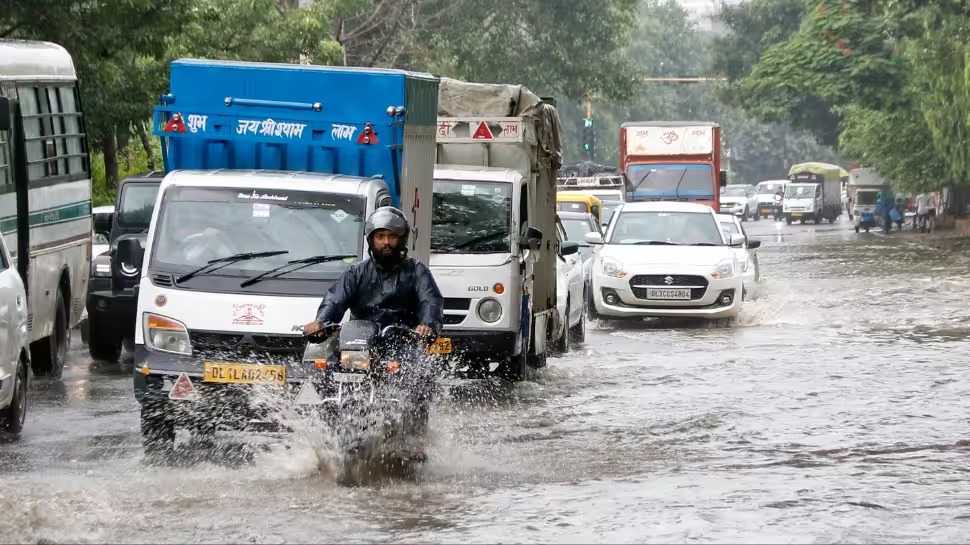
When climate scientists predicted weaker monsoons due to El Niño effects, most of India expected a drier August. Instead, what followed was one of the wettest months in recent memory. From Mumbai’s waterlogged streets to Assam’s overflowing rivers, August 2025 refused to give India a break.
What Made August 2025 So Rain-Heavy?
1. A Receding but Lingering El Niño
While El Niño typically weakens monsoon currents, it began fading late in July.
This created a temporary rebound effect, pulling moisture-heavy winds across central and northern India.
2. Positive Indian Ocean Dipole (IOD)
The Indian Ocean Dipole was in the positive phase, bringing additional rainfall from the Arabian Sea and Bay of Bengal.
It helped counterbalance the El Niño impact, leading to widespread showers across India.
3. Slowed Monsoon Withdrawal
Normally, the monsoon begins retreating by late August.
In 2025, cooler-than-average upper atmosphere temperatures delayed the withdrawal, causing prolonged rain spells.
4. Intensified Local Systems
Multiple low-pressure systems formed in the Bay of Bengal and moved inland, triggering continuous rain over Chhattisgarh, Madhya Pradesh, Bihar, and parts of UP and Odisha.
But Wait—Isn’t Climate Change Weakening the Monsoon?
Yes—and no.
Long-term trends do show increasing monsoon variability, with more erratic rainfall patterns.
But climate change is also amplifying extreme events, leading to heavier downpours over shorter durations.
So, instead of a long gentle monsoon, India now faces short bursts of intense flooding and dry patches in between.
Impacted States in August 2025
Maharashtra: 3 districts declared flood emergencies
Himachal Pradesh: Cloudbursts and landslides killed 40+
Assam & Bihar: Rivers crossed danger marks, displacing thousands
Delhi-NCR: Received double its monthly average rainfall in just 10 days
The Monsoon Paradox: More Rain, Less Water Security?
Ironically, heavy rainfall doesn’t guarantee water security.
Floods destroy topsoil, reducing agricultural yield
Urban flooding disrupts infrastructure, mobility, and health systems
Reservoirs overflow but groundwater remains unrecharged due to runoff
What We Can Learn from August 2025
Better stormwater drainage is critical in cities
Integrated river basin management is needed to prevent annual flood-drought cycles
Climate-resilient cropping patterns must be incentivized by policy
Early warning systems and public awareness need major upgrades
Final Word
August 2025 proved the Indian monsoon still packs power—but in unpredictable ways. As global warming reshapes our weather, India must stop relying on historical monsoon trends. We’re now entering an era of climate shocks, where “too much, too fast” is the new normal.
Are we prepared? Not yet. But with urgency and adaptation, we can be.
Published on : 2nd August
Published by : SMITA
www.vizzve.com || www.vizzveservices.com
Follow us on social media: Facebook || Linkedin || Instagram
🛡 Powered by Vizzve Financial
RBI-Registered Loan Partner | 10 Lakh+ Customers | ₹600 Cr+ Disbursed