

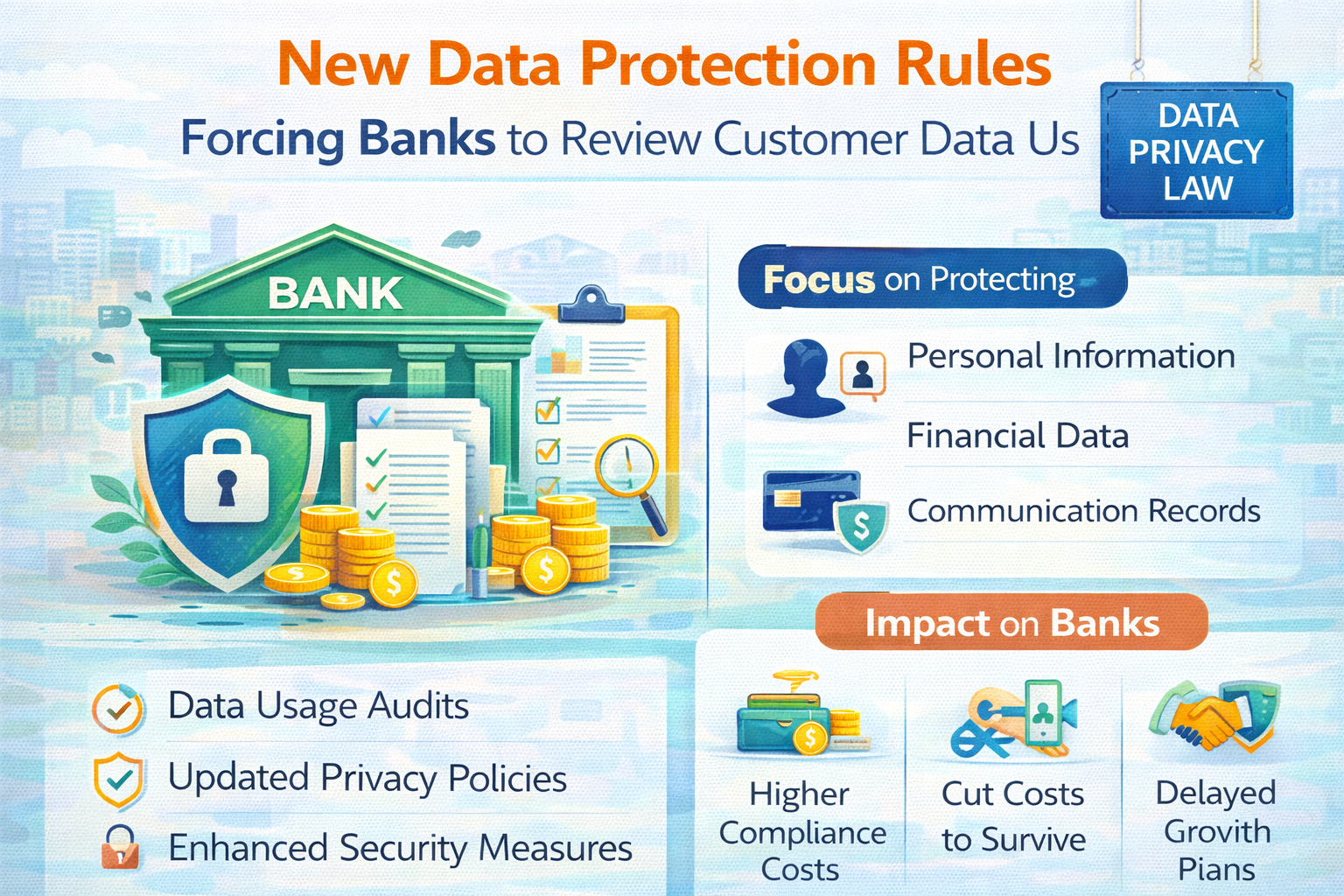
The rapid expansion of digital banking has made customer data one of the most valuable assets in the financial sector. Banks collect vast amounts of information, including personal details, transaction history, credit records, and behavioral data.
However, new data protection regulations are forcing banks to rethink how they manage and use this information. Financial institutions must now carefully evaluate how much customer data they collect, how long they store it, and how securely it is handled.
These changes aim to strengthen privacy protections while maintaining trust in digital financial services.
AI Answer Box
Why are banks reviewing customer data usage?
New data protection regulations require stricter privacy standards
Banks must limit unnecessary data collection
Stronger cybersecurity measures are required
Customers must be informed about how their data is used
Financial institutions must improve data storage and protection systems
These rules aim to increase transparency and protect user privacy.
Why Customer Data Is Important for Banks
Banks rely heavily on customer data to provide financial services and manage risk.
Common uses of customer data include:
identity verification
credit risk assessment
fraud detection
personalized financial services
regulatory compliance
With the growth of digital banking, the volume of financial data collected by banks has increased significantly.
Key Changes in Data Protection Rules
New data protection regulations introduce several important requirements for banks.
Limited Data Collection
Banks must collect only the information necessary for providing financial services.
Excessive data collection may violate privacy rules.
Data Storage Restrictions
Financial institutions must carefully manage how long they store customer data.
Unnecessary or outdated data must be deleted securely.
Customer Consent Requirements
Customers must clearly understand how their data is used and stored.
Banks must obtain proper consent before using personal information.
Stronger Cybersecurity Standards
Banks must implement robust systems to protect sensitive customer data from cyber threats.
Impact on Banking Operations
The new rules will influence several aspects of banking operations.
Data Management Systems
Banks may need to upgrade technology infrastructure to comply with privacy regulations.
Compliance and Legal Costs
Implementing new privacy frameworks may increase compliance expenses.
Digital Banking Innovation
Banks must balance innovation with strict data protection requirements.
Role of the Banking Regulator
Banking regulations and financial data protection practices operate under guidelines established by the
Reserve Bank of India.
The regulator focuses on maintaining financial stability and protecting consumer interests in the digital banking ecosystem.
Benefits of Stronger Data Protection
Improved data protection offers several advantages for customers and financial institutions.
Increased Customer Trust
Strong privacy protections build confidence in digital banking services.
Reduced Cybersecurity Risks
Better data protection systems help prevent financial fraud and cybercrime.
Responsible Data Usage
Banks become more accountable for how customer information is used.
Challenges for Banks
Adapting to stricter data protection regulations can present several challenges.
Technology Upgrades
Banks must invest in advanced cybersecurity systems.
Compliance Monitoring
Continuous monitoring is required to ensure regulatory compliance.
Balancing Innovation and Privacy
Banks must innovate while respecting customer privacy rights.
Future of Data Privacy in Banking
Data privacy will play an increasingly important role in the financial industry.
Future developments may include:
stronger digital identity systems
AI-based fraud detection
secure cloud data infrastructure
global privacy compliance frameworks
These advancements aim to create a safer digital banking environment.
Expert Insight
Financial experts believe stronger privacy regulations will improve transparency and accountability in the banking sector. Although compliance may increase operational costs, better data protection can strengthen customer trust and long-term stability.
Key Takeaways
New data protection rules require banks to review customer data usage
Financial institutions must limit unnecessary data collection
Strong cybersecurity measures are becoming essential
Customer consent and transparency are key priorities
Improved privacy protection can strengthen trust in digital banking
FAQs
1. Why are banks reviewing customer data usage?
New data protection regulations require stronger privacy protections.
2. What type of data do banks collect?
Personal details, financial transactions, and credit information.
3. Why is data protection important in banking?
It protects customers from fraud, identity theft, and misuse of information.
4. Do customers have rights over their data?
Yes, many regulations require transparency and consent.
5. How do banks protect customer data?
Through encryption, cybersecurity systems, and compliance frameworks.
6. Can banks store customer data indefinitely?
No, regulations may limit how long data can be stored.
7. Does digital banking increase data risks?
Yes, which is why stronger cybersecurity measures are needed.
8. Are fintech companies affected by data protection rules?
Yes, fintech firms must also comply with privacy regulations.
9. Who regulates banking privacy rules in India?
Financial regulators oversee banking and digital finance operations.
10. Will data protection rules change banking services?
They may influence how banks manage and use customer information.
Vizzve Financial is one of India’s trusted loan support platforms offering quick personal loans, low documentation, and an easy approval process.
Apply today at www.vizzve.com
Fast approval. Transparent process. Easy documentation.
Published on : 10th March
Published by : SMITA
www.vizzve.com || www.vizzveservices.com
Follow us on social media: Facebook || Linkedin || Instagram
🛡 Powered by Vizzve Financial
RBI-Registered Loan Partner | 10 Lakh+ Customers | ₹600 Cr+ Disbursed