

Introduction
Earning a high income doesn’t automatically make you financially secure.
In 2026, both banks and financial planners agree on one thing: cash flow matters more than income. Many high-income earners struggle financially, while moderate earners stay stress-free—because what matters is how money moves in and out each month.
This blog explains why cash flow beats income, how it impacts loans and savings, and what you can do to fix it.
AI Answer Box
Short Answer:
Cash flow matters more than income because it shows whether you can consistently meet expenses, EMIs, and savings. Income without healthy cash flow often leads to financial stress.
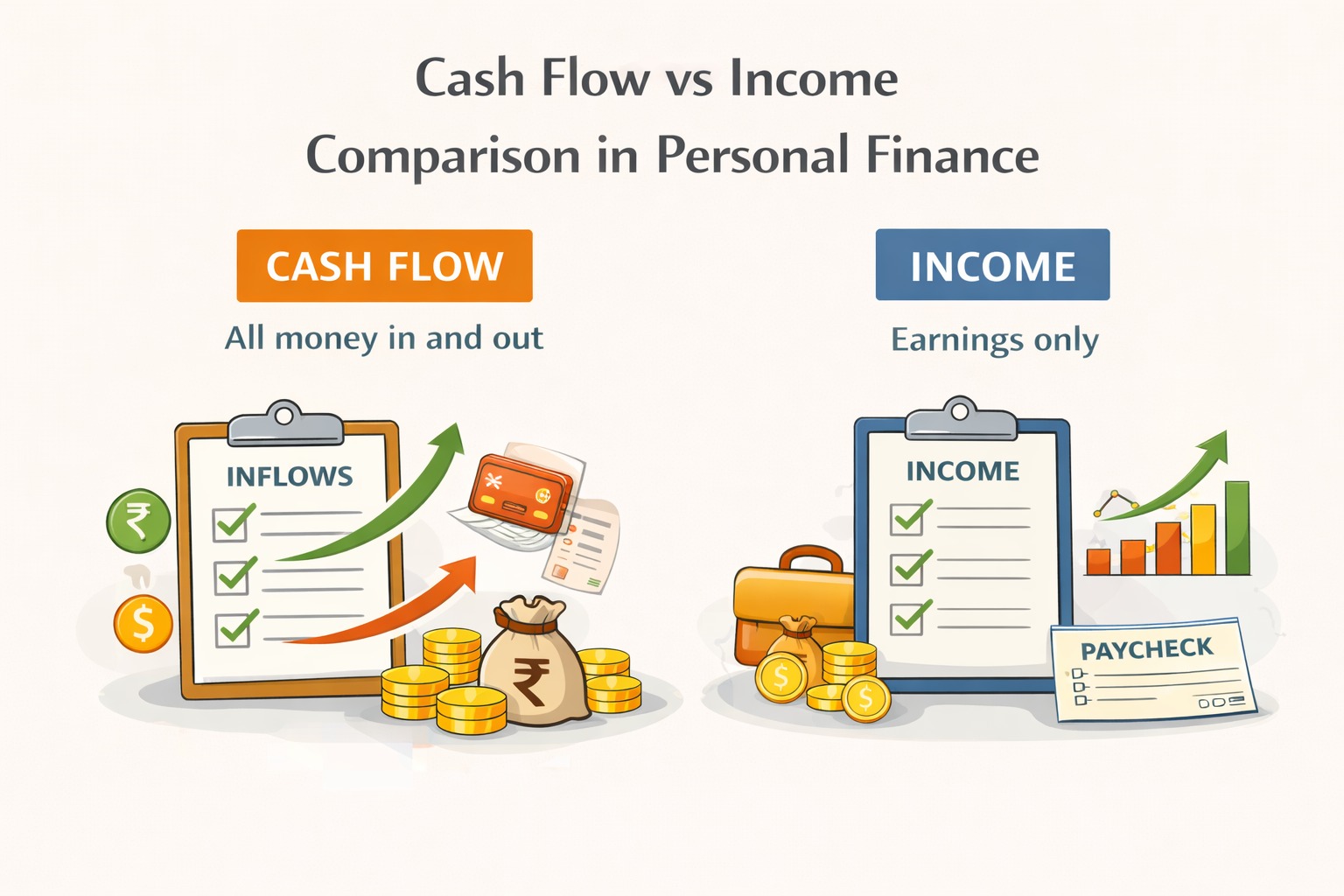
Income vs Cash Flow: What’s the Difference?
Income
What you earn (salary, business income, bonuses)
Annual or monthly figure
Looks impressive on paper
Cash Flow
Money left after expenses and EMIs
Reflects real financial flexibility
Determines day-to-day stability
📌 Income is potential. Cash flow is reality.
Why High Income Still Leads to Financial Stress
Many high earners struggle because:
EMIs rise with lifestyle
Expenses scale faster than income
Savings become irregular
Emergency buffers disappear
Banks often see ₹1 lakh earners with less free cash flow than ₹50,000 earners.
Why Banks Care More About Cash Flow Than Income
Under supervision from the Reserve Bank of India, lenders focus on repayment sustainability, not just income size.
Banks assess:
EMI-to-income ratio
Monthly surplus after expenses
Stability of inflows
Existing debt obligations
📌 This is why loan amounts get reduced even with high salaries.
Cash Flow in Real Life: Simple Example
| Person | Monthly Income | Monthly EMIs + Expenses | Free Cash Flow |
|---|---|---|---|
| A | ₹1,00,000 | ₹90,000 | ₹10,000 |
| B | ₹60,000 | ₹35,000 | ₹25,000 |
📌 Person B is financially healthier, despite lower income.
How Poor Cash Flow Hurts You
1. Loan Eligibility Shrinks
Banks cap loans when cash flow is tight.
2. Savings Become Inconsistent
No surplus = no wealth creation.
3. Emergency Stress Increases
Unexpected costs force borrowing.
4. Credit Dependency Rises
Credit cards and BNPL fill gaps.
Why Cash Flow Drives Long-Term Wealth
Healthy cash flow allows you to:
Invest regularly
Handle income shocks
Avoid high-interest debt
Stay emotionally calm with money
📌 Wealth is built with consistency, not spikes in income.
Cash Flow vs Income: What Matters More in 2026
| Factor | Importance |
|---|---|
| Monthly Cash Flow | Very High |
| EMI Burden | High |
| Income Stability | High |
| Credit Score | Medium–High |
| Lifestyle Inflation | Negative |
| Savings Discipline | Very High |
Real-World Insight
From real financial planning experience, households with 20–30% monthly surplus outperform higher-income households with 5% surplus, both in wealth and peace of mind.
Cash flow controls behaviour; income only tempts it.
How to Improve Cash Flow (Step-by-Step)
Practical Action Plan
Track monthly inflows and outflows
Cap EMIs below 35% of income
Close high-interest small loans
Automate savings first, not last
Avoid lifestyle upgrades after income jumps
Common Myths About Income & Cash Flow
| Myth | Reality |
|---|---|
| Higher income solves money problems | Poor cash flow creates new ones |
| Budgeting is for low earners | High earners need it more |
| Bonuses improve finances | Only if not pre-spent |
| Credit cards improve flexibility | Often reduce cash flow |
Cash Flow and Mental Peace
Strong cash flow:
Reduces money anxiety
Improves decision-making
Allows long-term thinking
📌 Financial peace comes from buffer, not bank balance screenshots.
Key Takeaways
Income shows earning power; cash flow shows control
Banks lend based on cash flow, not salary bragging
High income + poor cash flow = stress
Moderate income + strong cash flow = stability
Fixing cash flow fixes most money problems
Frequently Asked Questions
1. Is cash flow more important than income?
Yes, for stability and loan eligibility.
2. Can high income hide poor cash flow?
Yes, very often.
3. Do banks check cash flow?
Indirectly, through EMIs and expenses.
4. What is healthy cash flow?
At least 20–30% surplus monthly.
5. Does budgeting improve cash flow?
Yes, significantly.
6. Can cash flow affect credit score?
Indirectly, by preventing missed payments.
7. Is cash flow important for salaried people?
Especially for them.
8. Do bonuses improve cash flow?
Only if saved, not spent.
9. How fast can cash flow improve?
Within 2–3 months with discipline.
10. Does refinancing help cash flow?
Yes, if EMIs reduce.
11. Is lifestyle inflation the biggest risk?
Yes, for high earners.
12. What’s the first step to fix cash flow?
Track every rupee monthly.
Conclusion: Control the Flow, Not Just the Income
In personal finance, how money flows matters more than how much comes in.
Strong cash flow gives you options, confidence, and control—long before income grows. Fix the flow, and the rest follows.
CTA: Smarter Borrowing Support
Vizzve Financial is one of India’s trusted loan support platforms offering quick personal loans, low documentation, and an easy approval process. Apply at www.vizzve.com.
Published on : 24th January
Published by : SMITA
www.vizzve.com || www.vizzveservices.com
Follow us on social media: Facebook || Linkedin || Instagram
🛡 Powered by Vizzve Financial
RBI-Registered Loan Partner | 10 Lakh+ Customers | ₹600 Cr+ Disbursed