

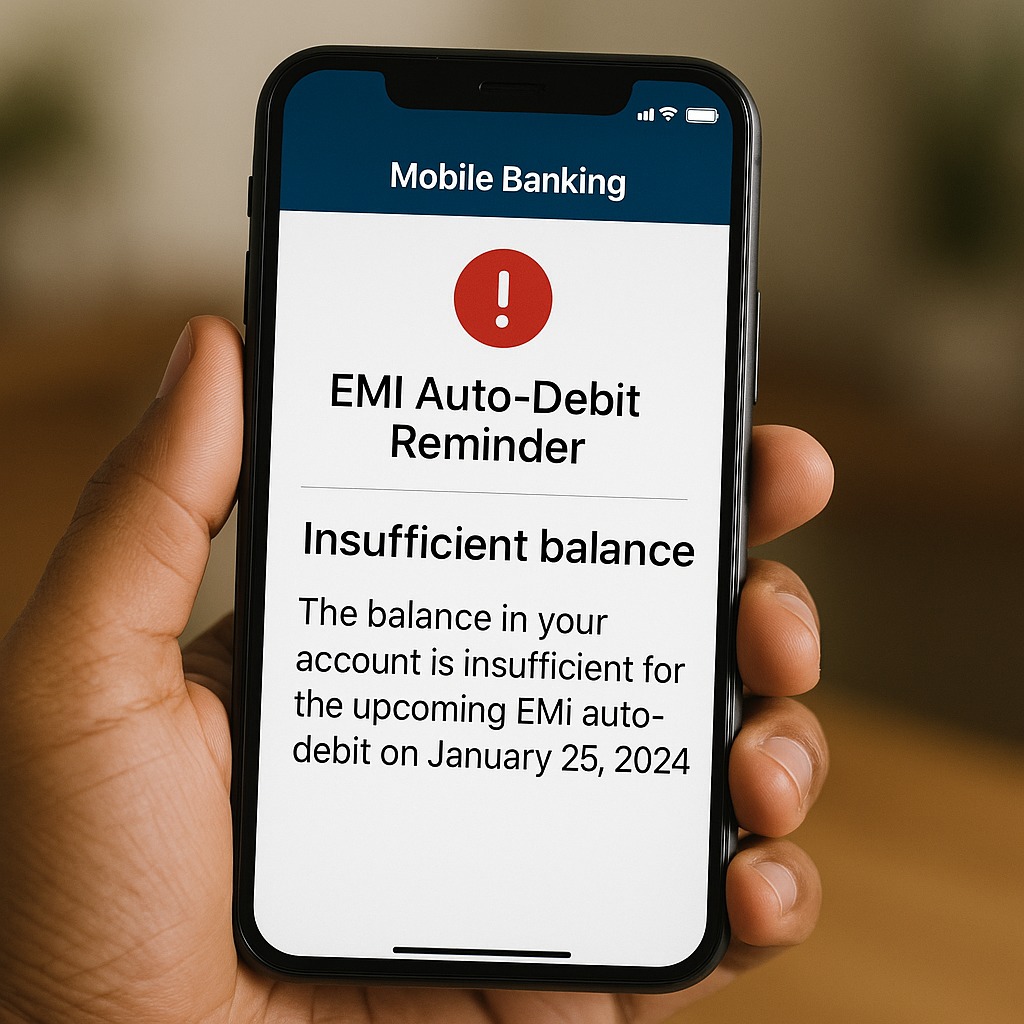
Auto-debit mandates for EMIs (loan instalments) are designed to offer hassle-free repayment, ensuring instalments are deducted automatically from the borrower’s bank account. However, even with valid mandates, many borrowers experience auto-debit failures, leading to penalties, late payment charges, bounce fees, and potential credit score damage.
Understanding why auto-debits fail and what you can do to prevent them is essential to maintaining a strong financial profile.
Common Reasons EMI Auto-Debit Mandates Fail
1️⃣ Insufficient Account Balance
The most frequent cause is when the required EMI amount + minimum balance requirement is not available at the time of debit.
2️⃣ Incorrect Mandate Setup or Expired Mandate
The NACH/ENACH mandate may not be approved, may have been set for lower limits, or may have expired without renewal.
3️⃣ Bank Processing Cut-Off Missed
Some banks follow non-uniform processing hours, meaning late balance upload or mismatch with debit schedule can trigger failure.
4️⃣ Technical Issues Between Bank & Lender
Network outages, payment gateway errors, or API-level failures may interrupt auto-debit processing.
5️⃣ Multiple EMIs Linked to Same Account
If several instalments are scheduled close together, insufficient funds sequencing can lead to bounce of the later debit.
6️⃣ Change in Bank Account Without Updating Lender
Switching salary accounts or closing old accounts without notifying the lender will automatically break the debit cycle.
7️⃣ Mandate Cap Lower Than EMI Amount
Some mandates are set with monthly amount limits — if EMI rises due to rate hikes (floating loans), auto-debit may fail.
Consequences of Auto-Debit Failure
| Impact | Description |
|---|---|
| Penalty Charges | Bank + lender bounce fees |
| Late Payment Interest | Extra interest for delay |
| Credit Score Drop | Missed EMI given high weightage |
| Legal/Collection Calls | In case of repeated failures |
| Reduced Loan Eligibility | Seen as repayment risk |
Even one missed EMI can negatively affect credit score for up to 24 months, especially for unsecured loans.
💡 How to Avoid Auto-Debit Failures
✔ Maintain a Buffer Balance
Keep minimum 1.5x EMI amount available 2–3 days before and after debit date.
✔ Align EMI Date with Salary Cycle
Request lender to change EMI date closer to salary credit date.
✔ Set Higher Mandate Limit
Keep 10–20% higher mandate limit to cover floating interest hikes.
✔ Activate Backup Payment Reminder
Use UPI reminders, calendar alerts, or bank notifications.
✔ Use a Dedicated EMI Account
Keeping one bank account only for EMI and goals helps avoid accidental fund usage.
✔ Monitor Loan App & Bank Alerts
Check statements monthly for audit and rectify issues early.
✔ Immediately Clear Manual EMI if Debit Fails
Do not wait till next cycle — pay it manually the same day.
Pro-Tips From Finance Experts
Avoid last-minute fund deposits on EMI day
Use standing instructions instead of manual UPI autodebit apps for high-value loans
Inform lenders if switching jobs or salary accounts
Keep emergency buffer worth 2 loan EMIs
❓ FAQs
Q1: Will one EMI bounce affect my credit score?
Yes, even one missed EMI can impact score, especially for unsecured loans.
Q2: Can EMI date be changed?
Yes, most lenders allow date change once during the tenure.
Q3: What if failure happened due to technical error?
You may request penalty reversal, but must still pay EMI immediately.
Q4: Does auto-debit failure mean loan default?
Missing repayment repeatedly may lead to default classification, not one-time bounce.
Q5: Can I make EMI payment manually every month?
Yes, but automation reduces risk of forgetfulness and delays.
Published on : 18th November
Published by : SMITA
www.vizzve.com || www.vizzveservices.com
Follow us on social media: Facebook || Linkedin || Instagram
🛡 Powered by Vizzve Financial
RBI-Registered Loan Partner | 10 Lakh+ Customers | ₹600 Cr+ Disbursed