

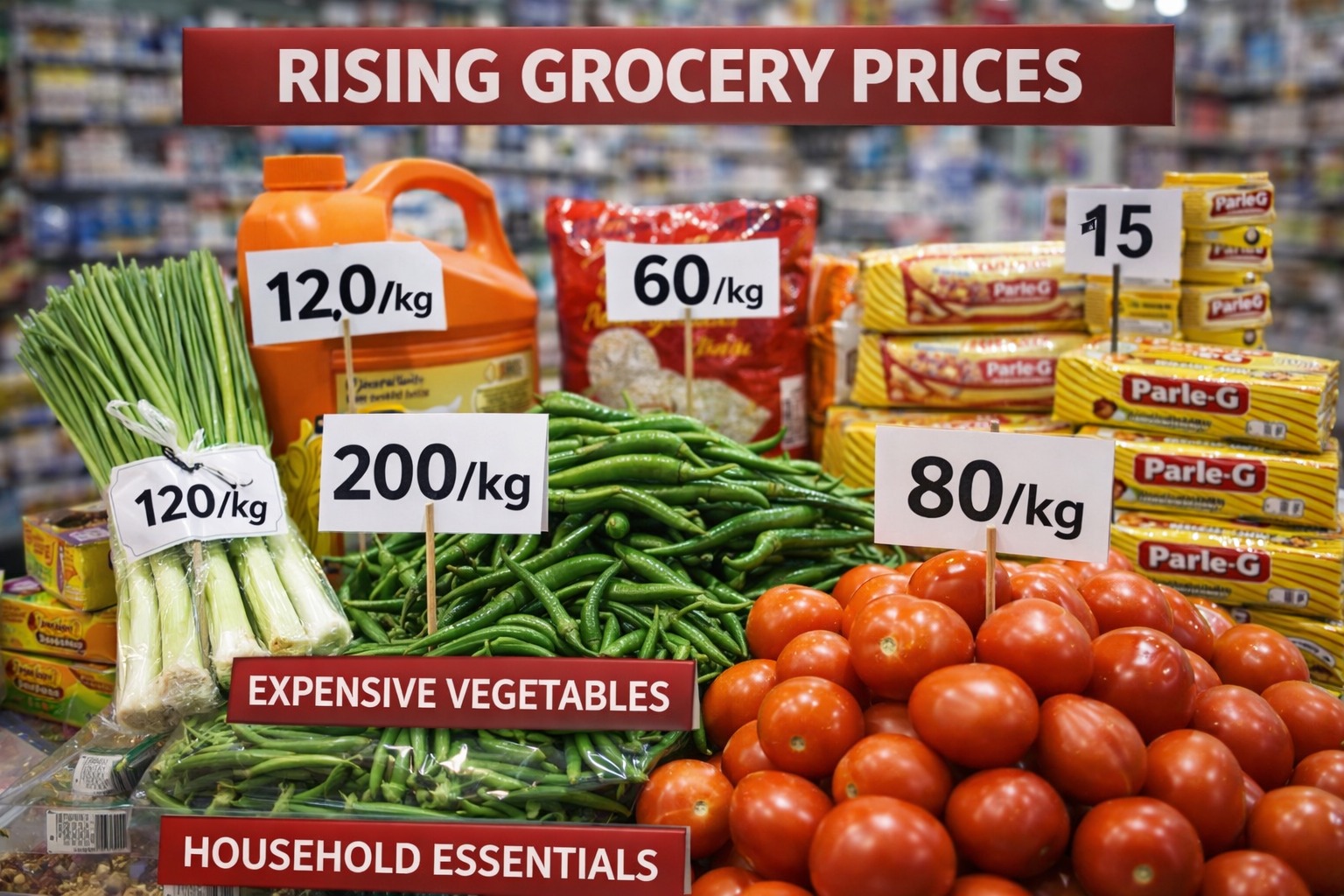
Everyday items in India remain expensive in 2026 due to food inflation, fuel costs, climate disruptions, global commodity prices, and higher logistics expenses.
AI Answer Box
The rising cost of everyday items in India is driven mainly by food inflation, fuel prices, climate-affected crops, global imports, and supply chain expenses. Groceries, milk, cooking oil, and transport costs remain the biggest contributors.
Why Are Everyday Prices Still Rising in India?
India’s inflation is being monitored by the Reserve Bank of India, but several forces continue pushing costs upward:
Major Inflation Drivers:
Food supply disruptions
High fuel & transport costs
Global commodity price pressure
Climate change impact on crops
Rising labour and packaging costs
Daily Essentials Seeing the Sharpest Price Increases
| Category | Price Change Trend | Reason |
|---|---|---|
| Vegetables & fruits | High increase | Weather + supply shortage |
| Milk & dairy | Steady rise | Feed cost + demand |
| Cooking oil | Sharp fluctuation | Import dependency |
| Fuel | Volatile | Global crude prices |
| Packaged food | Rising | Raw material costs |
What’s Really Behind This Cost Surge?
🌦 Climate Disruptions
Heatwaves, floods, and erratic monsoons have:
Reduced crop yields
Increased storage losses
Created supply shortages
Transport & Fuel Inflation
Higher diesel prices increase:
Food delivery cost
Wholesale market prices
Retail inflation
Global Price Pressure
India imports:
Edible oils
Fertilizers
Crude oil
When global prices rise, local prices follow.
Real-Life Impact on Indian Families
Households across India report:
Grocery bills up 15%–30%
Reduced monthly savings
Increased credit usage
Lifestyle cutbacks
Middle-class families are feeling the sharpest pressure.
Pros & Cons of Rising Prices
✅ Economic Positives
✔ Higher farm incomes
✔ Boost to domestic production
✔ Rural income growth
❌ Household Negatives
❌ Reduced purchasing power
❌ Budget stress
❌ Lower savings
❌ Higher debt usage
Expert Insight
“India’s inflation today is supply-driven, not demand-driven. Until agriculture output and fuel stability improve, daily prices will stay elevated,” — Economic policy advisor R. Khanna.
Smart Ways to Manage Rising Costs
Buy seasonal produce
Track monthly expenses
Switch to local markets
Reduce food wastage
Use budget apps
Plan fuel-efficient travel
Key Takeaways
• Everyday items remain expensive in 2026
• Food and fuel drive most inflation
• Climate issues affect supply
• Global markets impact Indian prices
• Smart budgeting is essential now
❓FAQs
1. Why are everyday items getting costlier in India?
Due to inflation, fuel prices, climate impact on crops, and global commodity costs.
2. Which daily items increased the most?
Vegetables, milk, edible oil, and fuel.
3. Is inflation reducing in 2026?
It has slowed but remains high for food essentials.
4. Will grocery prices fall soon?
Short-term relief is unlikely; seasonal dips may occur.
5. How does fuel price affect food costs?
Transport costs directly raise retail food prices.
6. Are middle-class families affected most?
Yes, due to higher share of income spent on essentials.
7. Is this price rise global?
Yes, many countries face food and energy inflation.
8. Can RBI control food prices?
Indirectly through economic policy, but supply factors dominate.
9. Are packaged foods also costlier?
Yes, due to raw materials and packaging inflation.
10. How can households save money now?
Seasonal buying, budgeting, reducing waste.
11. Will salaries rise with inflation?
Slowly, but usually lag behind cost increases.
12. Are farmers benefiting?
Somewhat, but input costs are also rising.
Final Conclusion
The rising cost of everyday items in India is not temporary—it reflects deeper economic and climate-driven pressures. While inflation control continues, households must adapt with smarter spending and financial planning.
👉 Staying informed is the first step to staying financially secure.
Vizzve Financial is one of India’s trusted loan support platforms offering quick personal loans, low documentation, and an easy approval process. Apply at www.vizzve.com.
Published on : 6th February
Published by : SMITA
www.vizzve.com || www.vizzveservices.com
Follow us on social media: Facebook || Linkedin || Instagram
🛡 Powered by Vizzve Financial
RBI-Registered Loan Partner | 10 Lakh+ Customers | ₹600 Cr+ Disbursed