

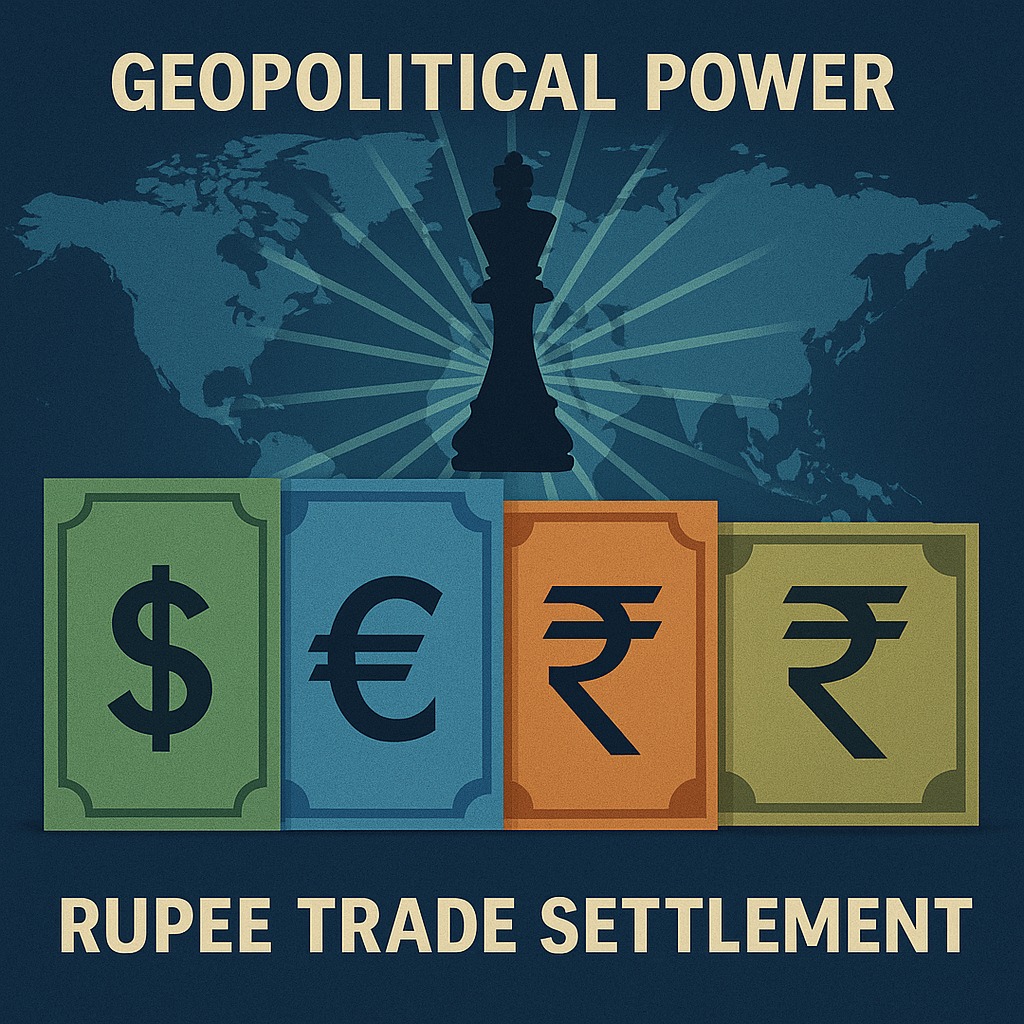
Currency demand is shaped as much by global politics as by economics. Nations don’t just choose currencies based on convenience—they choose them based on power, alliances, sanctions, and strategic interests.
In today’s shifting world order, this reality is clearer than ever, with many countries exploring alternatives to the US dollar. India’s push for rupee-based trade settlements reflects this global transition.
Here’s a clear look at how geopolitics drives currency demand and why the rupee is slowly gaining ground internationally.
Geopolitics = Currency Power
A currency becomes globally demanded when the issuing nation has:
Military strength
Economic influence
Global alliances
Strong institutions
Stable governance
This is why the US dollar, backed by American power and influence, remains the world’s most dominant currency.
Simply put:
The stronger the country, the stronger its currency’s global reach.
Why Sanctions Change Currency Choices
Countries facing US/EU sanctions—like Russia, Iran, and Venezuela—shift away from the dollar to protect themselves.
Even nations not under sanctions want diversification to reduce reliance on a single currency.
This geopolitical environment creates demand for:
UAE Dirham
Chinese Yuan
Russian Ruble
Euro
Indian Rupee (in selective corridors)
As multipolar geopolitics rises, multicurrency trade becomes the new normal.
Trade Partnerships Decide Which Currency Wins
Countries prefer settling trade in the partner’s own currency when they want:
Stronger political ties
Lower transaction costs
Reduced exposure to USD volatility
Faster bilateral settlements
For example:
India–Russia deals in INR/Ruble
India–UAE deals in INR/Dirham
India–Sri Lanka deals in INR
The deeper the trade ties, the more a currency is used.
Why Rupee Trade Settlements Matter for India
India’s push for inviting countries to trade directly in rupees is a strategic geopolitical and economic move.
1. Reduces Dependence on the US Dollar
Using INR means India needs fewer dollars for imports.
This helps:
Strengthen the rupee
Stabilise forex reserves
Reduce vulnerability to US interest rate hikes
2. Increases Global INR Demand
Foreign traders and central banks start holding rupees for payments.
More INR overseas = stronger international relevance.
3. Helps Nations Facing Dollar Shortages
Countries like Sri Lanka, Bangladesh, and some African nations benefit from settling with India in INR instead of scarce USD.
4. Strengthens India’s Regional Influence
A widely used rupee makes India a stronger economic anchor in:
South Asia
Indian Ocean Region
West Asia trade corridors
5. Supports India’s Goal of a Multipolar Currency World
As global trust in US/EU financial systems fluctuates, countries want alternatives.
India aims to make the rupee a regional settlement currency.
But Challenges Remain
Despite progress, rupee internationalisation has hurdles:
INR isn’t fully convertible
Some countries hesitate to hold excess rupees
India has trade deficits with many nations
Foreign access to Indian bond markets is limited
Still, progress is visible through:
Vostro accounts for INR trade
Bilateral rupee settlement agreements
Digital rupee infrastructure
Growing South–South trade
The Bottom Line
Currencies follow power — not the other way around.
As geopolitical alliances shift, countries increasingly diversify their currency choices to:
Reduce risks
Gain autonomy
Build new economic partnerships
India’s push for rupee trade settlements is more than an economic policy—it's a strategic geopolitical step aimed at:
Strengthening the INR
Reducing dollar dependency
Increasing India’s international influence
Building a stable multipolar financial system
The rupee may not challenge the dollar yet, but it is steadily gaining relevance across emerging markets, especially among India’s closest partners.
FAQs
1. What is rupee trade settlement?
It allows countries to trade directly in Indian rupees instead of using dollars or euros.
2. Why does geopolitics affect currency demand?
Currencies reflect national power, political stability, and international alliances.
3. Does rupee internationalisation benefit India?
Yes—India gains economic stability, reduced forex pressure, and greater regional influence.
4. Why are countries shifting away from the dollar?
To avoid sanctions, diversify reserves, and reduce dependence on one dominant currency.
5. Can the rupee become a global currency?
It can become a regional currency first; global dominance requires deeper financial reforms.
Published on : 19th November
Published by : SMITA
www.vizzve.com || www.vizzveservices.com
Follow us on social media: Facebook || Linkedin || Instagram
🛡 Powered by Vizzve Financial
RBI-Registered Loan Partner | 10 Lakh+ Customers | ₹600 Cr+ Disbursed