

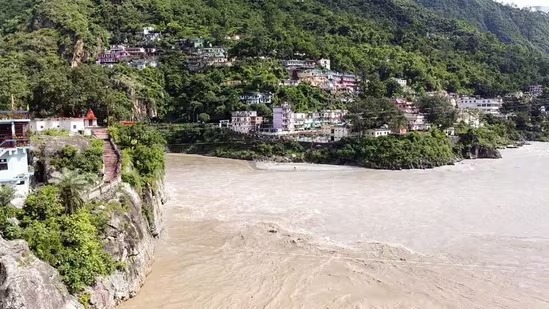
Every monsoon, the India Meteorological Department (IMD) issues rainfall warnings for Uttarakhand. These forecasts are often accurate — yet, year after year, the state suffers from catastrophic floods, landslides, and loss of lives. The recent spate of disasters in Uttarkashi, Chamoli, and Pithoragarh is proof that while forecasting is essential, it is far from sufficient.
The problem lies in how these warnings are acted upon — or rather, how they aren’t. Uttarakhand’s unique geography, fragile infrastructure, and lack of effective disaster management turn weather alerts into missed opportunities for prevention.
The IMD’s Role: What They Provide
The IMD issues different levels of alerts:
Yellow Alert – Be updated on weather changes
Orange Alert – Be prepared for action
Red Alert – Take immediate action to prevent disaster
These alerts include rainfall intensity, wind speeds, and flood risks. While these warnings are scientifically robust, the gap lies in translating alerts into community-level action.
Why Warnings Fail in Uttarakhand
1. Communication Breakdown
IMD alerts often reach district administrations but don’t trickle down effectively to the villages in time, especially those in remote mountain regions.
2. Limited Local Infrastructure
Even when warnings are received, evacuation routes, shelters, and transport are inadequate for quick action.
3. Overlapping Responsibilities
Disaster response in Uttarakhand involves multiple agencies — state disaster management, BRO, PWD, police, and local panchayats. This often leads to coordination delays.
4. Community Preparedness Gap
Many residents either underestimate the risk or don’t know evacuation protocols, leading to dangerous last-minute escapes.
5. Geographical Challenges
Steep slopes, fragile terrain, and narrow roads mean even the slightest delay can result in total isolation of villages after landslides.
Case Study: The August 2025 Monsoon Disaster
In August 2025, IMD issued a Red Alert for heavy rainfall in Uttarkashi. Despite this:
Landslides blocked Uttarkashi-Gangnani road within hours.
Dozens of families were stranded without food for days.
Helicopter rescues were delayed due to bad weather.
The forecast was accurate — the response system wasn’t.
What Needs to Change
1. Hyperlocal Weather Forecasting
Instead of district-wide alerts, forecasts should be broken down village-by-village, integrating real-time satellite and Doppler radar data.
2. Pre-emptive Evacuation Protocols
High-risk zones should have trigger-based evacuation plans — if rainfall crosses a certain threshold, evacuations begin before landslides strike.
3. Community Training & Awareness
Annual mock drills and education programs can help locals understand when and how to respond to warnings.
4. Infrastructure Reinforcement
Construct all-weather evacuation routes, Bailey bridges, and safe shelters in strategic points before the monsoon begins.
5. Integrated Disaster Response Command
A single decision-making body for emergencies can cut down life-threatening delays caused by bureaucratic coordination.
Role of Technology
SMS & Mobile App Alerts: Automatic, location-based warnings in local languages.
AI-Based Predictive Models: Better estimation of landslide-prone slopes.
Drone Surveillance: Quick post-warning assessments of vulnerable zones.
Community Radio: A low-cost, highly effective alert system in remote areas.
FAQs
Q1. Does IMD provide accurate rainfall forecasts for Uttarakhand?
Yes, but accuracy doesn’t guarantee safety — execution and community response matter just as much.
Q2. Can hyperlocal forecasting reduce disaster impact?
Yes, targeted alerts can help prioritize resources and evacuations in specific danger zones.
Q3. Why is Uttarakhand more vulnerable than other states?
Its steep slopes, fragile geology, and intense monsoons make it extremely disaster-prone.
Q4. Who is responsible for acting on IMD warnings?
District administrations, disaster management authorities, and local governance bodies share responsibility.
Conclusion
Forecasting is the first step, not the final solution. Uttarakhand’s battle against monsoon disasters will only be won when IMD warnings trigger immediate, coordinated, and community-driven action. Without that, even the most accurate forecast remains just another weather report — not a life-saving tool.
Published on : 12th August
Published by : SMITA
www.vizzve.com || www.vizzveservices.com
Follow us on social media: Facebook || Linkedin || Instagram
🛡 Powered by Vizzve Financial
RBI-Registered Loan Partner | 10 Lakh+ Customers | ₹600 Cr+ Disbursed