

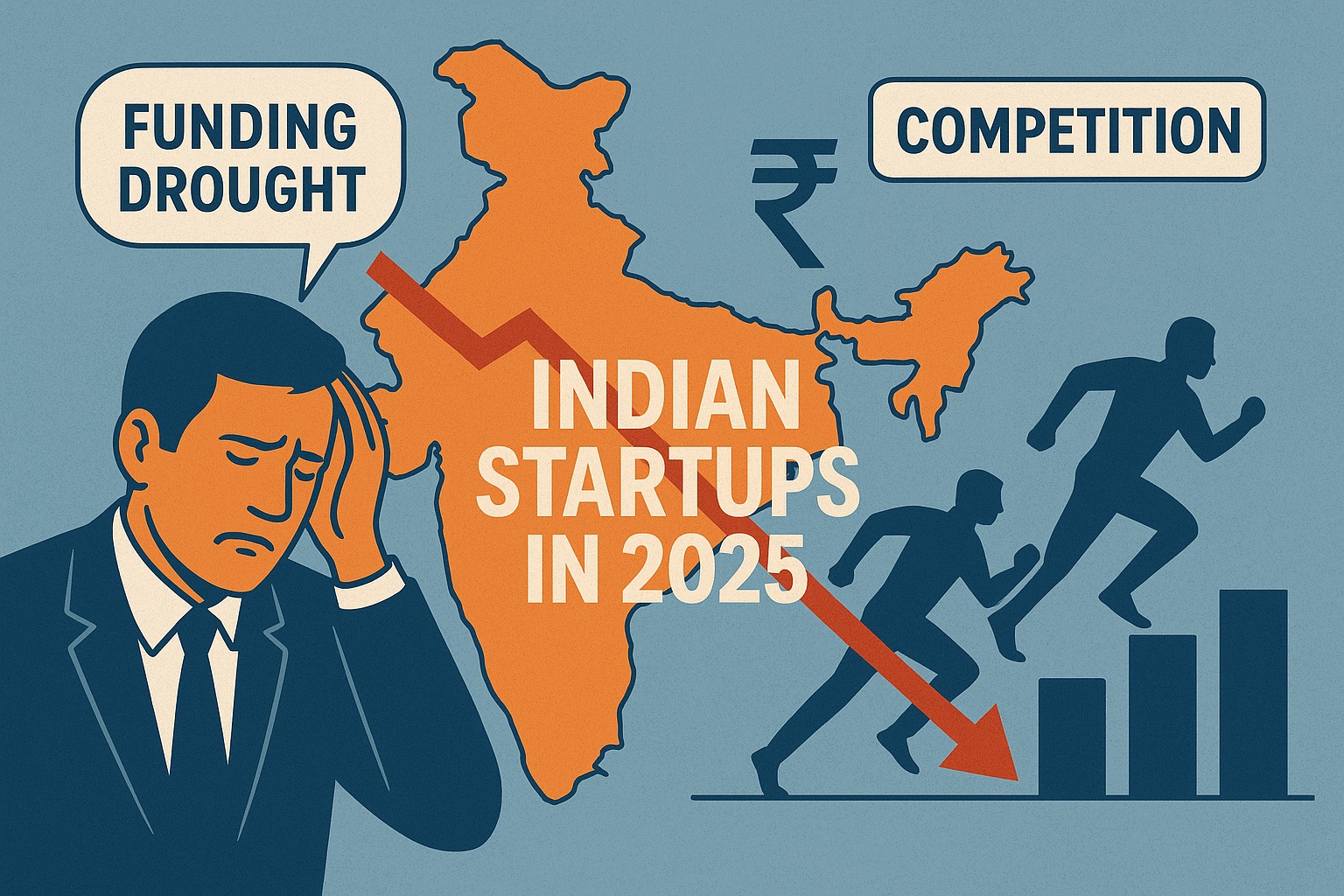
India has been called the world’s third-largest startup ecosystem, but 2025 has revealed a harsher reality—a rising number of startup failures. Despite billions in funding and global recognition, many Indian startups are shutting down due to weak business models, poor cash flow management, and intense competition.
In this blog, we explore why Indian startups are failing in 2025, the major challenges they face, and lessons entrepreneurs must learn to build sustainable ventures.
Why Are Startups Failing in 2025?
1. Funding Winter Continues
After record funding in 2021–2022, Indian startups are experiencing a funding slowdown in 2025. Venture capitalists are more cautious, focusing on profitability instead of growth at all costs.
2. Unsustainable Business Models
Startups that relied heavily on discounts, subsidies, and cash burn without a clear revenue model are struggling. Investors now demand unit economics before pumping in capital.
3. Intense Competition
Every niche—be it fintech, edtech, or e-commerce—is crowded. Without unique differentiation, startups fail to survive against well-funded competitors.
4. Regulatory Challenges
Government policies around data privacy, taxation, and compliance are creating roadblocks for startups that scaled too quickly without proper frameworks.
5. Leadership and Talent Gaps
Many founders lack experience in managing large-scale operations, leading to poor hiring, toxic cultures, and ultimately business collapse.
Lessons for Entrepreneurs in 2025
✅ Focus on Profitability
Startups should prioritize cash flow, revenue generation, and profitability over chasing vanity metrics like user signups or downloads.
✅ Build Resilient Business Models
Investors are backing companies with sustainable growth strategies rather than those dependent on subsidies.
✅ Adapt to Regulation Early
Entrepreneurs must ensure legal compliance and financial transparency from the beginning to avoid penalties and disruptions.
✅ Leverage Technology Smartly
AI, blockchain, and automation are not just buzzwords—they are tools for efficiency. Startups that adopt them smartly will stand out.
✅ Strong Leadership & Culture
Building a scalable organization requires strong leadership, transparency, and a culture of innovation.
The Bigger Picture
Despite the failures, India remains a thriving startup hub. Every failure provides a lesson that shapes stronger businesses. The transition from “growth at any cost” to “sustainable and profitable growth” will define the next decade of Indian entrepreneurship.
❓ FAQs
Q1. Why are Indian startups shutting down in 2025?
Most startups are failing due to funding shortages, weak revenue models, and increased competition.
Q2. Which sectors are most affected by startup failures?
Edtech, quick commerce, and fintech have seen the highest closures in 2025.
Q3. What can entrepreneurs learn from these failures?
Focus on profitability, innovation, compliance, and building long-term business strategies.
Q4. Is India still a good place to launch a startup in 2025?
Yes, India offers huge opportunities, but only for businesses with sustainable models and a clear path to profitability.
Published on : 17th August
Published by : SMITA
www.vizzve.com || www.vizzveservices.com
Follow us on social media: Facebook || Linkedin || Instagram
🛡 Powered by Vizzve Financial
RBI-Registered Loan Partner | 10 Lakh+ Customers | ₹600 Cr+ Disbursed