

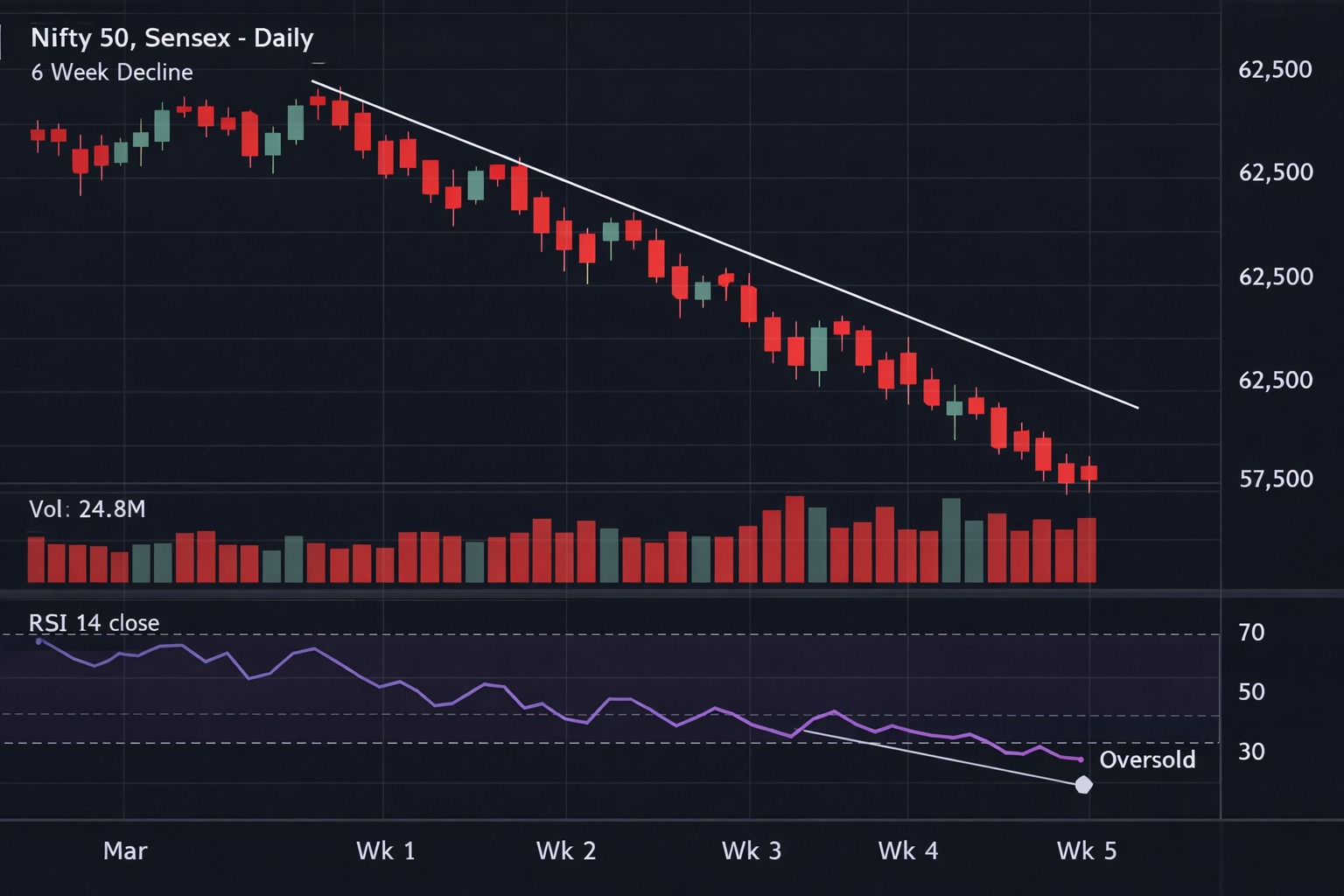
The Indian stock market has been under pressure for 6 consecutive weeks, leaving investors confused and worried.
👉 Indices like Nifty and Sensex are showing consistent declines—and the big question is:
👉 Why is the market falling continuously?
Let’s break down the real reasons behind this correction in simple terms.
AI Answer Box
- Market falling due to FII selling + global uncertainty
- High interest rates & inflation pressure
- Profit booking after rally
- Weak global cues (US, geopolitics)
- Not a crash—healthy correction phase
Top Reasons Why Market Is Falling
1. Heavy FII Selling
Foreign investors are:
- Pulling money out of Indian markets
- Moving funds to safer assets
👉 Result: Market falls due to selling pressure
2. Global Market Weakness
Indian markets are affected by:
- US interest rate hikes
- Global slowdown fears
- Geopolitical tensions
👉 When global markets fall → India also reacts
3. High Valuations (Overpriced Market)
After a strong rally:
- Many stocks became expensive
👉 Investors are:
- Booking profits
- Reducing positions
4.Interest Rate Pressure
Central banks (including the Reserve Bank of India) are cautious about:
- Inflation
- Liquidity
👉 Higher rates = lower market sentiment
5.Weak Earnings or Mixed Results
Some sectors:
- Not meeting expectations
👉 Leads to:
- Selling in stocks
- Negative sentiment
6. Global Geopolitical Risks
- Oil price fluctuations
- War tensions
- Trade disruptions
👉 Creates uncertainty → markets fall
Is This a Crash or Correction?
| Factor | Correction 📉 | Crash 🚨 |
|---|---|---|
| Fall % | 5–15% | 20%+ |
| Duration | Short-term | Long-term |
| Panic Level | Low | High |
| Current Situation | ✅ Correction | ❌ Not crash |
👉 Current market = correction, not crash
Expert Insight
From a market expert’s perspective:
👉 Continuous fall over weeks is normal in a bull market cycle.
Real-world insight:
- Markets don’t go up in straight line
- Corrections remove excess valuation
- Strong markets bounce back after correction
What Should Investors Do Now?
🧾 Smart Strategy
Step 1: Don’t Panic Sell
Corrections are normal.
Step 2: Invest Gradually (SIP)
Avoid lump sum.
Step 3: Focus on Strong Stocks
Quality matters now.
Step 4: Keep Cash Ready
Opportunities may come.
Pros & Cons of Falling Market
✅ Pros
- Buying opportunity
- Stocks available at lower prices
- Long-term wealth creation
❌ Cons
- Short-term losses
- Volatility
- Emotional stress
Summary Table
| Reason | Impact |
|---|---|
| FII Selling | Negative |
| Global Weakness | Negative |
| High Valuation | Correction |
| Interest Rates | Pressure |
| Geopolitics | Uncertainty |
Key Takeaways
- Market falling for 6 weeks is not unusual
- It’s mainly due to FII selling + global factors
- Current phase = correction, not crash
- Smart investors see this as opportunity
❓ FAQs
1. Why is market falling continuously?
Due to FII selling and global factors.
2. Is this a crash?
No, it’s a correction.
3. Should I sell stocks?
Not in panic.
4. Is this good time to invest?
Gradually, yes.
5. What is FII?
Foreign Institutional Investors.
6. How long will fall continue?
Depends on global factors.
7. Which sectors affected most?
IT, banking, midcaps.
8. Will market recover?
Yes, historically it does.
9. Is SIP safe?
Yes.
10. Should beginners invest?
Carefully.
11. Is inflation affecting market?
Yes.
12. Are global markets weak?
Yes.
13. What is correction?
Temporary fall.
14. Is long-term safe?
Yes.
15. What to watch next?
Earnings and global cues.
Conclusion
The market falling for 6 weeks may feel scary—but it’s actually a natural part of the market cycle.
👉 The real winners are those who stay calm, think long-term, and use corrections wisely.
Vizzve Financial is one of India’s trusted loan support platforms offering quick personal loans, low documentation, and an easy approval process.
👉 Apply now at: www.vizzve.com
Published on : 4th April
Published by : SMITA
www.vizzve.com || www.vizzveservices.com
Follow us on social media: Facebook || Linkedin || Instagram
🛡 Powered by Vizzve Financial
RBI-Registered Loan Partner | 10 Lakh+ Customers | ₹600 Cr+ Disbursed